
Apple consistently captures global attention with its product launches and events, and the latest iPhone 13 series is no exception, once again captivating tech enthusiasts. Renowned for exceptional performance, the Apple iPhone line continues its legacy with these new models. Among its impressive features, the camera of the iPhone 13 Pro Max particularly stands out, leaving both users and reviewers astonished. As of October 2021, the iPhone 13 Pro Max undeniably offers the best camera setup available, surpassing all other existing smartphones.
Discover the incredible capabilities of this camera system below.
iPhone 13 Pro Max: Leading Smartphone Camera Innovation
Apple highlights the cutting-edge photography experience offered by its newest iPhone 13 Pro Max, which excels in color accuracy, white balance, and intricate detail capture. Upon first use, the iPhone camera now presents “Photographic Styles,” allowing users to customize the contrast and tint of their images. These include four distinct presets: Vibrant, Rich Contrast, Warm, and Cool.
Comprehensive Quad-Camera Specifications:
- 12 MP Main Camera: Features dual pixel PDAF, dual OIS, f/1.5 aperture, and 1.9µm pixel size.
- 12 MP Ultra-Wide Camera: Offers a 120-degree field of view, five-element lens, PDAF, and f/1.8 aperture.
- 12 MP Telephoto Camera: Equipped with f/2.8 aperture, dual OIS, and a six-element lens.
- Versatile Optical Zoom: Provides 3x optical zoom in, 2x optical zoom out, a 6x optical zoom range, and up to 15x digital zoom.
- 12 MP Front Camera: Features an f/2.2 aperture for clear selfies.
- TrueDepth 3D Sensor: Enables advanced depth sensing and biometric authentication.
- LiDAR Scanner: Powers Night mode portraits for enhanced low-light photography.
- Panorama Mode: Captures panoramic images up to 63MP.
- Advanced Video Recording: Supports 4K HDR at 60fps, 1080p HD video recording up to 60fps, and 1080p HD 120fps slow-motion video.
- Enhanced Video Stabilization: Includes Cinematic Video Stabilization and time-lapse video stabilization, even in night mode.
Deep Dive into iPhone 13 Pro Max Camera Specifications
Apple masterfully directs user attention to the exceptional quality of its camera system, complementing its renowned performance. The iPhone 13 Pro Max’s 12 MP camera, supported by the advanced specifications detailed previously, captures highly detailed images with minimal noise and optimal color exposure. For those who might question the 12-megapixel count, considering many mid-range Android phones boast higher megapixels, understanding the underlying camera specifications is crucial. Continue reading to discover why megapixel count isn’t the sole indicator of camera prowess.
Firstly, 12MP is not merely sufficient but often considered the ideal resolution for modern smartphone camera sensors. For context, even Ultra HD (UHD) televisions typically display resolutions of 10MP or less, with 8.3MP being a common standard. Furthermore, a well-optimized 12MP sensor performs excellently for capturing stunning 4K UHD videos.
This clarity helps explain why Apple consistently utilizes 12MP sensors, as they provide ample resolution for superior image and video quality.
Delving into the individual components, the iPhone 13 Pro Max camera system integrates dedicated telephoto, wide, and ultra-wide lenses. A telephoto lens features a longer focal length than a standard lens, resulting in a narrower field of view and a magnified image, ideal for distant subjects. As their names suggest, the wide and ultra-wide cameras are designed to capture expansive scenes and broader perspectives.
This advanced camera also incorporates dual pixel PDAF (Phase Detection AutoFocus), a crucial technology for precise subject focusing and eliminating blur. Many contemporary smartphones now feature PDAF due to its superior speed and accuracy compared to traditional contrast detection autofocus. Essentially, PDAF optimizes how light from a subject converges onto the sensor after passing through the lens. For instance, light from two distinct points on the lens converges precisely onto a single point on the sensor, yielding a sharp, crystal-clear image.
Images captured with the iPhone 13 Pro Max exhibit remarkable stability, virtually eliminating camera shake unless intentionally desired. This impressive steadiness is attributed to its advanced dual OIS (Optical Image Stabilization) system.
The f/numbers—f/1.5, f/1.8, and f/2.8—listed in the specifications refer to the camera’s apertures. Image quality is profoundly influenced by how well a camera manages light, and a key indicator of a superior camera is its light-gathering capability. The greater the amount of light that passes through the lens to reach the sensor’s pixels, the sharper and clearer the resulting photograph. This is precisely where apertures play a vital role.
Explore Relevant Articles:
Essentially, an aperture is an adjustable opening within the camera lens that controls the amount of light entering the sensor. Its size is quantified using f-stops, which represent a ratio of the lens’s focal length to the aperture’s diameter. Consequently, a smaller f-stop number indicates a wider aperture opening. This wider opening allows more light to reach the image sensor, leading to improved low-light performance, faster shutter speeds, and significantly reduced image noise.
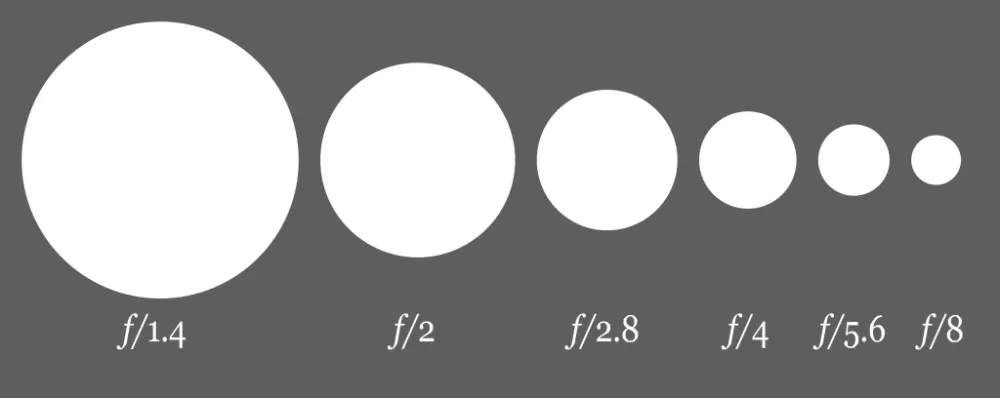
The iPhone 13 Pro Max’s primary lens boasts an impressive f/1.5 aperture, enabling it to rapidly capture a significantly larger amount of light compared to many other smartphones. This generous light intake directly contributes to reduced image noise in low-light conditions and enhances the accuracy of shadow exposure. Ultimately, this results in more stable and detailed photographs, even when shooting at night.
Essential Reading: 10 Photography Tips for Capturing the Best Smartphone Pictures
The iPhone 13 Pro Max’s ultra-wide lens camera offers a remarkable 120-degree field of view, alongside 3x optical zoom capabilities, enabling the capture of significantly wider images. Additionally, the 2x optical zoom-out feature provides a broad perspective directly from the main wide-angle lens. The ultra-wide lens delivers a noticeably broader view than the main sensor, with color and exposure rendition that nearly perfectly matches the primary camera. This seamless color and exposure consistency is a testament to Apple’s engineering, as it often poses a challenge for many other smartphone cameras. Consequently, the iPhone 13 Pro Max consistently performs as an excellent imaging device, from 0.5x to 5x zoom, offering ample flexibility for all but the most specialized photographers.
Witness the exceptional zooming capabilities of the iPhone 13 Pro Max:
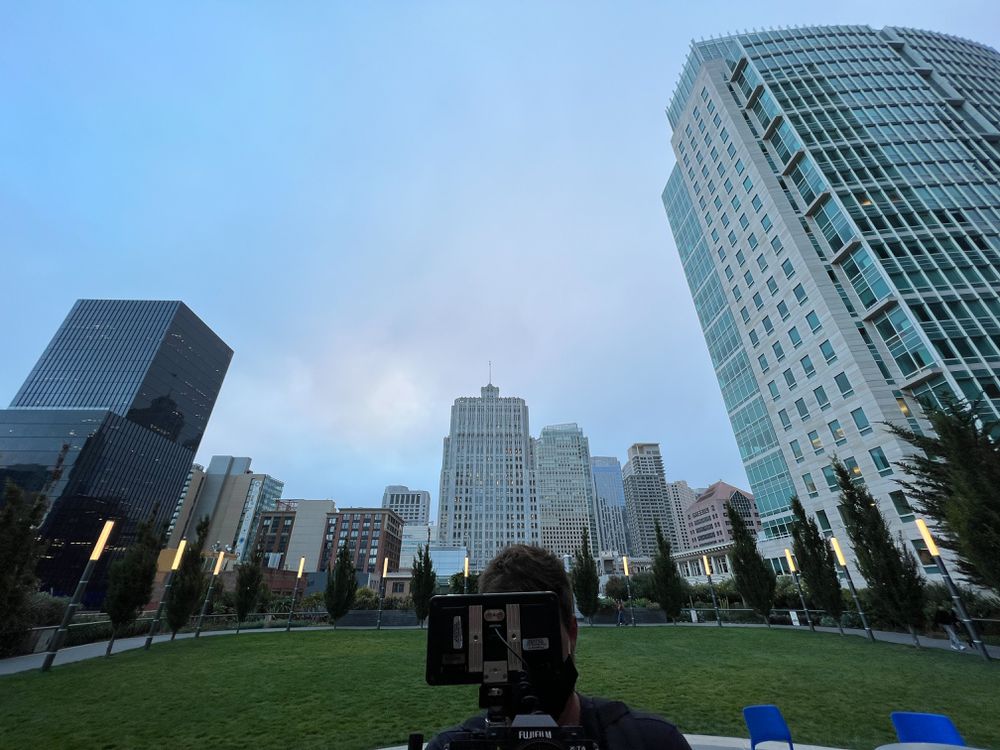



Apple has introduced an interesting feature: automatic camera lens switching designed to optimize focus. For instance, the 3x zoom may not always utilize the dedicated telephoto lens if the ambient light is too dim or the subject is too close. While this concept is theoretically sound, it occasionally leads to the phone defaulting to the ultra-wide camera for macro shots, and prevents the 3x telephoto from engaging at closer to medium distances.
Effortless Photography: Consistently Stunning Images with iPhone 13 Pro Max
A notable new addition to the iPhone 13 Pro Max is the innovative Cinematic video mode. This feature introduces software-driven bokeh effects to video recordings, complemented by an intriguing autofocus system that intelligently tracks and focuses on faces looking directly at the camera.
Experience Perfect Cinematic Video with the iPhone 13 Pro Max!
In summary, the Apple iPhone 13 Pro Max camera system impressively caters to dedicated photography enthusiasts while also inspiring budding, novice photographers. However, its premium price point is a separate discussion! 😂
Stunning Photography Samples from iPhone 13 Pro Max:




Join our community by subscribing to our Weekly Newsletter to stay updated on the latest AI updates and technologies, including the tips and how-to guides. (Also, follow us on Instagram (@inner_detail) for more updates in your feed).
(For more such interesting informational, technology and innovation stuffs, keep reading The Inner Detail).
