
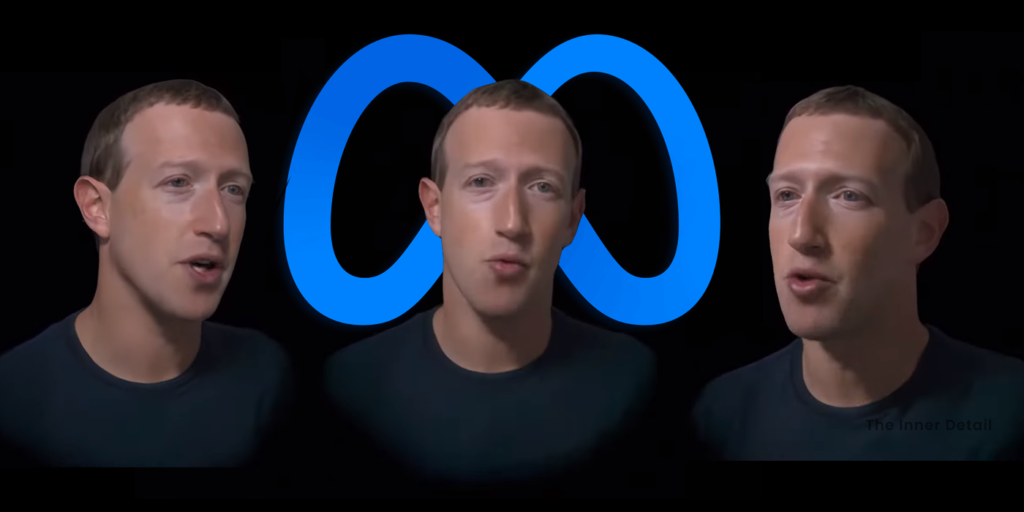
Mark Elliot Zuckerberg, an American internet entrepreneur, is widely recognized as the co-founder of Facebook. This visionary philanthropist also holds the distinction of being the world’s youngest self-made billionaire, achieving this feat at just 23 years old. Born on May 14, 1984, in White Plains, New York, Mark currently serves as the co-founder, Chairman, and CEO of Facebook Inc., where he remains a crucial shareholder. Beyond Facebook, Zuckerberg also co-founded ‘Solar Sail’, a groundbreaking spacecraft development initiative under Breakthrough Initiatives. This ambitious project aims to construct incredibly fast spacecraft designed to reach the Alpha Centauri star system, located 4.37 light-years away.
This blog post delves into the remarkable life of Mark Zuckerberg, highlighting his journey to becoming the youngest self-made billionaire, along with key factual insights into his career and significant contributions.
Insights into Facebook Co-founder Mark Zuckerberg:
- Mark Zuckerberg grew up in a Reform Jewish household in New York, with his father working as a dentist and his mother as a psychiatrist. He demonstrated exceptional academic prowess throughout his schooling, particularly at Ardsley High School and Philips Exeter Academy. Recognizing his son’s early aptitude, Mark’s father fostered his interest in programming from a young age, even hiring a software developer to teach him BASIC programming language skills.
- During his high school years, Mark pursued advanced programming, enrolling in a graduate programming course at Mercy College. He managed both his high school studies and this college-level curriculum simultaneously. His early teenage years spent learning to code proved to be a pivotal foundation for his immensely successful future career.
Early Innovations and Projects
- One of Mark’s earliest significant software creations was a program for his father. This system, named “ZuckNet”, facilitated seamless communication by connecting all computers between his father’s dental office and their home. ZuckNet is often considered a precursor to modern instant messaging services like AOL’s (American Web Portal & Online Service Provider) Instant Messenger.
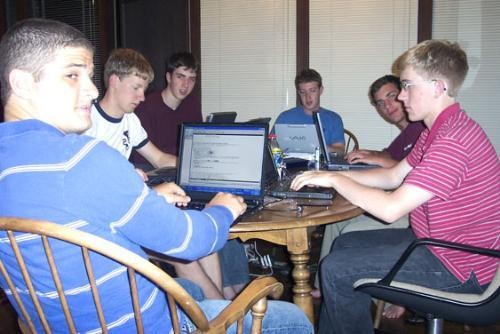

- During his time at Philips Exeter Academy in 2002, Mark developed ‘The Photo Address Book’, which is considered a foundational predecessor to Facebook. This digital address book contained detailed information about the Academy’s students, making it easily accessible to everyone.
- Throughout his academy years, Mark was also engaged in creating a music player known as ‘Synapse Media Player’. His high school period also saw him developing various games. Zuckerberg recalls, “I was fortunate to have a bunch of friends as artists. They would come over, draw stuff, and I’d build a game out of it.”
Zuckerberg’s Harvard Years and Early Projects
- Already a programming prodigy, Mark enrolled at Harvard University, pursuing studies in psychology and computer science. His time in college significantly enhanced his coding abilities, leading to the creation of several software applications. His first notable project during his sophomore year was ‘Course Match’, designed to assist students with course selection decisions and help them find study groups.
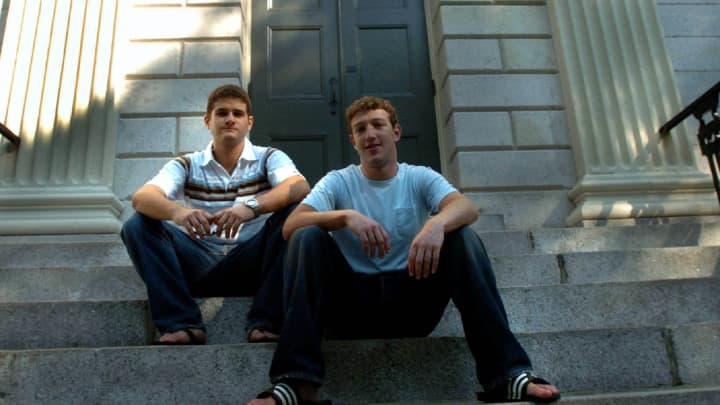
- His second significant creation was ‘Facemash’, an application designed to allow users to rate the attractiveness of individuals listed within it. This program controversially utilized college students’ photos, leading to widespread criticism from many who accused him of illegally using their images. The University subsequently shut down Facemash, though Mark Zuckerberg famously described the experience as ‘fun’.
The Genesis of Facebook
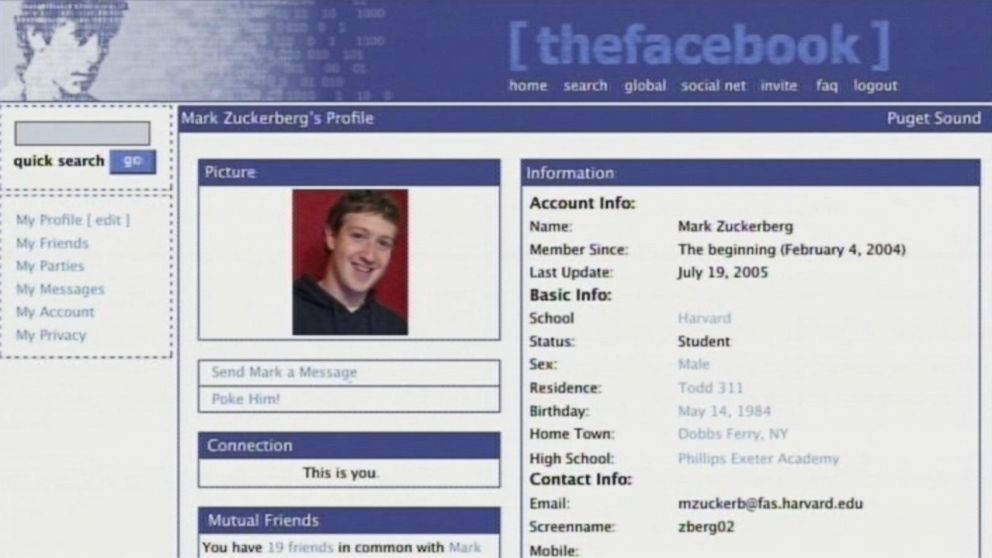
- Mark’s university experience provided the ideal environment for him to develop a groundbreaking website known as “Thefacebook”. Launched on February 4, 2004, when he was just 19, he co-founded this platform with his roommates Eduardo Saverin, Andrew McCollum, Dustin Moskovitz, and Chris Hughes, initially for Harvard students. With Dustin’s crucial support, the site rapidly expanded its reach to include students from other prestigious institutions such as Columbia University, New York University, and the University of Pennsylvania.
- However, a legal challenge arose just six days after the website’s launch when three of Zuckerberg’s Harvard seniors filed a lawsuit against him. They alleged that he intentionally deceived them into believing he would assist in developing their social network, ‘HarvardConnection.com’, while he was, in fact, using their concepts to build his own product. The lawsuit sought 1.2 million Facebook shares and a $20 million cash settlement.
- To further the website’s development, Mark Zuckerberg made the pivotal decision to leave Harvard, though he later received an honorary degree from the university in May 2017. The founding team subsequently relocated to Palo Alto, California, establishing their initial office in a small leased room. It was there that Mark met Peter Thiel, who became the company’s first significant investor. Despite numerous lucrative offers from corporations eager to acquire their burgeoning product, the founders consistently declined all proposals.
In a 2007 interview, Zuckerberg articulated his vision: “It’s not because of the amount of money. For me and my colleagues, the most important thing is that we create an open information flow for people. Having media corporations owned by conglomerates is just not an attractive idea to me.”
- Facebook experienced exponential growth in the new millennium, notably reaching an impressive 500 million users by July 21, 2010. Reflecting a culture of intense dedication, Facebook implemented ‘Hackathons’ every six to eight weeks, where staff would devote an entire night to conceptualize and finalize projects. These events, which Zuckerberg himself frequently participated in, were supported with food, music, and beer, fostering an environment of innovation.
“Rapid Innovation: Building Something Great Overnight”
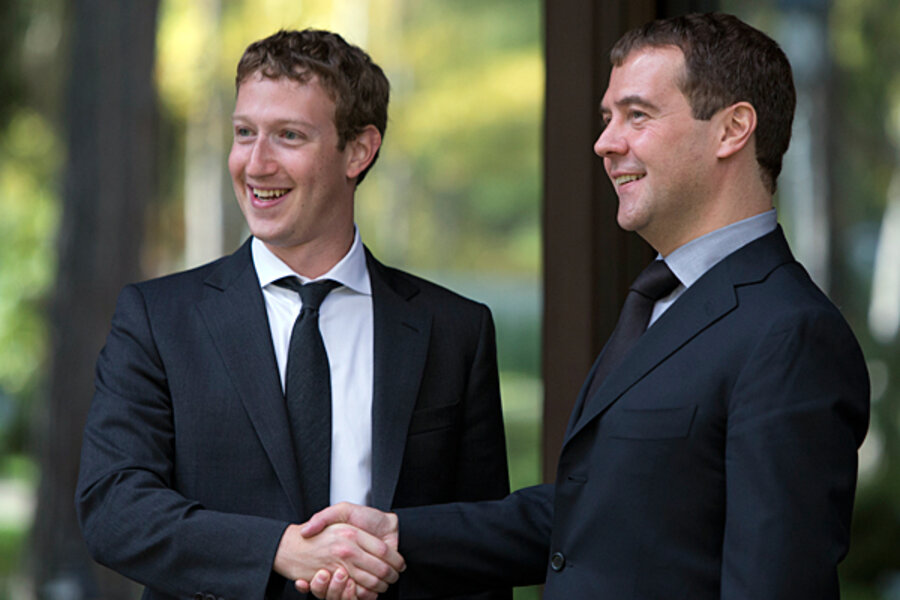
- Aiming to expand Facebook’s user base within Russia in 2012, Mark Zuckerberg met with then-Russian Prime Minister Dmitry Medvedev. Medvedev agreed to facilitate Facebook’s efforts to foster social media innovation in Russia. This strategic engagement successfully attracted 9 million new Russian users, establishing Facebook as a significant competitor to VK, Russia’s dominant social media platform with 34 million users.
- Facebook went public with its Initial Public Offering (IPO) in May 2012, and Zuckerberg continues to hold a 15% stake in its stocks. In the same year, Facebook achieved a monumental milestone, reaching an astonishing 1 billion users worldwide.
- In 2014, Mark Zuckerberg hosted Chinese politician Lu Wei, along with other prominent business leaders such as Jeff Bezos and Tim Cook. Despite Zuckerberg’s efforts and his high regard in China for fostering entrepreneurship, Facebook remains banned in the country. This ban stems from Facebook’s refusal to provide details on Xinjiang independence activists (whom authorities deemed terrorists) who had utilized the platform for their communication networks.

Additional Ventures and Initiatives
- During Facebook’s early developmental stages, it faced emerging competition from i2hub, a startup specializing in peer-to-peer file sharing. To counter this, Mark Zuckerberg collaborated with three friends to co-found ‘Wirehog’, a service designed to be similar to i2hub. Wirehog is now recognized as a significant precursor to the applications developed on the Facebook Platform.
- In 2007, Mark introduced ‘Beacon’, an innovative social advertising platform designed to help sellers promote and reach their products to a wider audience. However, Beacon later faced intense scrutiny due to significant privacy concerns, leading to its discontinuation and replacement with more privacy-conscious advertising methods.
- Zuckerberg unveiled the ambitious ‘Internet.org’ project in 2013, with the goal of bringing internet access to five billion people globally. This initiative brought together other corporate titans, including Satya Nadella and Sundar Pichai, to explore strategies for providing affordable internet connectivity to rural communities in less developed nations.
- In 2010, Facebook faced a temporary ban in Pakistan following a “Draw Muhammad” contest hosted on the platform. The company’s founders subsequently faced a lawsuit alleging blasphemy in connection with the incident.
- The Social Network: Mark Zuckerberg’s life and the creation of Facebook became the subject of the critically acclaimed film ‘The Social Network’, with Jesse Eisenberg portraying Zuckerberg. Although the movie did not always depict the billionaire in a positive light, Zuckerberg himself stated in an interview that he considered himself a “good boy.” On January 29, 2011, both the reel-life and real-life “Zuckerbergs” appeared together on Saturday Night Live, marking the only time Zuckerberg himself went live on Facebook.
Family Life and Philanthropic Endeavors
- Mark Zuckerberg married Priscilla Chan in 2012, after dating her since 2003, their sophomore year in college. The couple has two daughters: Maxima Chan Zuckerberg, born in December 2013, and another daughter born in August 2017.

- Demonstrating their commitment to global betterment, the couple pledged to donate 99% of their substantial wealth, estimated at $55 billion. Mark Zuckerberg has consistently engaged in significant philanthropic efforts, contributing generously to societal and human advancement. Notable donations include $25 million towards Ebola virus eradication and another $25 million to the Bill and Melinda Gates Foundation for COVID-19 treatment research.
- Zuckerberg’s influence has been widely recognized; he was named Vanity Fair’s ‘Most Influential Person of the Information Age’ in 2010 and ranked tenth on Forbes’ ‘World’s Most Powerful People’ list in 2016. Since 2007, he has consistently been among the top 20 wealthiest individuals globally.
- His compelling life story was chronicled in Ben Mezrich’s 2009 biography, “The Accidental Billionaires: The Founding of Facebook, a Tale of Sex, Money, Genius, and Betrayal.” As of June 29, 2020, the billionaire’s net worth stood at an impressive $79.7 billion.
“Embracing Risk: The Path to Innovation”
References:
- wikipedia.com
- forbes.com
Join our community by subscribing to our Weekly Newsletter to stay updated on the latest AI updates and technologies, including the tips and how-to guides. (Also, follow us on Instagram (@inner_detail) for more updates in your feed).
(For more such interesting informational, technology and innovation stuffs, keep reading The Inner Detail).
