
The AI landscape has changed dramatically in the past year. There was a time when discovering useful AI tools meant choosing between ChatGPT, Gemini, Claude, Perplexity and a handful of AI image generators. Today, there are hundreds of specialized AI platforms that can do things traditional chatbots simply cannot.
Some of the most interesting tools are not necessarily the ones dominating social media. There are platforms that let you access thousands of AI models, create cinematic videos, build consistent virtual characters, turn ideas into complete songs, research your own documents and even create entire applications without traditional programming.
So instead of another list filled with the same AI websites everyone already knows, here are 10 powerful AI tools worth exploring right now.
1. Claude — The AI for Writing, Research and Coding
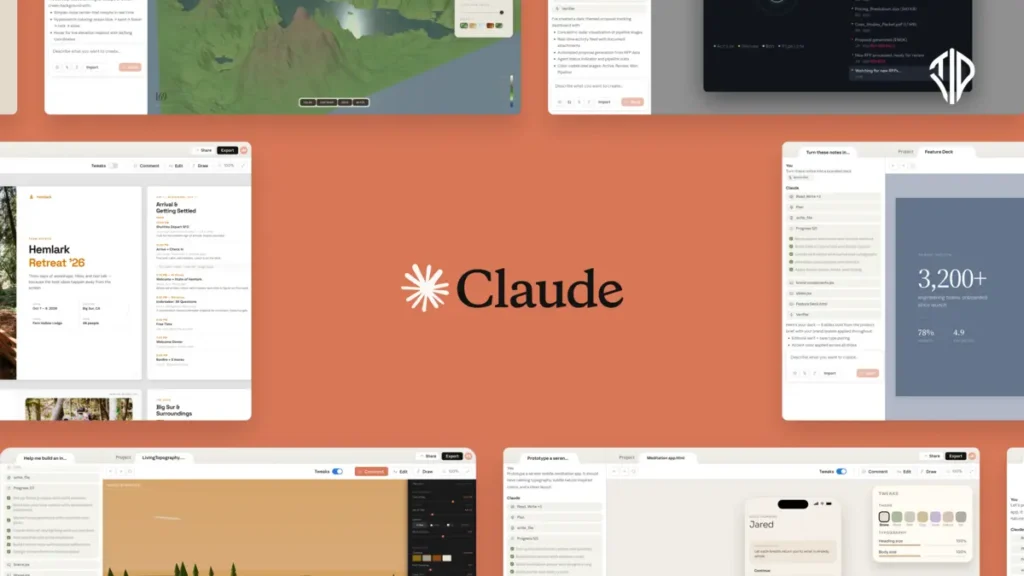
If ChatGPT is the general-purpose AI assistant most people know, Claude has become one of the strongest alternatives for people who want to work seriously with long documents, writing and code.
Claude is particularly useful when the task requires more than generating a quick answer. You can give it lengthy documents, ask it to analyze information, rewrite complex material, develop ideas, review code or work through a programming project. It can also function as a coding agent, allowing developers to work with files, repositories and development environments rather than simply asking isolated coding questions.
For writers, Claude can be useful for creating articles, reports, scripts and other long-form content while maintaining context across a lengthy conversation. For developers, it can move from explaining code to actually helping build and modify projects.
What makes Claude worth including in this list is its versatility. You can use it as a writing partner in the morning, a research assistant in the afternoon and a coding assistant later in the day.
Best for: Writing, research, document analysis, brainstorming and coding.
2. Higgsfield — An AI Video Studio for Characters and Cinematic Content
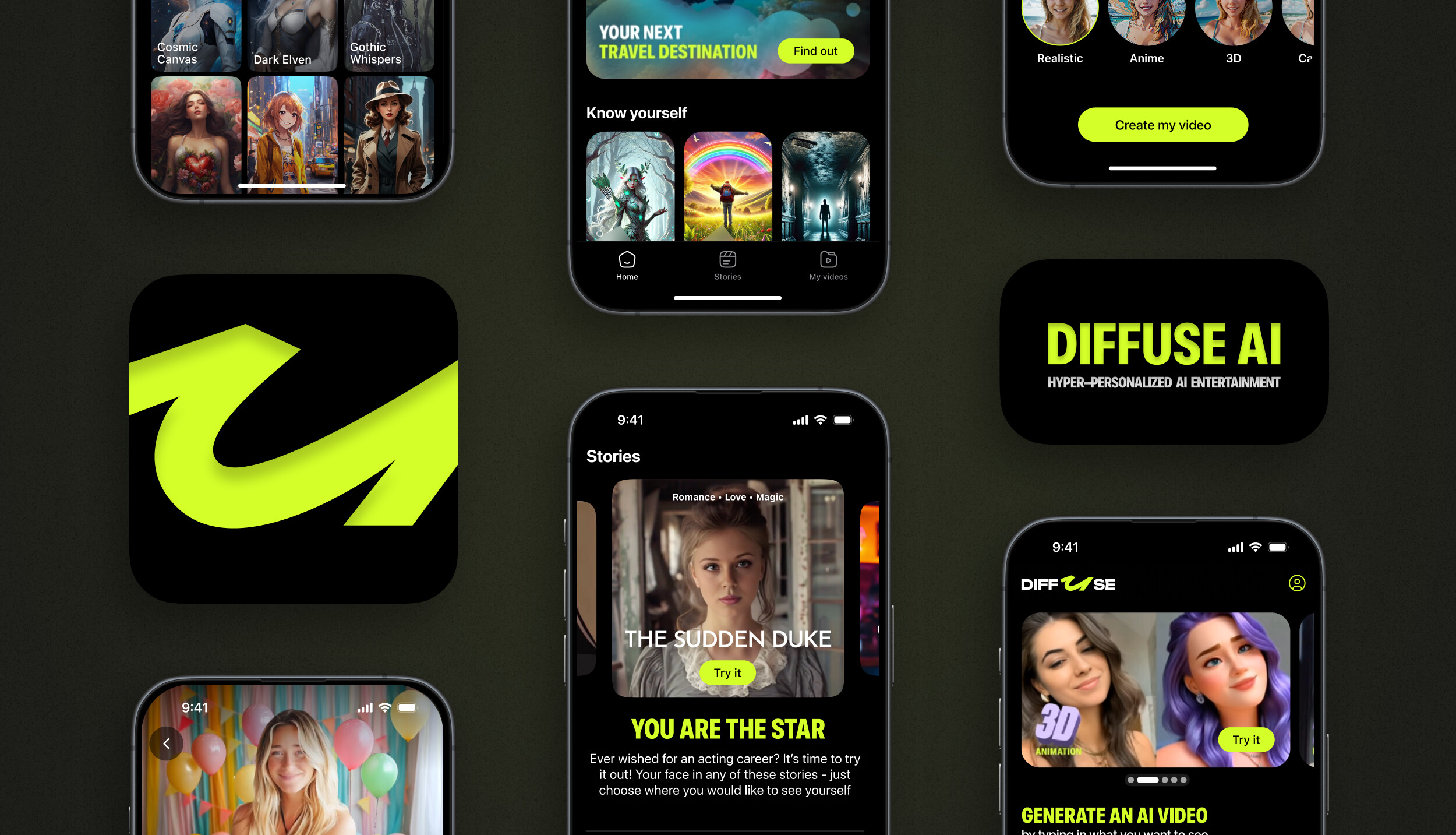
If you have only experimented with basic text-to-video generators, Higgsfield is worth exploring. Rather than functioning as just another AI video generator, Higgsfield brings several creative video models and specialized tools into one workspace.
One of its particularly interesting capabilities is consistent AI characters. Its AI Influencer tools are designed to create virtual characters that can appear consistently across different pieces of content. Its Cinema Studio also focuses on cinematic video creation with greater control over camera movement and visual storytelling.
Higgsfield can also bring together different AI video models, allowing creators to experiment with models such as Kling, Sora, Veo and others without having to build an entirely separate workflow around each one. It also offers tools for product advertising, UGC-style content and visual campaigns.
That makes it particularly interesting for YouTubers, filmmakers, marketers and social-media creators who want to go beyond simple AI-generated clips.
Best for: AI videos, virtual characters, cinematic shots, advertisements and social-media content.
3. Hugging Face — A Treasure Chest of AI Models

Hugging Face is probably one of the most underrated websites on this list, especially among people who use AI but don’t consider themselves developers.
Think of Hugging Face as a massive ecosystem where researchers and developers share AI models, datasets and applications. Its Models section currently contains millions of models, covering everything from text generation and coding to image generation, speech recognition and video.
The interesting part is that you aren’t limited to one company’s AI. You can discover models from organizations such as Google, Microsoft, Meta, NVIDIA, Qwen, DeepSeek and many independent developers. Hugging Face also provides access to inference providers, allowing certain models to be tried through hosted infrastructure rather than requiring you to download and run enormous models yourself.
This makes Hugging Face particularly valuable for anyone who wants to experiment beyond the mainstream AI assistants. You can discover models for specific tasks, compare alternatives and even find experimental projects that may not yet be available in mainstream consumer AI apps.
Some models and inference options are free, although availability, limits and computing requirements vary by model.
Best for: Exploring AI models, open-source AI, experimentation, developers and discovering alternatives to mainstream AI tools.
4. Kimi — The AI Agent That Can Actually Build Things
Kimi is another AI platform that deserves more attention outside the usual AI circles. Developed by Moonshot AI, Kimi has evolved beyond a conventional chatbot into an agent-oriented platform capable of handling more complex tasks.
Kimi’s Agent can work with documents, generate content, assist with programming and even help create websites. Its current capabilities include conversational website building, full-stack previews, persistent storage, user authentication and version management.
For developers, Kimi Code can work directly with development tools and terminals. It can read and edit code, execute shell commands, search the web and independently plan actions during a software-development task.
This makes Kimi particularly interesting for users who want an AI that doesn’t stop at answering questions. Instead, you can give it a goal and let it work through multiple steps to produce something usable.
Best for: AI agents, coding, website creation, research and complex multi-step tasks.
5. Runway — More Than an AI Video Generator
Runway is one of the strongest choices for people interested in AI filmmaking and creative video production. While many AI video tools focus primarily on generating short clips, Runway is building a broader creative environment around video generation and editing.
Its current Gen-4.5 model supports both text-to-video and image-to-video generation. It is designed to understand complex instructions involving camera choreography, scene composition, timing and atmospheric changes.
Runway also provides tools for continuing to work with generated footage rather than simply downloading the first result. Its platform includes creative workflows, an AI Agent for producing multi-shot videos through conversation and a node-based workflow system for more customized production pipelines.
For filmmakers, the important distinction is control. Instead of simply asking AI to “make a cinematic video,” Runway allows creators to work more deliberately with images, motion, camera movement and iterations.
Best for: AI filmmaking, cinematic videos, image-to-video, creative editing and visual storytelling.
6. NotebookLM — Your Personal Research Assistant
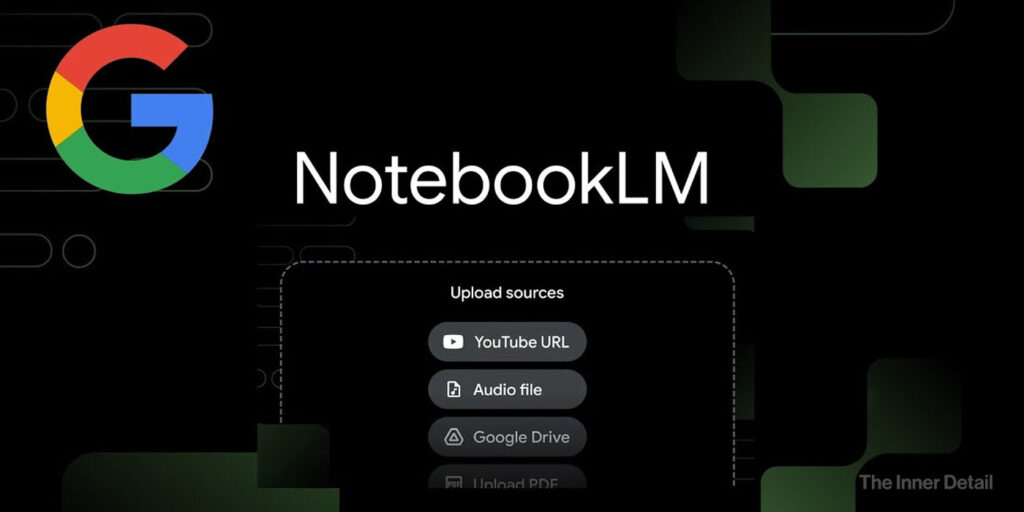
While NotebookLM is becoming better known, it still deserves a place on this list because it solves a problem that general-purpose AI assistants don’t always handle well.
Instead of asking an AI to answer questions based on everything it knows, NotebookLM lets you provide the sources first. You can upload documents and other supported sources and then ask questions about that specific material.
This makes it particularly useful for students, researchers, journalists and professionals dealing with large amounts of information. Rather than repeatedly reading through dozens of pages, you can ask the system to explain concepts, compare information, summarize sections or extract important points from your sources.
One of its most distinctive features is its ability to turn research material into Audio Overviews and Video Overviews, giving users a podcast-like way and a learning-video to review and understand things better. It can also create clean and complicated presentations to the awe of users. I would recommend this personally, as being benefitted by the tool heavily.
The biggest advantage is the source-focused workflow. If you’re researching a specific subject, you can create a notebook around that topic and keep the AI’s answers grounded in the material you’ve provided.
Best for: Research, studying, document analysis, summarization and learning, including PPT-making.
7. Google AI Studio — The Place to Experiment With Google’s AI
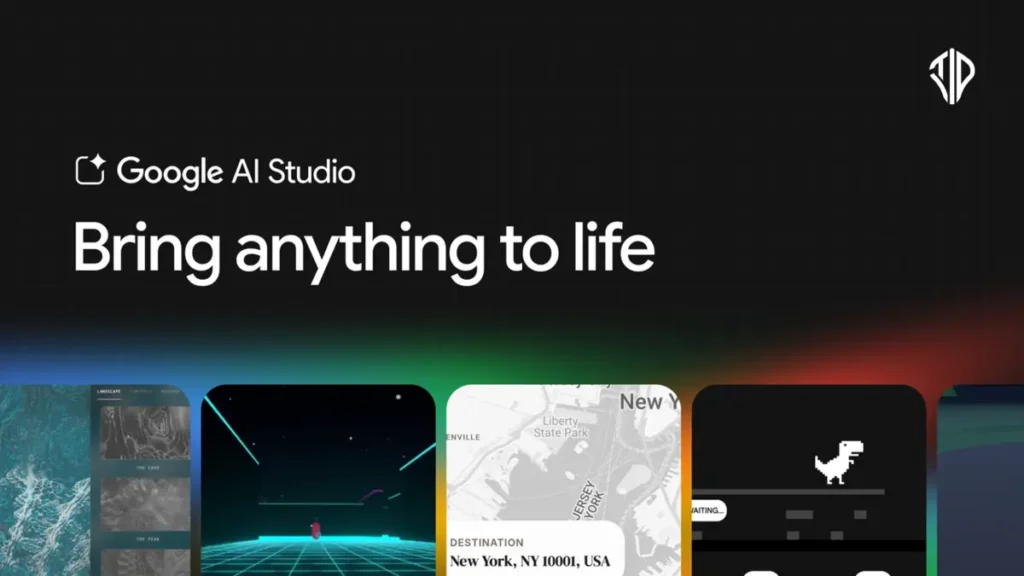
Most people know Gemini, but considerably fewer people explore Google AI Studio. Google AI Studio is essentially a playground and development environment for experimenting with Google’s generative AI models. It allows users to test prompts, experiment with multimodal inputs and build applications around Google’s AI models.
It becomes particularly interesting when you want to move from simply chatting with AI to actually experimenting with what AI can do. You can prototype applications, test different instructions and work with Google’s AI capabilities before integrating them into a larger project.
For developers and advanced users, AI Studio can also act as a bridge between experimenting with an AI idea and turning that idea into an application through APIs.
The best part is that you don’t necessarily need to be an experienced developer to begin experimenting. You can start by simply trying different models and prompts, then gradually explore the more advanced development features.
Best for: AI experimentation, Gemini models, prototyping, multimodal AI and developers.
8. n8n — Build Your Own AI Automation System
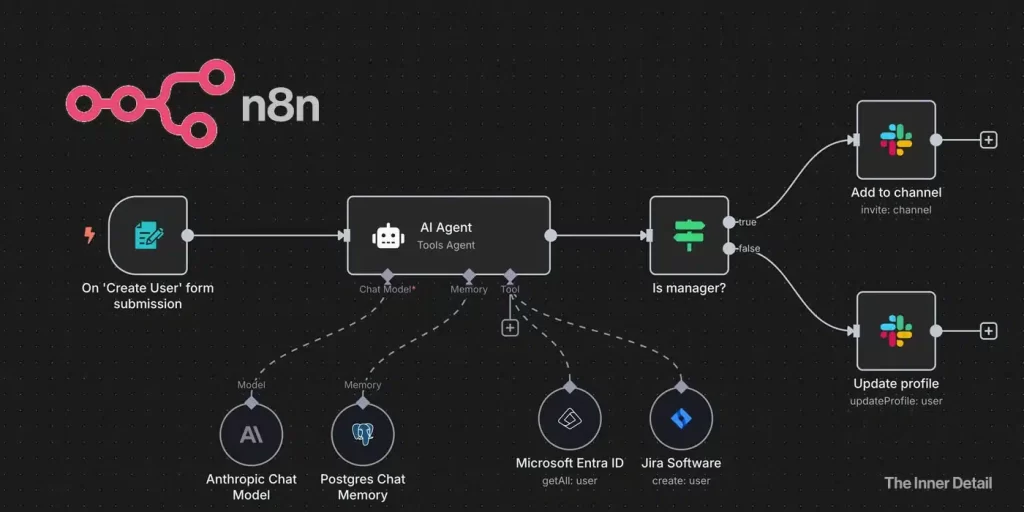
Imagine having an AI assistant that doesn’t just answer you but automatically moves information between your apps, processes documents, sends notifications and performs repetitive tasks. That’s where n8n comes in.
n8n is a visual workflow automation platform that allows users to connect different applications and services. Instead of manually performing the same sequence of actions repeatedly, you can create a workflow where one event triggers another.
For example, a workflow could monitor incoming emails, extract information from them, send that information to an AI model, save the result to a database and notify you on another platform.
What makes n8n particularly interesting for AI users is its ability to incorporate AI agents and models into these workflows. This means you can build systems that combine AI with email, databases, spreadsheets, APIs, websites and other services.
It is especially powerful because n8n offers both a visual interface and the flexibility to add more technical logic when needed.
Best for: Automation, AI agents, connecting apps and eliminating repetitive work.
9. Suno — Create Complete Songs With AI
AI has transformed visual content, but it is doing something equally fascinating with music. Suno lets almost anyone turn an idea into a complete song without knowing how to play an instrument or operate a traditional digital audio workstation.
You can start with a simple idea and generate music with vocals, lyrics and different musical styles. The latest Suno v6 generation adds even more control, including the ability to edit sections of a song using natural language, create mashups, work from audio or visual inputs and generate different musical ideas from a reference.
Suno has also moved beyond simple “type a prompt and get a song” generation. Its Studio environment now includes features such as MIDI, audio effects, a synthesizer, automation and a chat interface for working with music.
There is also a free option. Suno currently says free users can create up to 10 songs per day, while more advanced models and features are available through paid plans.
Whether you want background music for a video, a demo track, an experimental song or simply want to see what AI music can do, Suno is one of the easiest places to start.
Best for: AI music, songs, vocals, background music and music experimentation.
10. Replit — Turn an Idea Into a Working App
The final tool on the list is for anyone who has ever had an idea for an app but thought, “I don’t know how to code this.”
Replit has increasingly turned its platform into an AI-assisted development environment where users can describe what they want to build and have AI help create the application.
Instead of starting with an empty code editor, you can begin with an idea: a personal dashboard, a small business website, an internal tool, a calculator, a database-driven application or a prototype. AI can then help generate the code and develop the project while you refine it through natural-language instructions.
The interesting part is that this isn’t simply an AI that gives you a block of code and leaves you to figure out what to do next. Replit combines AI assistance with an actual development and hosting environment, making the distance between “I have an idea” and “I have a working prototype” much smaller.
For non-programmers, this can be a surprisingly powerful way to experiment with software. For developers, it can speed up prototyping and eliminate much of the repetitive work involved in getting an initial project running.
Best for: Building websites, prototypes, applications and experimenting with software without starting from scratch.
Summary of the 10 Best Useful AI Websites
| Name | Description | Category | Pricing |
|---|---|---|---|
| Claude | A powerful AI assistant for writing, research, document analysis and coding. It can work with lengthy content and help users create, analyze, edit and develop projects. | AI Assistant / Content Generation / Research / Coding | Freemium |
| Higgsfield | An AI creative platform for generating videos, cinematic scenes and consistent AI characters. It brings multiple AI video models and creative tools into one workspace. | AI Video / Character Generation / Cinematic Content | Freemium |
| Hugging Face | A massive AI ecosystem providing access to millions of models, datasets and AI applications. Users can explore models for text, coding, images, audio, video and other AI tasks. | AI Models / Open Source AI / AI Development | Free / Freemium |
| Kimi | An AI agent platform capable of handling complex tasks such as research, document work, coding and website creation. Its agent-oriented approach allows it to work through multiple steps rather than simply answering questions. | AI Agent / Coding / Research / Website Creation | Freemium |
| Runway | An advanced AI creative platform for generating and editing videos. Its video models can create content from text and images while providing greater control over cinematic shots and visual storytelling. | AI Video / Filmmaking / Creative Production | Freemium |
| NotebookLM | Google’s source-grounded AI research assistant that analyzes documents and other sources provided by the user. It can generate summaries, explanations, study material and Audio Overviews. | Research / Document Analysis / Education / PPT-generation | Free / Freemium |
| Google AI Studio | Google’s browser-based environment for experimenting with generative AI models, building prototypes and testing multimodal AI applications using Gemini and other Google AI technologies. | AI Development / Prototyping / Multimodal AI | Freemium |
| n8n | An open-source workflow automation platform that connects applications and services through visual workflows. It can also incorporate AI models and agents to automate complex tasks. | Workflow Automation / AI Agents / App Integration | Freemium |
| Suno | An AI music-generation platform that can turn ideas and prompts into complete songs with vocals, lyrics and different musical styles. It also provides tools for editing and developing AI-generated music. | AI Music / Song Generation / Audio Creation | Freemium |
| Replit | An AI-powered development platform that helps users create websites, applications and software by describing what they want to build, reducing the need to write everything manually. | AI Coding / App Development / Website Creation | Freemium |
Which AI Website Should You Try First?
The best tool depends entirely on what you want to accomplish. If your work revolves around writing, research and coding, Claude is one of the most versatile choices. If you want to explore the huge world of AI models beyond the big consumer chatbots, Hugging Face is the place to start.
For video creators, Higgsfield and Runway are particularly interesting. Higgsfield stands out for its character consistency and collection of video models, while Runway offers a more complete creative-production environment.
If you’re interested in building rather than simply chatting with AI, Kimi, Google AI Studio, n8n and Replit deserve your attention. They demonstrate where AI is heading: from answering questions to actually performing tasks and helping people create working products.
For researchers and students, NotebookLM remains one of the most useful source-grounded AI tools. And if you’ve never tried AI-generated music, Suno is perhaps the easiest way to experience how far generative AI has moved beyond text and images.
The AI Tools Worth Watching Are No Longer Just Chatbots
The biggest change in the AI industry is that AI websites are becoming increasingly specialized. The question is no longer simply “Which AI chatbot is best?” Instead, it is becoming “Which AI tool is best for this particular job?”
Higgsfield is exploring AI filmmaking and characters. Hugging Face provides access to a huge ecosystem of models. Kimi is pushing AI agents and software creation. Runway is turning generative video into a broader creative workflow. Suno is doing the same for music, while n8n connects AI to the rest of your digital life.
And that’s why these lesser-known platforms are worth exploring. The next major AI breakthrough may not come from another chatbot that writes slightly better answers. It may come from a specialized tool that quietly changes how you create videos, build software, conduct research, automate work or make music.
The AI ecosystem is now much bigger than ChatGPT—and some of the most interesting tools are hiding in plain sight.
Join our community by subscribing to our Weekly Newsletter to stay updated on the latest AI updates and technologies, including the tips and how-to guides. (Also, follow us on Instagram (@inner_detail) for more updates in your feed).
(For more such interesting informational, technology and innovation stuffs, keep reading The Inner Detail).
