
Over the past two decades, numerous scientific and technological fields have emerged, paving the way for the advanced tech innovations and gadgets we experience today and anticipate for the future. These advancements include Artificial Intelligence (AI) for detecting heart disease through selfies, augmented reality (AR) for enhanced transport and entertainment, virtual reality (VR) experiences, DNA-based cloud data storage, robotics, and blockchain technology. These groundbreaking applications continue to transform our world.
Among these crucial fields, one stands out as the focus of this article: Data Science.
Understanding Data Science: A Core Overview
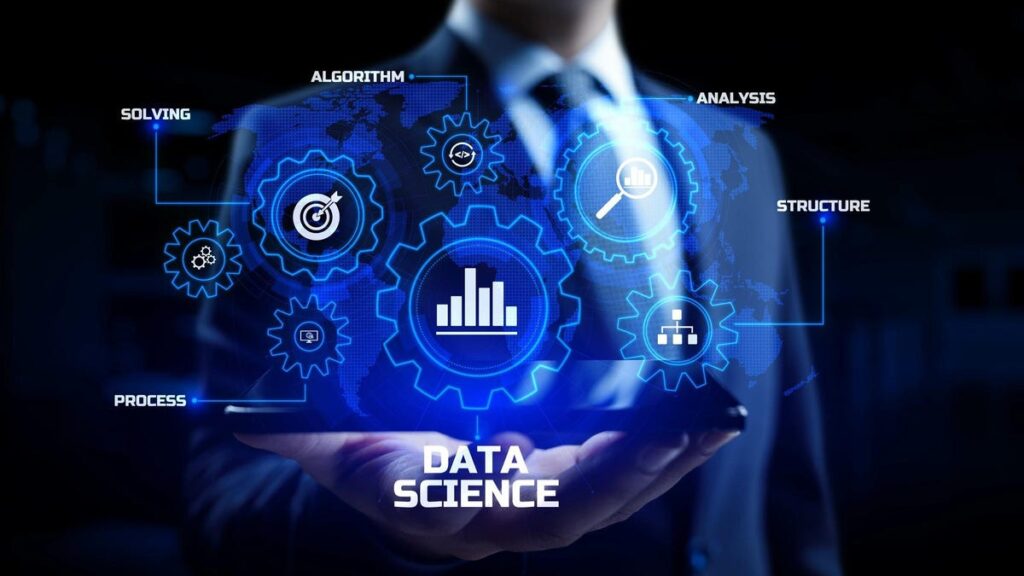
Data Science is an interdisciplinary field that integrates scientific methods, artificial intelligence (AI), machine learning, statistics, and data analysis. Its core objective is to extract meaningful and applicable value from both structured and unstructured datasets, utilizing direct and indirect approaches.
Let’s break down these technical terms to clarify what Data Science truly encompasses.
- Interdisciplinary field: Data Science is a convergence of multiple disciplines, including those mentioned previously (scientific methods, AI, machine learning, statistics, data analysis). It’s not a singular domain but a powerful synthesis.
- Applicable value: The insights derived from data must be practical and actionable, offering real-world benefits and solutions, not merely raw information.
- Provided and non-provided set: This refers to data that is readily available and data that may need to be actively discovered or ‘mined’ from various sources.
- Directly and indirectly: Achieving valuable insights can occur through direct analysis or indirectly by implementing programming and advanced computational techniques.
Given this multifaceted nature, a Data Scientist often performs roles that would typically require several different specialists, integrating various expertise to achieve comprehensive results.
A Practical Example of Data Science in Action
To better illustrate the concept of data science, let’s consider a familiar scenario.

Consider a mother preparing a meal. She has a kitchen full of ingredients – vegetables, cereals, pulses, and various other necessities. When making a dish like sambar rice, her process mirrors key data science steps: she first analyzes the recipe requirements (data analysis), then gathers all the necessary ingredients (data extraction). Next, she begins the chopping process (data maintenance). If an ingredient is missing, she might quickly acquire it from a nearby store (data mining).
Subsequently, the actual cooking begins (data processing). Even before the dish is complete, you might notice the enticing aromas, which can be likened to predictive analysis. Once cooked, she performs a qualitative check by tasting a small portion (qualitative analysis) and visually assesses the food’s texture and overall readiness (data visualization).
Finally, she serves the meal to you and your family (data reporting). While decision-making regarding the food’s taste might sometimes involve others (like your father or even you), in a true data science context, the “data scientist” (the mother in this analogy) typically makes these crucial decisions herself.
In essence, based on these comparative skills, every mother effectively functions as a data scientist within her own household.
“The ability to take data — to be able to understand it, to process it, to extract value from it, to visualize it, to communicate it — that’s going to be a hugely important skill in the next decades.”
— Hal Varian, chief economist at Google and UC Berkeley professor of information sciences, business, and economics
Essential Skills for Aspiring Data Scientists
As demonstrated by our earlier analogy, a successful data scientist must be a highly versatile, data-driven professional. They require advanced technical skills to develop sophisticated algorithms, effectively synthesize, organize, and interpret data, ultimately guiding strategic decisions within an organization.
Key attributes for data scientists include a results-oriented mindset, deep industry-specific knowledge, and excellent communication skills to translate complex technical findings for non-technical stakeholders. A strong quantitative foundation in statistics and linear algebra is crucial, alongside proficiency in programming, data mining, and various modeling techniques.
- Programming Languages: Proficiency in Python is essential.
- Open-Source Notebooks: Familiarity with web applications for code execution, data visualization, and result generation, such as Jupyter and RStudio.
- Big Data Technologies: Understanding of frameworks like MapReduce.
- Cloud Computing: Knowledge of cloud platforms.
- Machine Learning Fundamentals: A solid grasp of basic machine learning concepts.
Data Science in Business: Key Applications and Transformations
At its core, the objective of a data scientist is to leverage data manipulation as a strategic competitive advantage, enhancing products and services. This ultimately aims to boost an organization’s profitability through the intelligent valuation and application of data. Here are some key applications of Data Science across various industries:
- Marketing Optimization: Analyzing call center data to refine marketing strategies and improve customer engagement.
- Logistics and Supply Chain: Examining traffic patterns, weather, and other variables to enhance delivery speeds, reduce operational costs, and optimize supply chains by predicting equipment breakdowns.
- E-commerce and Retail: Generating personalized product recommendations based on past purchases, leading to increased sales and customer satisfaction.
- Financial Services: Detecting fraudulent activities by identifying suspicious behaviors and anomalous transactions.
- Healthcare: Improving patient diagnoses through the analysis of medical test data and reported symptoms, enabling earlier detection and more effective treatment of diseases.
Further Reading: Explore Related Posts
The Surging Global Demand for Data Scientists
The demand for data science professionals is currently robust globally. In the United States, for instance, there’s an immediate need for over 150,000 data scientists, with similar skill shortages observed across Europe and Asia. Notably, research indicates that 94% of data science graduates since 2011 have secured employment. Looking ahead, the US Bureau of Labor Statistics projects a staggering 11.5 million jobs in data science and analytics by 2026, highlighting significant career growth opportunities.
Specifically in India, the Big Data industry is forecasted by Analytics Insight to grow from its current US $6.9 billion to US $20 billion by 2026, capturing 32% of the global market share.
This surge reflects in India’s data science job market, which is experiencing unprecedented demand, leading to promising career progression and competitive salaries. As of August 2020, approximately 93,000 data science positions were unfilled in India, with 70% of these vacancies open to candidates with less than five years of experience. Projections suggest India will also see over 11 million job openings in this sector by 2026.
Salaries for data scientists reflect this high demand. In the US, the average annual salary for a data scientist is $117,212 (approximately ₹89.62 Lakhs), with senior data scientists earning around $142,250 (approximately ₹1.08 Crores). In India, data scientists typically earn an annual income of about ₹10 Lakhs. (Reference: GlassDoor)
If the prospect of becoming a data scientist has ignited your interest, we encourage you to pursue this dynamic and rewarding career path. Best of luck on your journey!
(Special thanks to Deva Chimai for suggesting this insightful topic!)
Join our community by subscribing to our Weekly Newsletter to stay updated on the latest AI updates and technologies, including the tips and how-to guides. Also, follow us on Instagram (@inner_detail) for more updates in your feed. For more such interesting informational, technology and innovation stuffs, keep reading The Inner Detail.
