
OpenAI has finally launched its most anticipated “GPT-5” AI model, and the internet has gone crazy experimenting it out and building things with it.
It’s almost 3 years since the birth of ChatGPT (GPT was introduced on Nov 22, 2022) and this GPT-5 is expected to take humanity towards the experience of the next level of AI – Artificial General Intelligence (AGI), where AI has the ability to understand, learn anything that a human being can.
This new model is poised to transform how we interact with AI, fundamentally changing the march towards AGI not despite, but because of, its unique characteristics.
A New Era of AI: Thinking with Tools
The defining characteristic of human intelligence is the ability to use tools, just as the Stone Age was demarcated by humans learning to shape tools. GPT-5 ushers in a similar “stone age for Agents and LLMs” because it doesn’t just use tools; it thinks and builds with them. Unlike previous models that might simply execute a web search, GPT-5 is capable of sophisticated behaviors like conducting research, planning, iterating, and exploring, integrating tools into its thinking process.
GPT-5 yearns for tools that are powerful, capable, and open-ended. These tools can be broadly categorized into:
- Internal Retrieval: Such as RAG (Retrieval Augmented Generation), SQL Queries, or bash commands.
- Web Search: Where GPT-5 decides what to search for, and the tool handles the how.
- Code Interpreter.
- Actions: Anything with a side-effect, like editing a file or triggering UI.
A key improvement is GPT-5’s proficiency at parallel tool calling. While technically capable before, other models rarely executed this correctly or often enough. This parallelization allows GPT-5 to operate on much longer time horizons with significantly lower latency, enabling new product possibilities. This also means that thinking about prompting GPT-5 shifts from “prompting a model” to “prompting an agent,” requiring clear, structured pointers or a “compass” rather than pre-loading extensive context. For example, when working with a codebase, you need to onboard it with project details, file organization, company standards, and how to evaluate task completion.
GPT 5 in Coding: Unparalleled Software Engineering Prowess
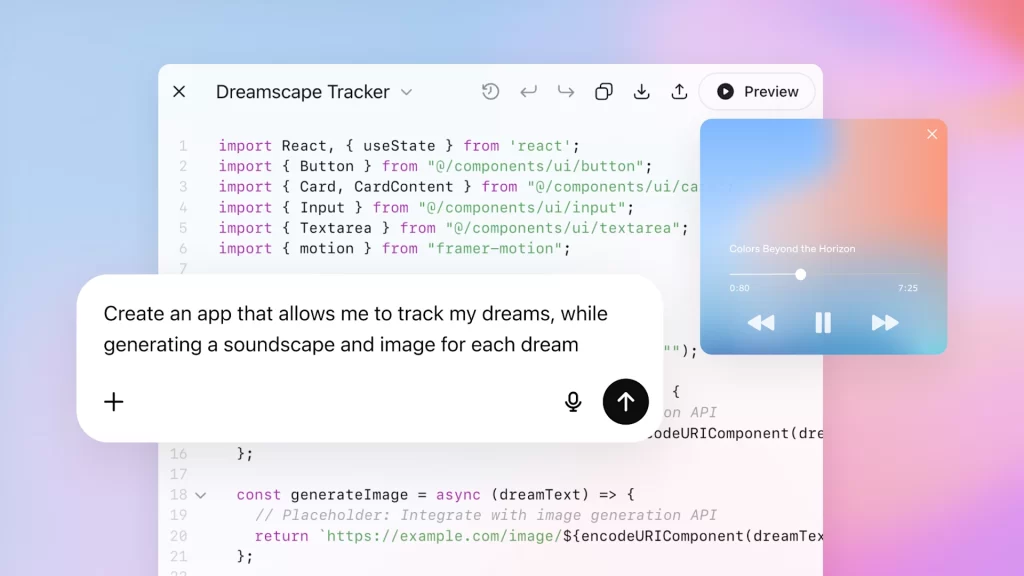
One of the most striking capabilities of GPT-5 is its exceptional skill in software engineering. Experts describe it as unequivocally the best coding model in the world. It has been observed “one-shotting” complex applications and solving “really gnarly issues across a massive codebase”.
Examples highlight this prowess:
- Dependency Conflicts: GPT-5 was able to resolve complex nested dependency conflicts in a codebase where other advanced models like o3, Cursor, Claude Code, and Opus 4 failed. It did so by meticulously running commands like yarn why in multiple folders, taking notes, reasoning about discrepancies, and precisely editing necessary lines across files.
- Websites from Vague Prompts: It can “one-shot” entire websites, even complex ones with full functionality like a paint app with working features (pen/pencil/eraser, color picker, thickness change) and persistence to local storage, all from minimal or vague prompts. Users noted GPT-5 loved to surprise with details that actually work.
- Production-Ready Applications: When tasked to create a website with a SQLite database, GPT-5 one-shotted a version much closer to production ready compared to Claude Opus 4, which built from scratch without a database, or o3, which only provided a plan and scaffolding. Even Claude Opus 4.1 struggled with build errors where GPT-5 ran perfectly.
This means GPT-5 can effectively turn an old codebase into one supporting newer AI SDK versions, creating “feel the AGI” moments for developers. It is seen as a “cracked full-stack developer”.
Microsoft is actively integrating GPT-5 into its developer offerings like GitHub Copilot and Visual Studio Code, allowing developers to write, test, and deploy code using GPT-5’s advanced agentic capabilities. Azure AI Foundry also provides access to all GPT-5 models, including a model router that selects the optimal model based on task complexity, performance, and cost, further enhancing its utility for building. The “collapse of the boundary between user and developer” is anticipated, leading to a proliferation of software built faster by more people.
GPT-5 building things
GPT-5 just does stuff, often extraordinarily. It takes proactive steps, anticipating needs and suggesting next actions without explicit instruction. This addresses a common problem for users who don’t know what AIs can do or what tasks to request.
For instance, when asked to generate startup ideas, GPT-5 not only provided ideas but also generated drafts of landing pages, LinkedIn copy, and simple financials—all unprompted. In a demonstration, a vague request for a “procedural brutalist building creator” resulted in a working 3D city builder within minutes, with GPT-5 adding unrequested features like neon lights, cars, facade editing, and a save system when simply encouraged to “make it better”. Even when bugs occurred, pasting the error text allowed GPT-5 to fix them, breaking the typical “doom loop” of AI coding. This proactive nature shifts the interaction from commanding AI to “collaborative cognition”.
Model Selection, Context & Reliability
GPT-5 is not a single model but a unified system with a smart and fast model for most questions and a deeper reasoning model for harder problems. A real-time router automatically decides which model to use based on conversation type, complexity, tool needs, and explicit intent (e.g., if you say “think hard about this”). This automation aims to make AI use more productive and less frustrating for most users who might not know which model to select. While generally helpful, this automatic routing can be somewhat arbitrary; for instance, some tasks might be deemed easy and given to a weaker model unless explicitly prompted to “think hard”.
The models boast an impressive input limit of 272,000 tokens and an output limit of 128,000 tokens. This larger context window is particularly beneficial for handling long records, imaging notes, and timelines in healthcare, supporting continuity of care.
Significant advances have been made in reducing factual hallucinations, improving instruction following, and minimizing sycophancy. While models still make mistakes, hallucination—where models confidently state real-world untruths—is much less of a problem with GPT-5 compared to previous years. It also honestly admits when it cannot complete a task rather than pretending it has.
GPT-5 also introduces “safe-completions,” a new safety-training approach that focuses on the safety of the assistant’s output rather than a binary classification of the user’s intent. This means instead of outright refusing a request, GPT-5 will attempt to provide a helpful but moderated answer to avoid harmful content.
Where GPT-5 Is Not a Super-Genius
Despite its many advancements, GPT-5 is not “just better” at everything. Notably, it’s worse at writing than GPT-4.5 and even 4o. Its writing style is described as more “LinkedIn-slop” compared to GPT-4.5, which stays truer to user tone. This indicates that models are becoming “spiky,” each with different specialties. A significant point of user frustration has been the removal of the model picker option in ChatGPT, meaning users can no longer choose which specific model (like GPT-4o) they want to use.
Many users have reported that the new GPT-5 model gives shorter responses and has less personality than previous versions, leading to a feeling of a “downgrade branded as the new hotness”. Some users even felt like they “just watched a close friend die” with the removal of GPT-4o.
Availability and Pricing
GPT-5 is now live for ChatGPT users and is being rolled out to enterprise and education tiers.
For developers, GPT-5 is available via the API in three models: regular, mini, and nano, each with four reasoning levels (minimal, low, medium, high). A “thinking-pro” model is available via ChatGPT’s $200/month tier as “GPT-5 Pro”.
Pricing is aggressively competitive. GPT-5 costs $1.25 per million input tokens and $10 per million output tokens, which is half the input cost of GPT-4o. GPT-5 Mini and Nano are even more affordable, at $0.25/$2.00 per million and $0.05/$0.40 per million for input/output tokens, respectively. A significant 90% discount on input tokens used within the previous few minutes also applies.
In Health & Education
GPT-5 is also poised to transform healthcare and education support. In healthcare, it acts as a health literacy assistant, helping patients understand medical information and prepare questions, and improving clinical support by providing safer outputs and handling long records. In education, it strengthens the AI teaching assistant role, planning lessons, adapting difficulty, creating quizzes, and supporting inclusive learning with multimodal capabilities.
Final Thoughts
While GPT-5 may not immediately strike everyone as a “super-genius” due to its flaws in areas like writing, its unprecedented capabilities in software engineering, proactive problem-solving, and sophisticated tool integration mark a profound shift in AI capabilities.
OpenAI’s official benchmarks are co-signed by early testers, solidifying its position as the world’s best coding model. The burden of using AI is lessened as GPT-5 increasingly “just does things” and even suggests next steps.
The future of AI interaction may involve less explicit prompting and more collaboration, blurring the lines between user and developer, and promising a proliferation of software.
Key Takeaways
- GPT-5 excels in software engineering, demonstrating exceptional coding prowess.
- It proactively anticipates user needs and suggests next actions, shifting the interaction towards collaborative cognition.
- GPT-5 introduces a smart model selection system, optimizing AI use based on task complexity and user intent.
- While not perfect (e.g., weaker writing skills), GPT-5 significantly reduces hallucinations and improves instruction following.
- New “safe-completions” prioritize the safety of AI’s output, providing moderated answers to potentially harmful requests.
Join our community by subscribing to our Weekly Newsletter to stay updated on the latest AI updates and technologies, including the tips and how-to guides. (Also, follow us on Instagram (@inner_detail) for more updates in your feed).
(For more such interesting informational, technology and innovation stuffs, keep reading The Inner Detail).
