
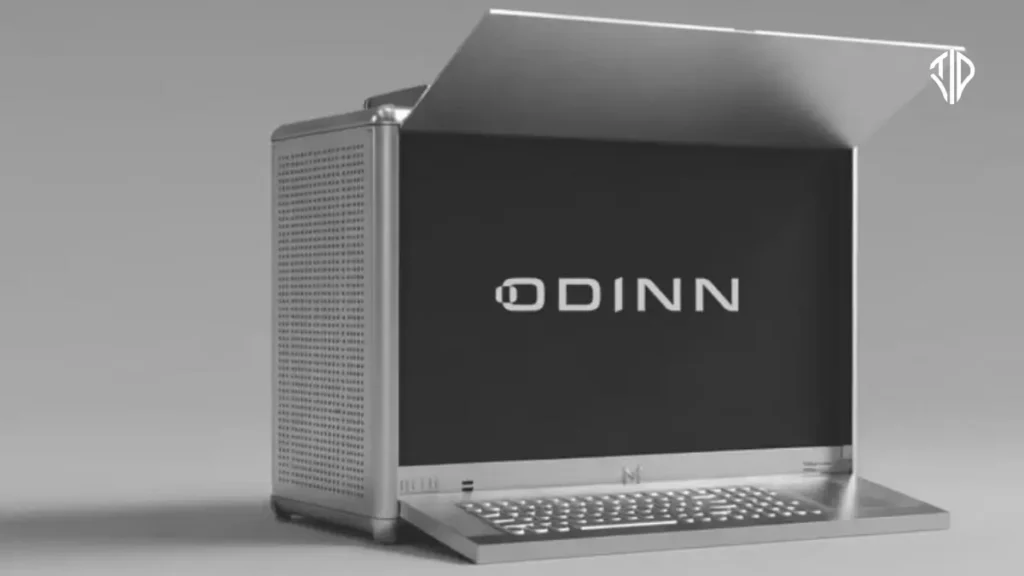
California-based startup ODINN has revolutionized localized computing with OMNIA, a high-performance AI supercomputer compact enough to fit inside a standard carry-on suitcase. This portable powerhouse enables institutions to process sensitive data on-site with data-center-level capabilities without the need for massive infrastructure.
Historically, organizations requiring massive computing power had to choose between building multimillion-dollar server rooms or trusting their sensitive data to distant cloud providers. For sectors like national defense or private healthcare, neither option is truly ideal due to the inherent security risks of public networks or the immense upfront costs of physical construction.
As the demand for bespoke artificial intelligence models grows, the need for decentralized, sovereign hardware has become critical. The emergence of portable supercomputing represents a shift from centralized cloud giants back to localized control, allowing high-level innovation to happen exactly where the data is generated, whether in a hospital lab or a remote field office.
Key Takeaways
- Portability: OMNIA provides a full-scale supercomputing environment within a suitcase-sized frame.
- Sovereignty: Enables organizations to maintain 100% data privacy by processing sensitive information on-site.
- Infrastructure-Free: Operates on standard office power and utilizes proprietary closed-loop cooling to eliminate the need for server rooms.
- Scalability: The modular Infinity Cube system allows businesses to expand their computing clusters as demand grows.
The Power of a Data Center in Your Hand
The OMNIA supercomputer is a self-contained system that packs the same high-end CPUs, GPUs, and storage capacities typically found in industrial-sized server racks.
Despite its diminutive size, it supports multi-terabyte memory and petabyte-level storage, making it capable of handling the most demanding AI workloads.
By integrating these components into a portable frame, ODINN has created a solution for the modern AI explosion. Unlike traditional systems that require months of planning and assembly, OMNIA is designed to be deployed in minutes.
It connects to standard power and networking infrastructure, meaning it can function in a typical office environment without specialized electrical upgrades.
Closed-Loop Cooling and the NeuroEdge Software
One of the most significant engineering hurdles for compact supercomputing is heat management. ODINN addressed this by developing a proprietary closed-loop cooling system.
This allows the unit to run quietly and efficiently, even when processing massive datasets, ensuring it doesn’t disrupt the professional environments it inhabits.
To manage this hardware, ODINN introduced a specialized software layer called NeuroEdge. This platform coordinates job scheduling and deployment, ensuring the hardware extracts maximum performance from its AI clusters.
It integrates seamlessly with existing ecosystems, such as NVIDIA’s AI software, allowing researchers to focus on their models rather than technical troubleshooting.
Scalability Through the Infinity Cube
While a single OMNIA unit is powerful, certain institutional demands require even greater scale. To solve this, the startup developed the Infinity Cube, a modular enclosure that can house multiple OMNIA units. This system allows a business to start small and expand their computing power as their needs grow.
Benefits of a Modular AI Cluster:
- Sovereignty: Total control over data privacy by keeping all information on-site and off public clouds.
- Low Latency: Faster processing speeds by eliminating the need to send data to a remote server.
- No Specialized Infrastructure: Each unit has internal cooling, removing the need for raised floors or external cooling plants.
- Rapid Deployment: Units can be added to the cluster and activated almost instantly.
A Comparison of Computing Approaches
To better understand where OMNIA fits into the current technological landscape, we can compare it to traditional methods of accessing high-performance computing.
| Feature | Cloud Data Centers | Traditional On-Site Servers | ODINN OMNIA |
|---|---|---|---|
| Deployment Time | Instant (Virtual) | 6 – 12 Months | Minutes |
| Data Privacy | Shared/Public Network | High (Local) | Maximum (On-Site) |
| Physical Footprint | None (Remote) | Large (Dedicated Room) | Minimal (Suitcase-sized) |
| Infrastructure Needs | High-speed Internet | Industrial Cooling/Power | Standard Office Power |
The Future of Localized AI
As OMNIA makes its debut at CES 2026, it marks a significant pivot in how we view AI infrastructure. The ability to carry a supercomputer as luggage suggests a future where high-performance computing is no longer a static resource tethered to a specific location, but a versatile tool that can be moved and scaled as easily as a piece of office equipment.
For industries governed by strict safety and privacy rules, this technology offers the first real path to AI independence.
Join our community by subscribing to our Weekly Newsletter to stay updated on the latest AI updates and technologies, including the tips and how-to guides. (Also, follow us on Instagram (@inner_detail) for more updates in your feed).
(For more such interesting informational, technology and innovation stuffs, keep reading The Inner Detail).
