
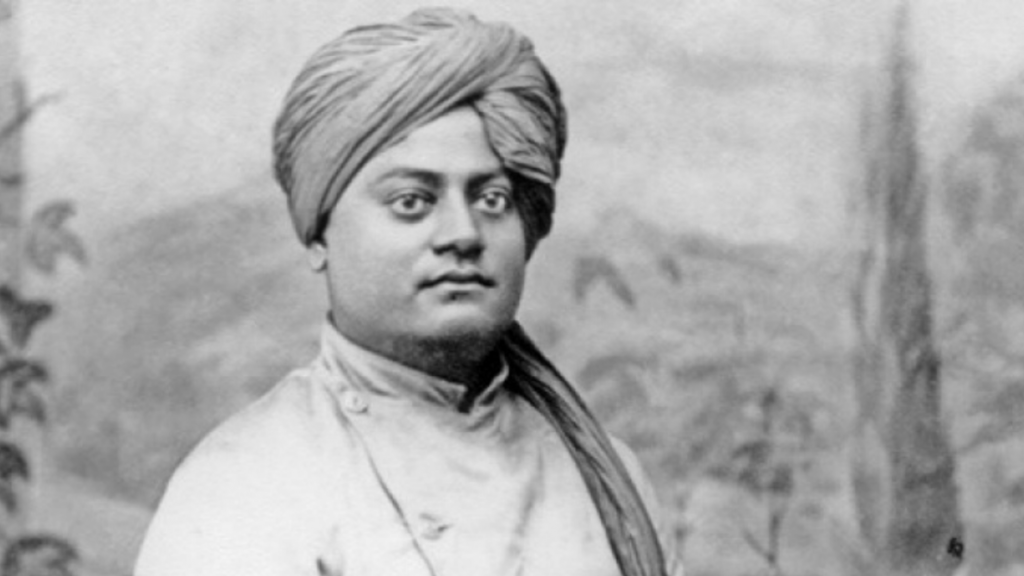
Swami Vivekananda, an revered Indian monk, is celebrated for introducing the profound Indian philosophies of Vedanta and Yoga to the Western world during the late 19th century. His powerful oratory and insightful wisdom captivated thousands at the 1893 Parliament of World Religions in Chicago. India continues to honor Vivekananda for his monumental contributions in bringing glory to the nation. In recognition of his legacy, his birthday on January 12th is observed annually as “National Youth Day” across the country. This article explores his remarkable life, significant works, timeless sayings, and how he tirelessly achieved his vision.
Exploring the Life and Teachings of Swami Vivekananda, a Visionary Leader
- Born Narendranath Datta on January 12, 1863, Swami Vivekananda hailed from a Bengal Kayastha family in Calcutta, then the capital of British India. He was one of nine siblings, and his father, Vishwanath Datta, served as an attorney in the Calcutta High Court.
- Narendranath was known for his restless and mischievous nature during childhood, often drawing complaints. Despite being born into a wealthy family with all his needs met, his playful antics led his mother to famously quip, “I prayed to Lord Shiva for a son, but he has sent one of his demons.”
- From an early age, Narendranath was an avid reader, immersing himself in spiritual beliefs and the tenets of Hinduism. He diligently studied sacred Hindu scriptures such as the Vedas, Upanishads, Bhagavad Gita, the Ramayana, Mahabharata, and the Puranas. This young intellectual also cultivated a strong practice of meditation, contributing to his exceptional intellect. He notably achieved the highest marks in the Presidency College’s entrance examination, being the only student to secure a first-class division. Beyond academics, he pursued Indian classical music and various sports.
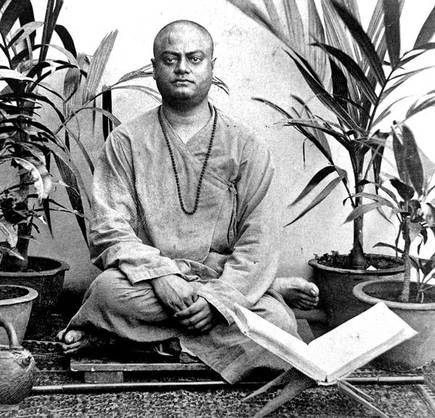
- William Hastie, the Principal of Christian College, Calcutta, famously remarked on Narendranath’s “prodigious memory.” Hastie stated, “I have been to many German Universities; but I haven’t seen any student with this kind of talent and intellectuality. He is a genius.” An illustrative anecdote recalls an argument Narendranath had with a Swedish national, where he cited Swedish history with such precision that the Swede, initially skeptical, ultimately conceded.
- In 1880, Narendranath became a part of Keshab Chandra Sen’s ‘Nava Vidhan’ movement, which advocated for the truth in all religions and the worship of the goddess as mother. He also joined the ‘Brahma Samaj’, embracing its tenet of a formless God. Through these associations, Naren first encountered Western esotericism, envisioning a new, unified spiritualism that blended Hinduism with Western culture.
- Subsequently, Narendranath embarked on a profound spiritual quest, asking everyone he encountered, “If anyone had come ‘face to face with God’?” Most responses failed to satisfy his deep longing. However, the words of Ramakrishna, an esteemed Indian Hindu Saint, resonated deeply: “Yes, I see Him as I see You, only in an infinitely intense sense.” From that moment, Narendranath revered Ramakrishna as his spiritual mentor, his Guru.
- By 1884, Vishwanath Datta’s dismissal plunged the family into financial hardship and poverty. Narendranath, deeply frustrated and depressed by his family’s plight, found solace primarily at Ramakrishna’s abode in Dakshineswar. As their circumstances worsened, his visits to Dakshineswar became more frequent. It was Ramakrishna who profoundly influenced Naren, shifting his belief from a formless God to the concept of a physical manifestation of the divine.
- Narendranath and other devoted disciples diligently cared for Ramakrishna after he contracted throat cancer. Following Ramakrishna’s passing in August 1886, Narendra established the Ramakrishna Math, a monastery for a core group of disciples who chose to continue their spiritual journey, while others pursued family lives. Within the monastery, Narendra and his followers committed to emulating their Guru’s life, dedicating hours daily to meditation and yoga. Despite facing immense financial difficulties to sustain themselves and the monastery, this period marked Narendranath’s transformation into Swami Vivekananda, a name derived from Sanskrit, signifying ‘the bliss of discerning wisdom.’
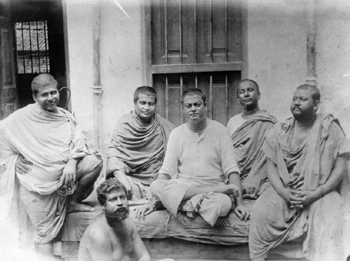
Swami Vivekananda’s Wanderings Across India
- Swami Vivekananda embarked on extensive travels across India, living as a wandering monk without fixed ties or abode. His minimal possessions included only a water pot, accompanied by a few disciples and his two cherished books: the Bhagavad Gita and The Imitation of Christ. For five years (1888-1893), he subsisted mainly on alms, delivering profound spiritual discourses to the populace. He witnessed and acknowledged the suffering and poverty of the people firsthand, living among them and engaging in discussions about diverse religions and cultures. His journey allowed him to meet scholars from various states, speaking different languages, thereby intimately familiarizing him with India’s rich and diversified religious and cultural tapestry.
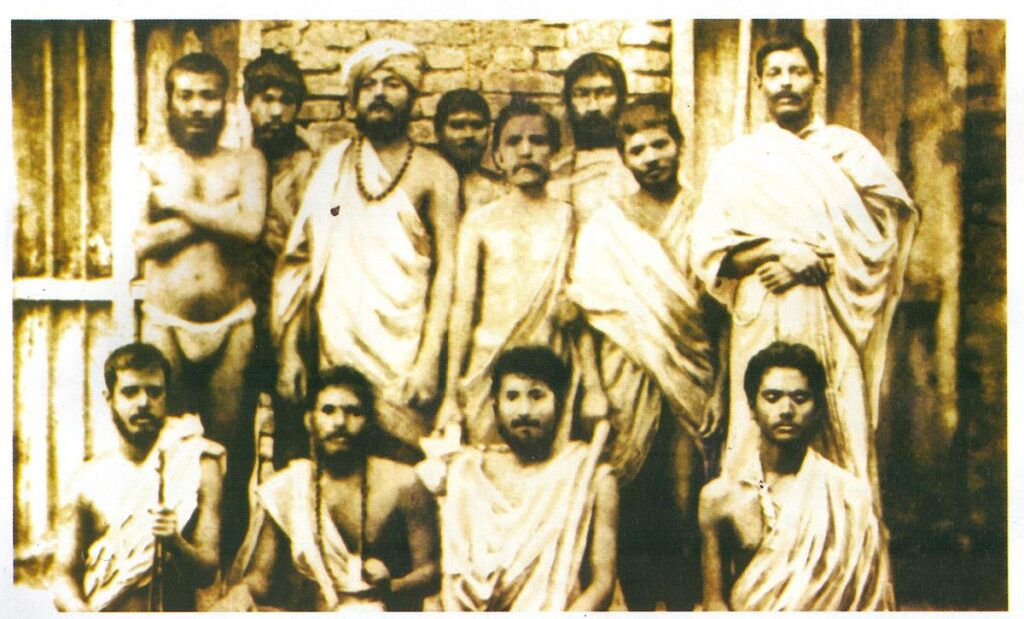
- From 1893 onward, Vivekananda seized the opportunity to travel internationally, visiting countries like Japan, China, Canada, and the United States. He delivered inspiring speeches, effectively broadening the understanding of Hinduism and Yoga worldwide. His decision to participate in the 1893 “Parliament of World’s Religions” conference in Chicago necessitated official accreditation from a recognized authority. For this, he reached out to Professor John Henry Wright of Harvard University, who had previously extended an invitation for a lecture, explaining his desire to represent India at the conference. With financial support from a Raja in Madurai, he journeyed to the US. This international forum became a pivotal platform for him to advance his ideals and fulfill his aspiration of bringing global recognition to Hinduism and India.
Swami Vivekananda at the Parliament of World’s Religions
- The Parliament of World’s Religions commenced on September 11, 1893, drawing prominent and influential religious representatives from across the globe. Swami Vivekananda captivated the entire audience with his very first words, commencing his address with, “Sisters and Brothers of America…” This opening line alone earned him a resounding two-minute ovation. Following a decorous silence, Vivekananda began his speech, quoting two profound passages from the “Shiva Mahimna Stotram”:
- “As the different streams having their sources in different places all mingle their water in the sea, so, O Lord, the different paths which men take, through different tendencies, various though they appear, crooked or straight, all lead to Thee!”
- “Whosoever comes to Me, through whatsoever form, I reach him; all men are struggling through paths that in the end lead to Me.”
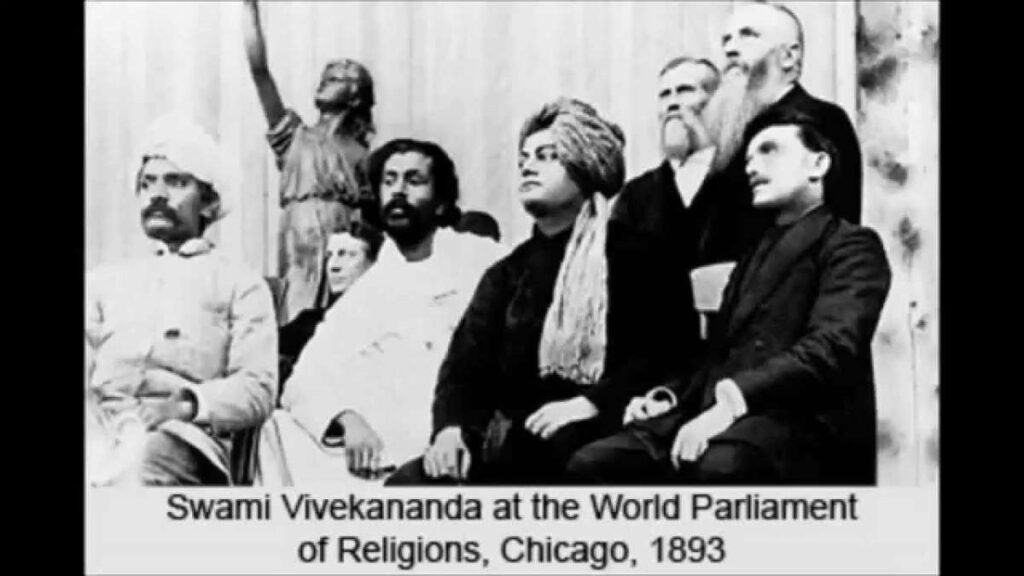
- Vivekananda’s speech was profoundly impactful and resonated deeply with the audience. His address became front-page news, earning widespread acclaim from both the American public and people in India. US newspapers lauded him with epithets such as ‘An orator by divine right,’ ‘cyclonic monk from India,’ ‘the most popular and influential man in the parliament,’ and ‘a great favorite at the parliament who will be applauded if he just cross.’ Notably, September 11th, the date of his historic speech, is now celebrated as “World’s Brotherhood Day.”
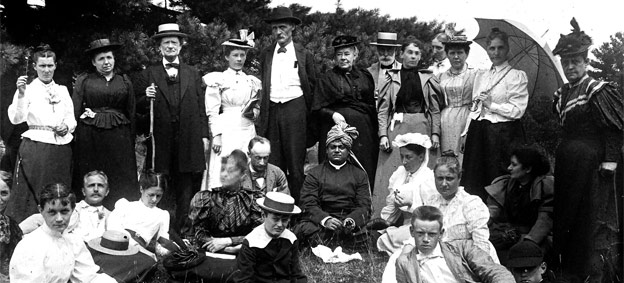
- Following his powerful speech, Vivekananda emerged as a globally renowned orator, leading to numerous invitations for public addresses. He remained in the US for two years until 1894, establishing the Vedanta Society in New York in 1894. During his second visit in 1899, he founded similar societies in California and San Francisco. Throughout these periods, he conducted private classes on Vedanta and Yoga, in addition to his public lectures.
- Vivekananda extended his travels to the UK and other European nations, propagating the principles of Hinduism and Vedanta, and encouraging the practice of Yoga wherever he went. His endeavors were supported by individuals who resonated with his teachings. His unique approach to Hindu philosophy drew heavily from Patanjali’s Yoga Sutras, which he interpreted to introduce his ‘four yogas’ model. This was presented in his influential 1896 book, ‘Raja Yoga,’ which achieved immediate success in Western countries. Additionally, in 1889, he translated the first six chapters of ‘The Imitation of Christ.’
- Swami Vivekananda returned to India on January 15, 1897, landing in Colombo, British Ceylon. Throughout his journey from Colombo to Calcutta, he delivered numerous lectures in various cities. Crowds often intercepted his train or other modes of transport, eagerly requesting him to speak. Upon his arrival in Calcutta on May 1st, he founded the Ramakrishna Mission, a prominent trust dedicated to social service.
Swami Vivekananda’s Influence on Founding the Indian Institute of Science (IISc)
- During his journey to Chicago, Vivekananda encountered Jamshetji Tata, the visionary founder of the Tata Group in India, who was traveling on the same ship. Tata shared that his purpose for visiting Germany was to test Indian soil for iron ore deposits. Vivekananda advised him to establish a research institute within India instead, emphasizing that this would provide long-term benefits and self-sufficiency for the Tata Group. Influenced by Vivekananda’s foresight, Jamshetji Tata founded a research institute in Bangalore, now globally recognized as the “Indian Institute of Science (IISc).”
- Swami Vivekananda envisioned a spiritual synthesis combining Vedanta with Western esotericism, which he termed “Neo-Vedanta.” Renowned for his voracious reading, he once visited a Chicago library, consistently borrowing a substantial book daily and returning it the very next day. Puzzled by this unusual habit, the library custodian inquired, to which Vivekananda simply stated he completed each book within a single day. When further questioned about specific details from the book, Vivekananda precisely recounted them, leaving the custodian utterly astonished. He remained a brahmacharya (celibate) throughout his life, attributing his extraordinary memory to this practice.
- Swami Vivekananda had a premonition that he would not live past the age of forty, a prophecy that came true when he passed away on July 4, 1902, at 39 years old. Officially, his demise was attributed to a rupture of a blood vessel in his brain, though his disciples believe he achieved mahasamadhi. His cremation took place on the banks of the River Ganga in Belur, directly opposite to the resting place of his Guru, Ramakrishna.
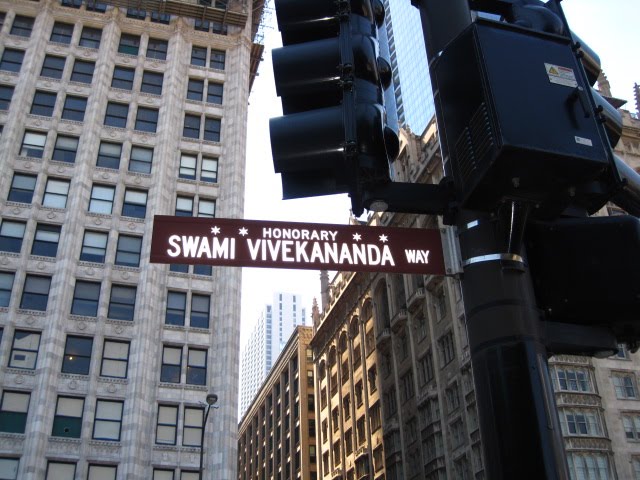
- Swami Vivekananda remains a highly revered figure in India and an esteemed monk, honored for his tireless efforts in bringing dignity and global recognition to the nation and its rich culture.
Prominent Leaders on Swami Vivekananda’s Legacy
- Mahatma Gandhi: “One who maintained this Hindu religion in a state of splendor by cutting down the dead wood of tradition.”
- Chakravarti Rajagopalachari: “Vivekananda saved Hinduism, saved India.” (First Governor-General of Independent India)
- Subhash Chandra Bose: “The maker of modern India.”
- Rabindranath Tagore: “If you want to know India, study Vivekananda. In him everything is positive and nothing negative.”
- Swami Vivekananda bequeathed numerous profound sayings, especially inspiring youth towards success. His powerful quotes continue to be widely celebrated and cherished.
Inspiring Quotes from Swami Vivekananda
- “Arise, awake, and stop not until the goal is achieved.”
- “Talk to yourself once a day, otherwise, you may miss meeting an excellent person in this world.”
- “If I love myself despite my infinite faults, how can I hate anyone at the glimpse of a few faults?”
- “All the powers in the universe are already ours. It is we who have put our hands before our eyes and cry that it is dark.”
- “Take risks in your life. If you win, you can lead; if you lose, you can guide.”
- “Be a hero. Always say, I have no fear.”
- “The world is the great gymnasium where we come to make ourselves strong.”
- “Do not forget those who are helping you. Do not hate those who are loving you. Do not cheat those who are believing in you.”
- “We are what our thoughts have made us; so take care of what you think. Words are secondary. Thoughts live; they travel far.”
- “Learn everything that is good from others, but bring it in and absorb it in your own way; do not simply become others.”
For more inspiring quotes from Swami Vivekananda, click here!
Join our community by subscribing to our Weekly Newsletter to stay updated on the latest AI updates and technologies, including tips and how-to guides. Also, follow us on Instagram (@inner_detail) for more updates in your feed.
For more interesting informational, technology, and innovation content, continue reading The Inner Detail.