
While many recognize Larry Page and Sergey Brin as Google’s founders, the true origins of Google’s journey, sparked by Page’s innovative vision, are often overlooked. This initial spark ignited a blaze of determination and sacrifice, meticulously managed by Larry Page, ultimately transforming his idea into a trillion-dollar enterprise and establishing him as one of the world’s wealthiest individuals. This article explores how Larry Page steered Google from concept to global tech powerhouse.
The Journey: Larry Page and the Birth of Google
- Larry Page, Google’s visionary co-founder, was born on March 26, 1973, in Lansing, Michigan, USA. His father, Carl Victor Page Sr., held a PhD in Computer Science from the University of Michigan, and his mother, Gloria, was a computer programming instructor at Lyman Briggs College.
- Growing up surrounded by computers, cutting-edge technology, and scientific literature, Larry developed an early passion for innovation. He immersed himself in tech and science magazines, and at the age of six, he began experimenting with an early-generation personal computer left by his parents, sparking his lifelong interest.
- Page advanced his education, earning a Bachelor of Science in Computer Engineering from the University of Michigan before pursuing a Master of Science in Computer Science at Stanford University.
- During his time at the University of Michigan, Larry Page displayed his inventive spirit, conceptualizing improvements for inkjet printers and cartridges that aimed to minimize ink consumption. He even designed the necessary electronics and mechanics to bring his ideas to life. Furthermore, he contributed to the university’s Solar Car team and once envisioned a business model for a software-based music synthesizer company.
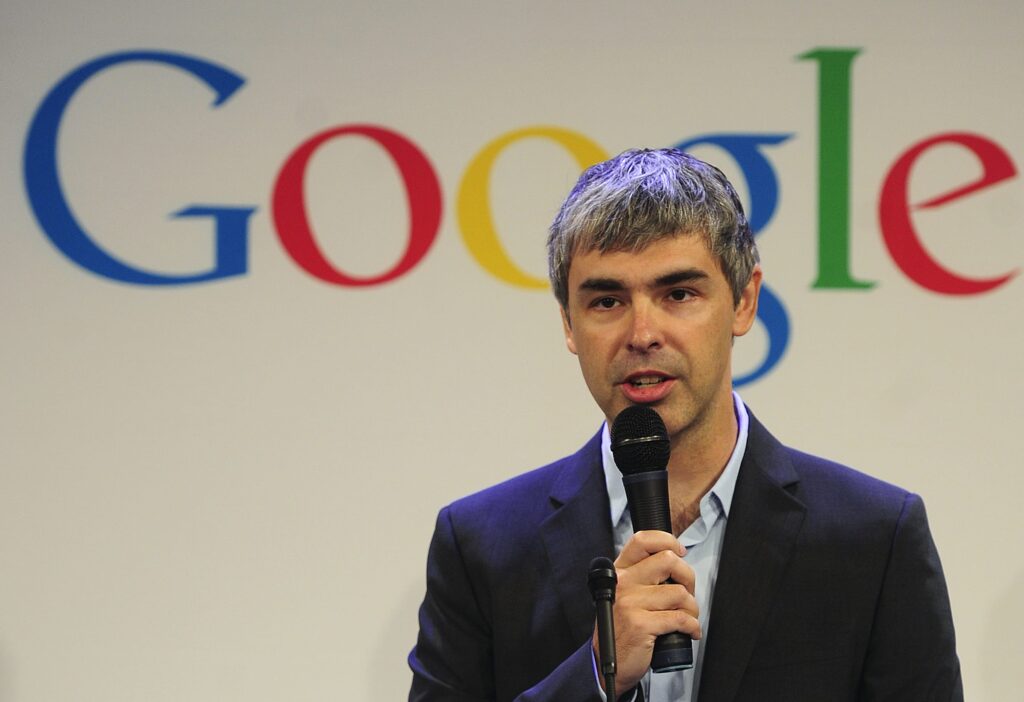
- While at Stanford University, Larry Page sought a dissertation topic that aligned with the burgeoning World Wide Web. He aimed to decipher the web’s intricate properties and link structure, viewing it as a vast graph. Through this exploration, he identified a critical challenge: efficiently determining which web pages linked to a specific page, recognizing the immense value of such backlinks for understanding page relevance and authority.
- To address this complex problem, Page conceived a system to interlink web pages and integrate them into a universal search engine, vastly improving information accessibility. It was during this period that Sergey Brin, who would later become Google’s co-founder, was also seeking a compelling project, given his diverse intellectual pursuits. Brin found Page’s innovative concept both thrilling and demanding, leading to their collaboration. Together, they published their groundbreaking thesis, “The Anatomy of a Large Scale Hypertextual Web Search Engine,” which rapidly became one of the most widely downloaded scientific documents on the internet.
Larry Page’s early notes offer a glimpse into the foundational technology behind their ambitious project, BackRub, the precursor to Google. He famously stated:
“BackRub is written in Java and Python and runs on several Sun Ultras and Intel Pentiums running Linux. The primary database is kept on a Sun Ultra series II with 28GB of disk. Scott Hassan and Alan Steremberg have provided a great deal of very talented implementation help. Sergey Brin has also been very involved and deserves many thanks.” — Larry Page
- This ambitious undertaking by Page and Brin was initially dubbed ‘BackRub’. The core search engine concept evolved into an innovative algorithm that effectively interlinked web pages, forming the foundation of what would later become “PageRank” – the cornerstone algorithm for Google Search.
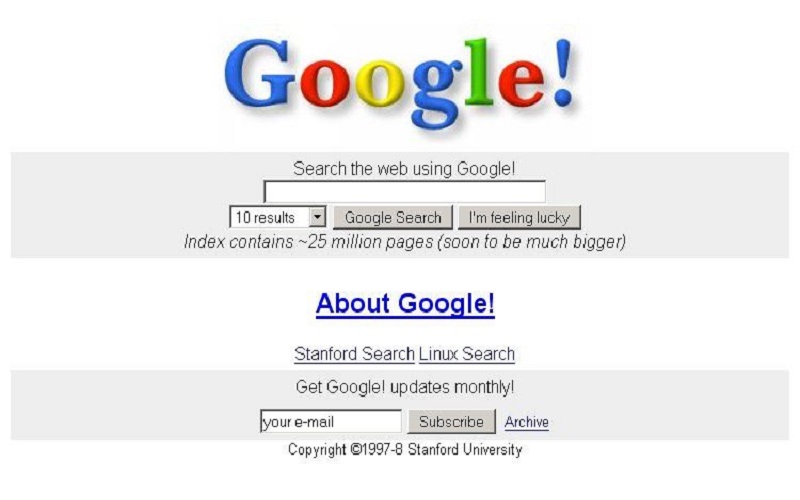
- Their early work on this project was hands-on, with Page’s dormitory room serving as a development hub and Brin’s dorm room transforming into their primary office and programming center. They meticulously honed their HTML skills to create a user-friendly search interface, initially for internal Stanford users. By August 1996, this search page gained broader accessibility, marking the public release of the very first version of Google.
“The first step may seem a formidable upstream; But never forget that the downstream would be in superyacht!”
- By 1997, BackRub had significantly mapped the World Wide Web, cataloging 75.2306 million HTML URLs and processing 207.022 gigabytes of data. The project’s momentum surged, with BackRub handling 10,000 searches daily by mid-1998, motivating Page and Brin to scale their ambitions further.
- The escalating user demand necessitated more robust server infrastructure. To meet this need, the duo diligently sought funding and eventually rented a modest garage in Menlo Park. A pivotal moment arrived when a co-founder of Sun Microsystems generously provided a $100,000 check. Page humorously recounted their dilemma, stating they “had nowhere to deposit the prodigious money for two weeks.” Soon after, the pair formally incorporated their company as ‘Google’, deriving its name from “googol,” a mathematical term for ‘one followed by one hundred zeroes,’ symbolically representing the immense scale of the internet’s interconnected links. With its official birth, Larry Page assumed the role of CEO, and Sergey Brin became the President of Google.
- Google experienced rapid growth, indexing an astounding 1 billion internet URLs by 2000. Page candidly admitted to frequent, intense disagreements with Brin during this period, attributing them to the immense workload. However, he consistently expressed gratitude for Brin’s unwavering involvement and amicable partnership.
- Larry Page held strong convictions about organizational structure, particularly his frustration with non-technical project managers overseeing engineers. This stance often led to friction with his managers and directors, yet he relentlessly pushed engineers to innovate and resolve performance issues within Google’s search capabilities.
“Leadership is not about self-working; Its about making others to work effectively for a self-motive”
- In March 2001, facing pressure following a $50 million investment from prominent venture capital firms like Kleiner Perkins Caufield & Byers and Sequoia Capital, Larry Page agreed to appoint Eric Schmidt as Google’s new CEO. Under Schmidt’s leadership, Google successfully launched its Initial Public Offering (IPO) in August 2004, an event that propelled Page into billionaire status by his early thirties.
- Page’s strategic vision continued in 2005 when he passionately championed the acquisition of Android for $50 million. He dedicated substantial time collaborating with Android CEO and co-founder Andy Rubin. This foresight proved critical, culminating in the 2008 launch of the G1 mobile phone by T-Mobile, the first device to integrate the Android operating system.
- Larry Page once again took the helm as Google’s CEO in April 2011. Prior to this, as head of Product Development, he had already overseen numerous key acquisitions for Google, including YouTube, AdMob, and DoubleClick, significantly expanding the company’s portfolio.
- Page maintained a deep commitment to the design aesthetics of both Google and Android and also led significant acquisitions. Notably, Motorola became Google’s most expensive acquisition at $12.5 billion, although it was later sold for $2.9 billion. For Page, this strategic move was primarily aimed at safeguarding Android’s patents against potential legal challenges from Apple Inc. and Microsoft.
- To better manage Google’s growing empire of diverse ventures, Page orchestrated the formation of Alphabet Inc., a new parent holding company. In 2015, he appointed Sundar Pichai as the new CEO of Google, while assuming the role of CEO for Alphabet Inc. By December 2019, Page stepped down from his Alphabet CEO position, with Sundar Pichai taking over that responsibility as well.
- Alphabet and Google collectively demonstrated immense growth through acquisition, having bought over 200 companies by 2016. Recent significant acquisitions include Fitbit for $2.1 billion, further underscoring Google’s expansive and influential reach across various technological sectors.
- A profound music enthusiast, Page, a skilled flute and saxophone player, credited music for influencing his relentless pursuit of speed and efficiency in computing. He famously remarked, “Music led to the high-speed legacy of Google to me, I think,” suggesting it helped him manage impatience and an obsession with computational velocity. He had even taken saxophone courses during his high school years.
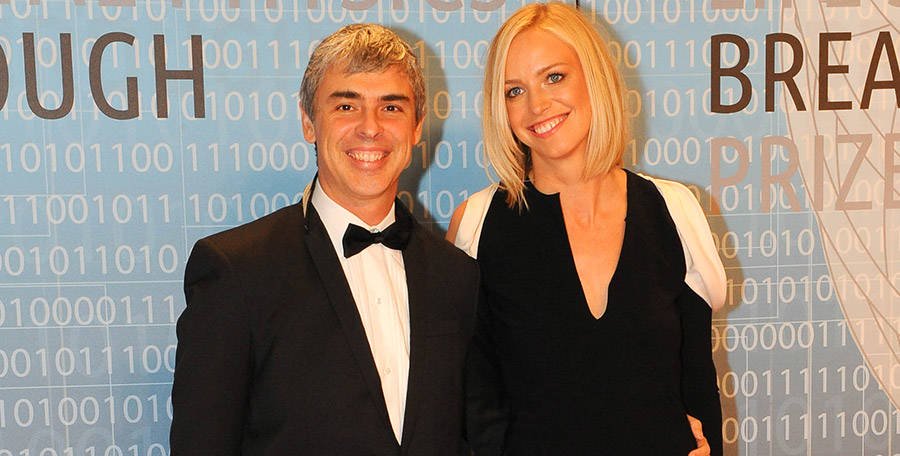
- Larry Page married Lucinda Southworth in 2007, and together they have two children, born in 2009 and 2011.
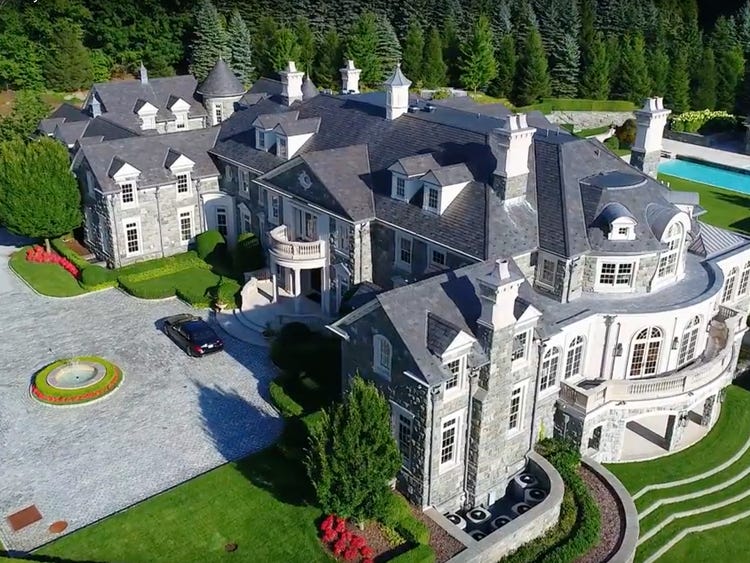
- Beyond his technological pursuits, Larry Page exhibits a deep appreciation for nature and sustainable living. He famously acquired properties surrounding his 9,000-square-foot Palo Alto residence, valued at $7.95 million, and subsequently demolished existing structures to create space for an expansive ‘Ecohouse’ designed with environmental principles in mind. Demonstrating his affinity for grand ventures, Page also invested $45 million in a 49-meter superyacht named ‘Senses’.
- Larry Page was diagnosed with an autoimmune vocal cord disease, ‘Hashimoto’s thyroiditis,’ which led to the paralysis of his vocal cords. During his treatment, he made a substantial $20 million donation to a research program dedicated to vocal-cord nerve function, demonstrating his commitment to medical advancements.
- Throughout his distinguished career, Larry Page has received numerous accolades, including recognition as the “Most Influential Businessperson” and the prestigious Marconi Foundation Prize. His visionary leadership, the immense wealth generated, and the groundbreaking acquisitions made by Google and Alphabet Inc. stand as testament to his profound impact on the technology world and beyond.
Join our community by subscribing to our Weekly Newsletter to stay updated on the latest AI updates and technologies, including the tips and how-to guides. Also, follow us on Instagram (@inner_detail) for more updates in your feed.
For more such interesting informational, technology and innovation stuffs, keep reading The Inner Detail.
