
In today’s rapidly advancing technological landscape, the construction industry is undergoing a significant transformation, moving beyond traditional methods to embrace smart building solutions. Just as home appliances have become intelligent, researchers and scientists are now focused on elevating building design and functionality to an unprecedented level. The goal is to imbue building components with remarkable self-healing and self-cooling capabilities.
This innovative approach promises to redefine our living and working spaces, potentially transforming how we think about energy consumption and building maintenance.
Smart Buildings of Tomorrow: Redefining Construction
If your perception of future buildings is limited to conventional bricks and concrete, it’s time to expand your horizons. Architectural marvels worldwide, like Dubai’s Burj Khalifa, soaring to an impressive 2,723 feet, demonstrate humanity’s remarkable ability to overcome structural complexities and perceived impossibilities in construction. Incredible structures continue to emerge globally, pushing the boundaries of engineering.
Beyond impressive exteriors, the internal components of buildings are also undergoing significant characteristic improvements. This article explores groundbreaking advancements, including materials capable of self-healing cracks, natural self-cooling mechanisms, and, critically, technologies designed to trap CO2 within building structures. These innovations offer vital solutions to climate change, especially considering that cement production, a key concrete ingredient, contributed to 7% of global carbon emissions in 2018.
Self-Healing Concrete: Extending Building Lifespans
Researchers at the University of Colorado Boulder are actively developing a groundbreaking self-healing living concrete. This innovative material is designed to automatically repair its own cracks and even absorb harmful toxins from the atmosphere, contributing to cleaner air.

Scientists create this living concrete using a combination of sand, gel, and bacteria. Specifically, photosynthetic microbial bacteria engage in biomineralization with sand-gelatin scaffolds, leading to the formation of these advanced Living Building Materials (LBM).
Studies indicate that this new building material not only possesses structural load-bearing capabilities but is also capable of self-healing, offering a more environmentally friendly alternative to traditional concrete, which stands as the second most-consumed material globally after water.
In their experiments, the research team utilized cyanobacteria—a type of green bacteria found in water that can produce its own food. These cyanobacteria absorb carbon dioxide from the air and produce calcium carbonate, a primary component of cement.
The self-healing properties, driven by microbial viability within the concrete, are particularly effective in humid environments. Experimental results demonstrated successful self-healing over a 30-day period, with microbes facilitating the process across three generations originating from a single parent generation.
Naturally Cool Buildings: Biomimicry in Architecture
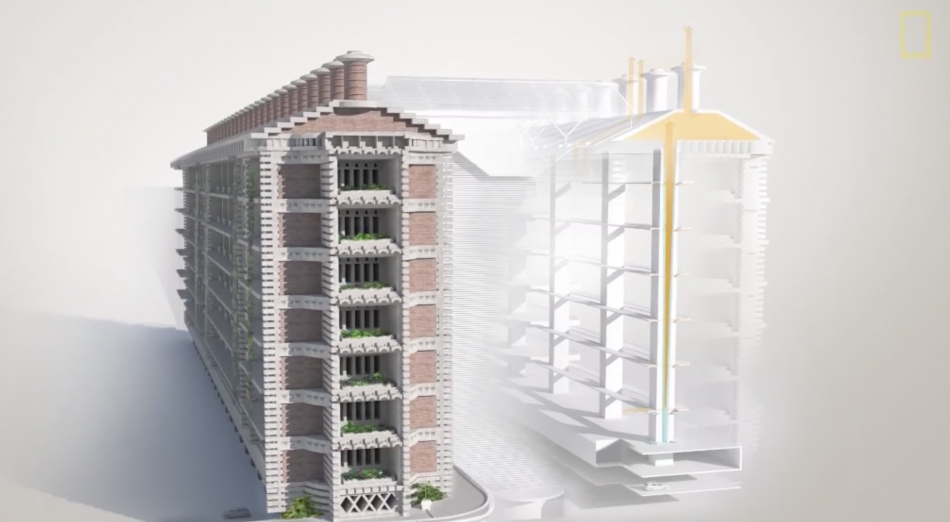
The innovative concept of naturally cooling buildings draws inspiration from an unlikely source: termite mounds. These towering dirt structures, which can reach over 30 feet high, function as remarkable natural air-conditioning systems. Zimbabwean architect Mick Pearce discovered this while observing termite mounds on a golf course, noting their intricate patterns of tiny holes. He mused, “I thought, it must be the optimum shape and form for using the natural forces of the climate, and this is where we’ll save a lot of energy.”
Termites’ ingenious architectural design, which Pearce considers a metaphorical model for sustainable building, incorporates a system of chimneys at the top of the mound. These chimneys facilitate the circulation of hot air upwards, while cooler air remains in the lower sections, providing a stable environment for the queen.
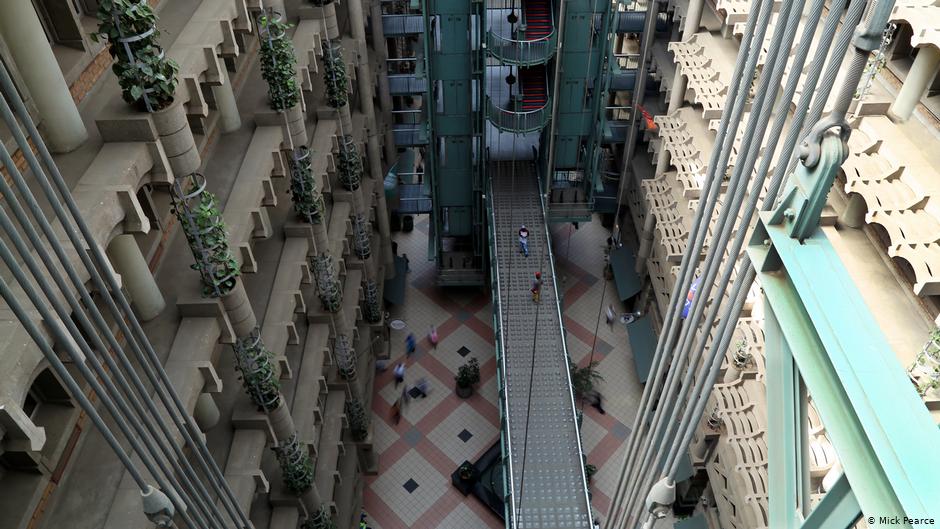
Pearce translated this bio-inspired principle to his engineering team, successfully integrating the termite mound’s design into a new building. The resulting structure features two towers connected by a central atrium. At the base of each tower, strategically placed fans propel cool, ground-level air upwards through a network of ducts. Simultaneously, this system draws warm air from each floor upwards and out through the building’s chimneys. Pearce has since applied similar termite-inspired chimney designs to projects like an office building in Melbourne and a dining hall in Shenzhen, China, showcasing the practical applications of biomimicry in modern architecture.
CO2-Storing Concrete: A Sustainable Solution for Climate Change
The production of concrete significantly contributes to global carbon emissions, accounting for 7% of total emissions in 2018. A substantial 80% of concrete’s carbon footprint stems directly from cement, a critical aggregate in its composition.
To mitigate this environmental impact, researchers and innovative companies are actively exploring methods to integrate captured CO2 directly into concrete as an ingredient. This process effectively locks away carbon dioxide, preventing its release into the atmosphere. CO2 can be incorporated either as aggregates or injected during the mixing phase. Additionally, carbonation curing, or CO2 curing, can be applied after the concrete has been cast, further enhancing carbon capture.
Qatar’s Rotating Floating Hotel: Self-Generating Electricity
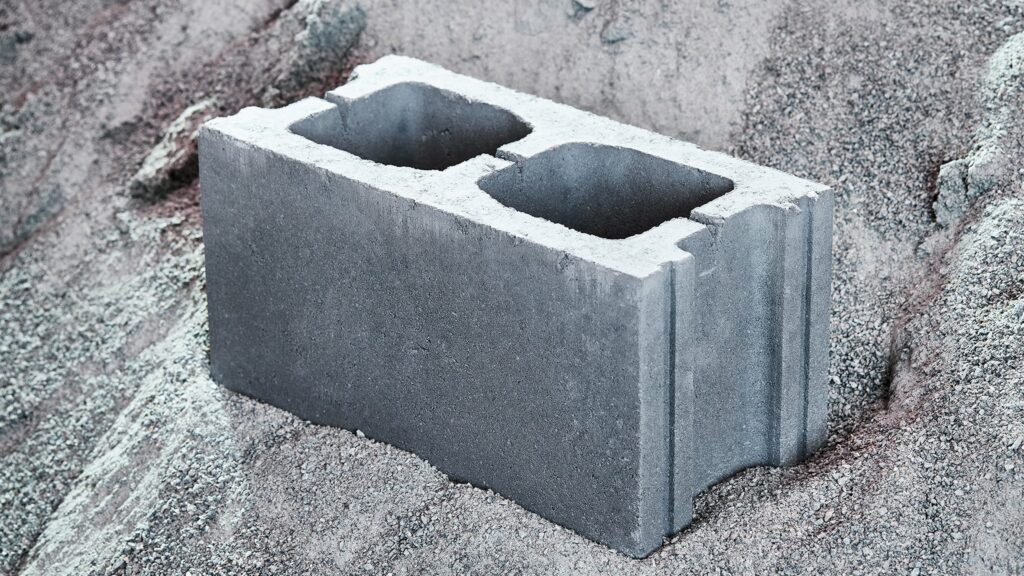
These transformative processes convert gaseous CO2 into stable mineral form, producing solid carbonates. This not only sequesters carbon but can also enhance the strength of concrete. Stronger concrete means that less cement may be required in structures, which in turn reduces associated emissions. Leading companies like CarbonCure and Solidia are at the forefront, developing and implementing technologies that apply these CO2 utilization processes to both poured concrete at construction sites and precast concrete products, including cinder blocks and various other building materials.
Latest Posts!
- Top 9 Open-Source AI Models: Comparison & Rankings
- AI Model Showdown: Gemini vs. ChatGPT vs. Perplexity & More – A Full Comparison
- Apple Employee Salaries 2025: What Are Apple Employees Earning?
- Transform Your TV into a Virtual Computer with JioPC: How-To Guide
- OpenArt.AI: Create AI Videos Instantly with One Click
Beyond Ordinary: The Evolution of Future Buildings
Join our community by subscribing to our Weekly Newsletter to stay updated on the latest AI updates and technologies, including the tips and how-to guides. (Also, follow us on Instagram (@inner_detail) for more updates in your feed).
(For more such interesting informational, technology and innovation stuffs, keep reading The Inner Detail).
