
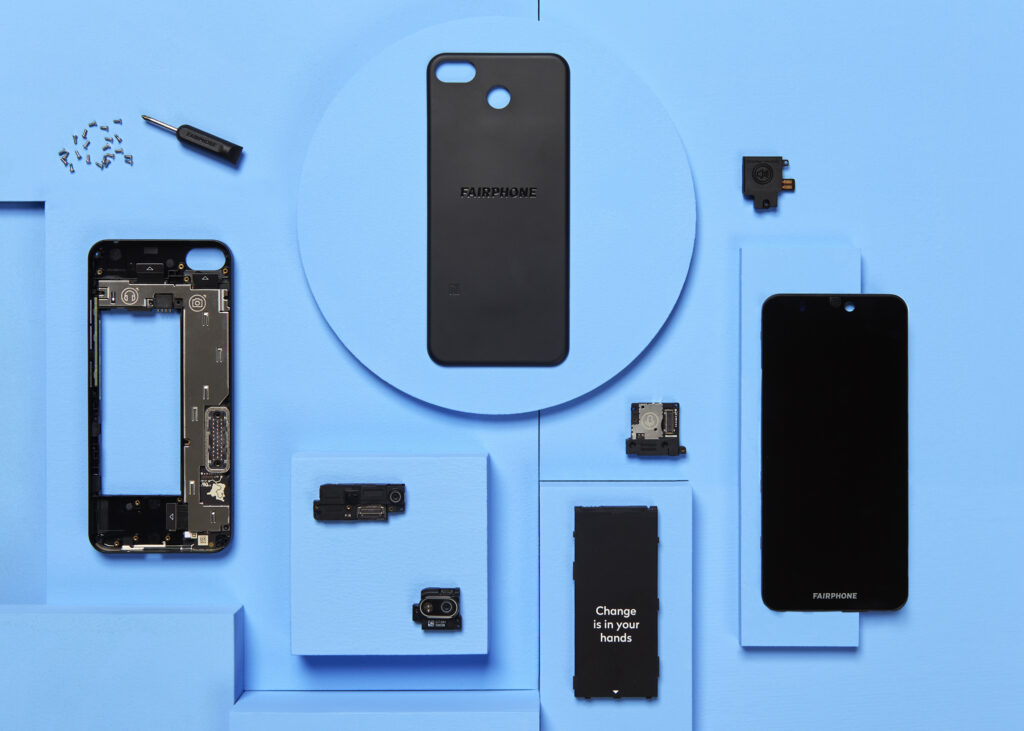
Smartphones have revolutionized our daily lives, proving indispensable for everything from virtual interviews on Zoom to simplifying daily tasks and even soothing a crying child. Their widespread appeal is evident in the 1.6 billion units sold annually, with many consumers consistently seeking the latest models. However, one company offers a distinct approach for those eager for upgrades: the ability to self-upgrade specific components with the newest specifications. For example, if your phone currently features a 16MP rear camera and you desire a 48MP camera, you can simply purchase and install that camera module yourself for enhanced capture quality.
Moreover, if any component becomes damaged, you have the flexibility to replace it yourself, promoting greater device longevity!
Fairphone: The Sustainable, Modular Smartphone Revolution
Based in Amsterdam, Fairphone is pioneering a significant shift in mobile manufacturing. Similar to Google’s concept with Project Ara, Fairphone empowers users to both repair and upgrade their own devices. This commitment to user empowerment is even symbolized by the inclusion of a tiny screwdriver within the phone’s packaging.
Evolving from an awareness campaign into a full-fledged smartphone company, Fairphone prioritizes product longevity through its innovative modular design. Yet, their commitment extends beyond just repairability. A remarkable 40% of the phone’s construction utilizes recycled plastic waste. Beyond enabling self-repairs, Fairphone is dedicated to sourcing materials ethically whenever possible and ensuring fair working conditions for those involved in manufacturing. This dedication earned the firm’s CEO, Bas van Abel, the prestigious ‘German Environmental Award’ in 2016.
Empowering Change: Fairphone’s Ethical Approach
The company consistently emphasizes its fully ethical and environmentally responsible production processes. For instance, Fairphone utilizes gold sourced from Fairtrade certified mines and tin from conflict-free regions. Since its inception in 2013, the company had released only four distinct smartphone models as of February 2021, underscoring their focus on sustainability over rapid iteration.
Fairphone Specifications: Models and Features
The Fairphone lineup features a 5.65-inch display and includes two primary models: the Fairphone 3 and its successor, the Fairphone 3+. Both models operate on Android 10, come equipped with 4GB of RAM, 64GB of internal storage, and a 3040mAh battery. Their key distinction lies in the camera specifications, with the newer Fairphone 3+ boasting an upgraded 48MP rear camera and a 16MP front camera.
Powering these devices is Qualcomm’s Snapdragon 632, a mid-range processor from the previous year. Fairphone is actively working towards allowing users to swap out processors in the future, further enhancing the phone’s upgradability.
/cdn.vox-cdn.com/uploads/chorus_image/image/67302434/image0.0.png)
The Fairphone provides a nostalgic user experience, reminiscent of phones from the 90s and early 2000s, where the back cover and battery are easily removable for SIM card insertion, repairs, or modular upgrades. However, this design choice also contributes to its somewhat old-fashioned and bulky aesthetic.
Read this: 10 Best Things you can do with your Smartphones
Fairphone’s Repairable Modules and Environmental Impact
One of the Fairphone’s most compelling features is its truly modular architecture, which facilitates not only software updates but also significant hardware upgrades. By offering readily available spare parts, the company actively encourages users to retain their smartphones for longer, directly contributing to a reduction in global carbon footprints and electronic waste.
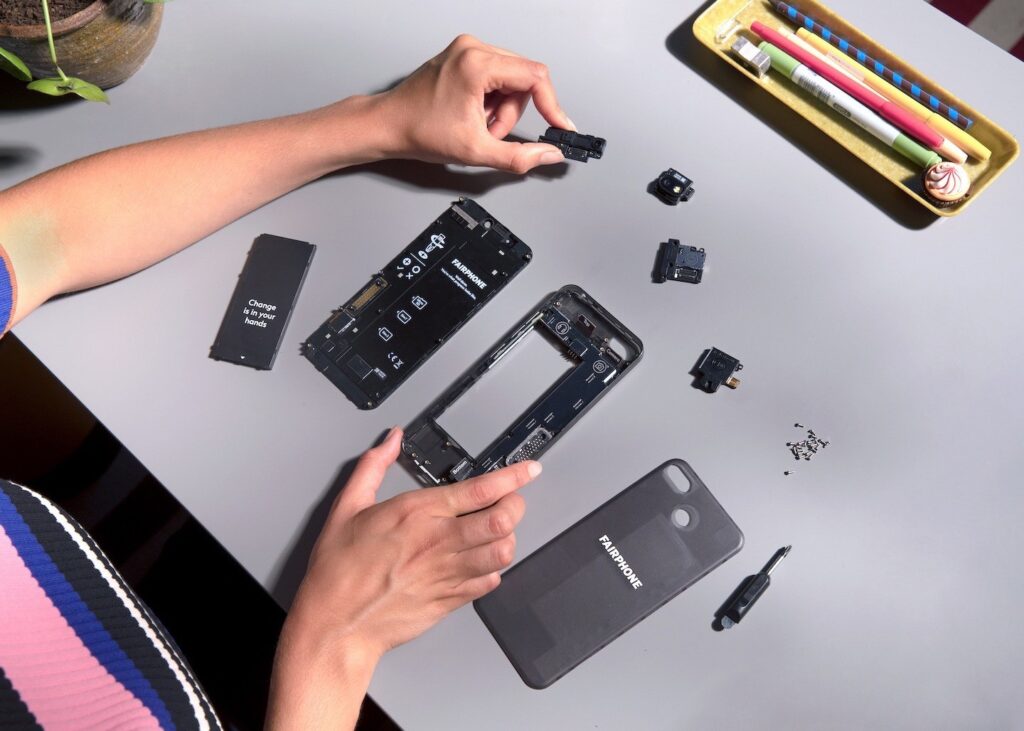
While individual replacement modules are not inexpensive, their self-installable nature presents a justifiable trade-off, preventing further damage during repairs. For example, a replacement camera module costs ₹4440, the speaker module is ₹1770, and the bottom module (with the USB-C socket) also costs ₹1770. The top module, encompassing the selfie camera, headphone socket, and other components, is priced at ₹2660. More frequently replaced parts include the screen at ₹7991, the battery at ₹2660, and the back cover at ₹2216.
This unparalleled modularity has earned Fairphone a perfect 100% score from iFixit, recognizing it as the most modular smartphone ever created.
The Fairphone Vision: Reducing E-Waste and Promoting Sustainability
Fairphone’s overarching mission goes beyond just selling phones; it’s a dedicated effort to combat the estimated 50 million tons of electronic waste discarded globally each year. By championing a comprehensive recycling process, the company has successfully facilitated the recycling of 600 million phones to date, saving enough energy to power an astounding 194,000 households.
Combating E-Waste: Fairphone’s Impact on Smartphone Recycling
Priced at $543 (₹39,980), the Fairphone is comparable in cost to devices like the Google Pixel 3A and OnePlus 7. While some users have noted better overall performance from Pixel and OnePlus models compared to the modular Fairphone, its unique selling propositions—namely, its commitment to eco-friendliness, user maneuverability, and extended longevity—continue to attract consumers. Despite the global pandemic, Fairphone successfully sold 17,000 units worldwide last year, demonstrating a growing market for sustainable technology.
The Growing Demand for Ethical and Harmless Products
Watch the pictures captured in Fairphone 3+, depicting its cam quality!



To explore more content related to this topic, click on the tag below: #be_updated
References:
- https://www.theguardian.com/technology/2019/sep/18/fairphone-3-review-ethical-phone
- https://www.theverge.com/21534276/fairphone-3-plus-review
- https://www.fairphone.com/en/
Join our community by subscribing to our Weekly Newsletter to stay updated on the latest AI updates and technologies, including the tips and how-to guides. (Also, follow us on Instagram (@inner_detail) for more updates in your feed).
(For more such interesting informational, technology and innovation stuffs, keep reading The Inner Detail).

Pingback: Your Smartphone is more powerful than the Perseverance Rover that touched Mars recently – The Inner Detail