
Often, it is said that “Nature is the best teacher,” encompassing everything from plants and animals to birds and their habitats. The technological world has drawn inspiration from natural phenomena for centuries, a trend that continues to profoundly influence modern innovation. The intricate behaviors of animals and birds have consistently inspired scientists and innovators, leading to remarkable inventions and discoveries. Many fascinating technologies exist today that are directly inspired by the animal kingdom. This field, where inventions and actions imitate life and nature, is known in science and engineering as “biomimicry.” Below, we explore ten groundbreaking technologies and innovations that emerged from observing animals and birds.
Humpback Whales: Inspiring Advanced Wind Turbine Blades
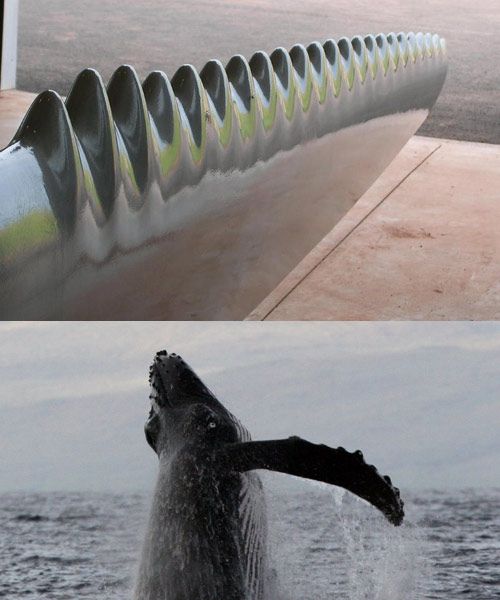
Despite being among the largest animals globally, humpback whales are exceptionally agile swimmers. This remarkable aquatic prowess is largely attributed to their uniquely shaped flippers. The leading edge of their fins features distinctive warty ridges, known as tubercles, which significantly contribute to their swimming speed and incredible ability to change direction swiftly.
Noting this remarkable hydrodynamic design, scientist Frank Fish conceptualized applying this principle to wind turbine blades. This biomimetic approach led to significant advancements, increasing blade speed and improving their maneuverability in response to wind direction, ultimately generating more power.
Further developing this innovation, the company WhalePower now manufactures blades directly inspired by the humpback whale’s fins. They report that this design has enhanced efficiency and safety across various applications, including airplanes and industrial fans.
Gecko-Inspired Spiderman Gloves for Vertical Climbing
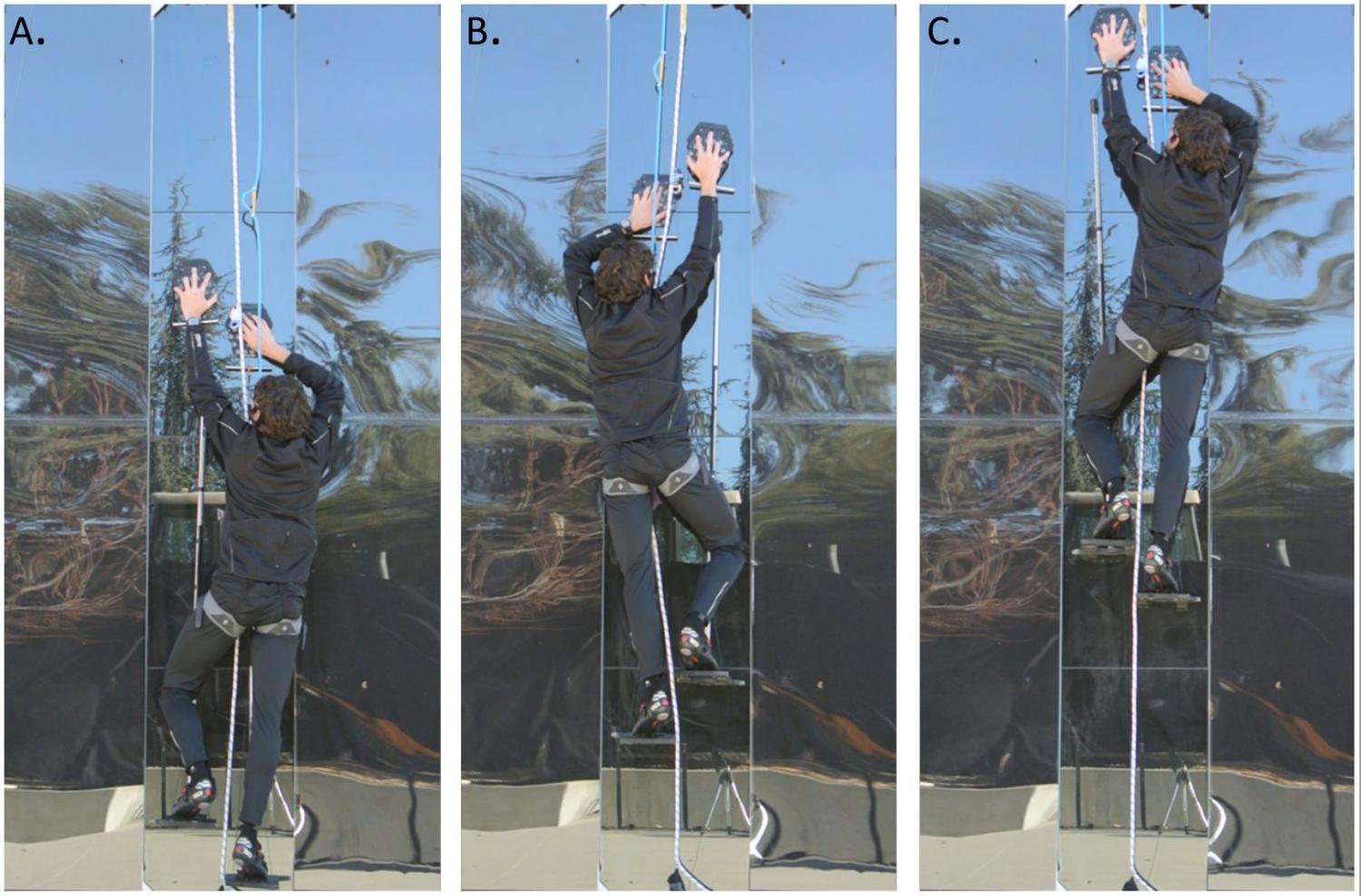
Geckos, a unique type of lizard, possess remarkable foot adaptations that allow them to cling to surfaces, defying gravity much like the fictional character Spiderman. Researchers investigating this incredible capability discovered that geckos have thousands of microscopic, elastic hairs called ‘setae,’ enabling their powerful adhesion.
Inspired by this natural sticking mechanism, researchers at Stanford University developed “Gecko Gloves.” These wearable silicone gloves, measuring 140 sq.cm on each hand, successfully allowed a 70kg person to scale a 12-foot vertical glass wall. Potential applications for this innovative technology include assisting window cleaners, enabling astronauts to secure objects, and providing military personnel with enhanced wall-climbing capabilities.
Gecko Eyes: Advancements in Contact and Camera Lenses
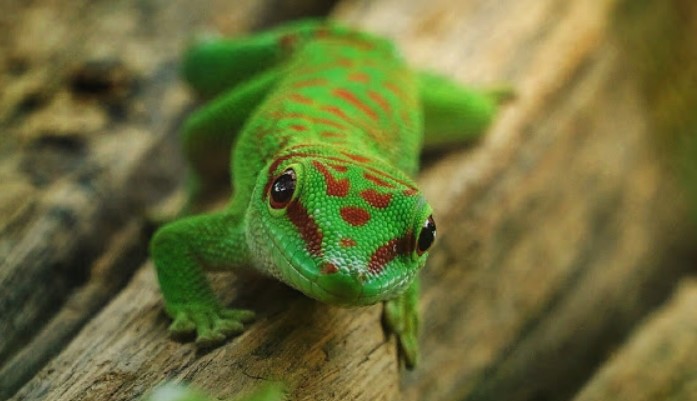
The eyes of a gecko have also provided significant inspiration for scientific innovation. Their vision is an astonishing 350 times more sensitive than that of humans, making them one of the few animals capable of perceiving color in low-light conditions. Researchers at Lund University in Sweden discovered that this superior night vision stems from a high density of cone cells in the gecko’s retina, allowing them to detect a broader range of specific light wavelengths. This understanding of gecko eyes is now guiding the development of more effective cameras and potentially advanced multifocal contact lenses.
Mosquitoes: Designing Painless Surgical Needles
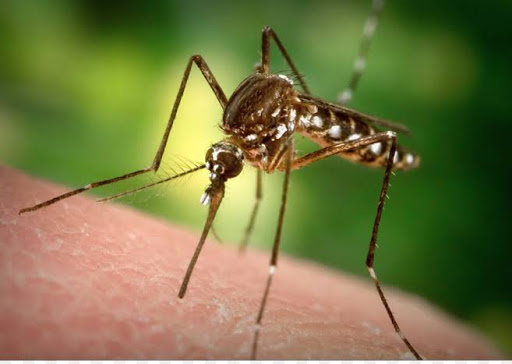
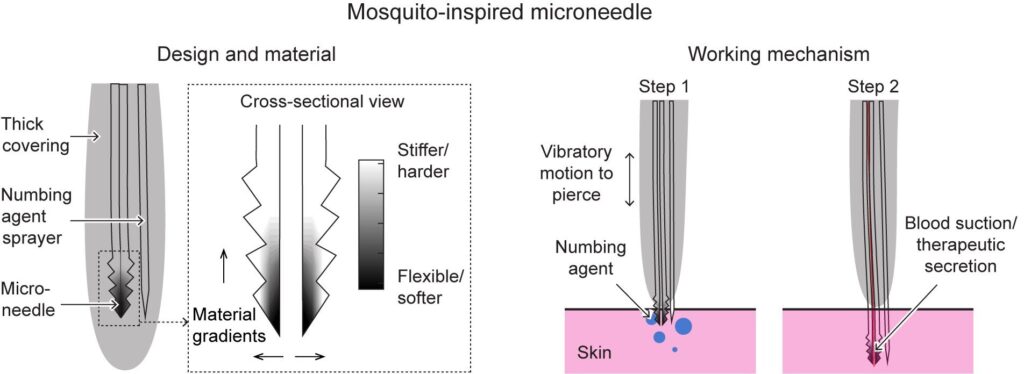
Consider this: the bite of a mosquito often feels less painful than a typical surgical needle stick. If this is true, why couldn’t a needle be designed for similarly painless insertion?
This intriguing question prompted researchers and engineers at Kansai University, Japan, to develop a new type of needle. Inspired by the mosquito’s proboscis (its needle-like mouthpart), they created a silicone needle that is electrochemically etched, sharpened, and jagged. Experimental results conclusively demonstrated the effectiveness of this biomimetic design, proving its ability to provide easy and virtually painless insertions.
Woodpecker Skulls: Inspiring Airplane Shock Absorbers
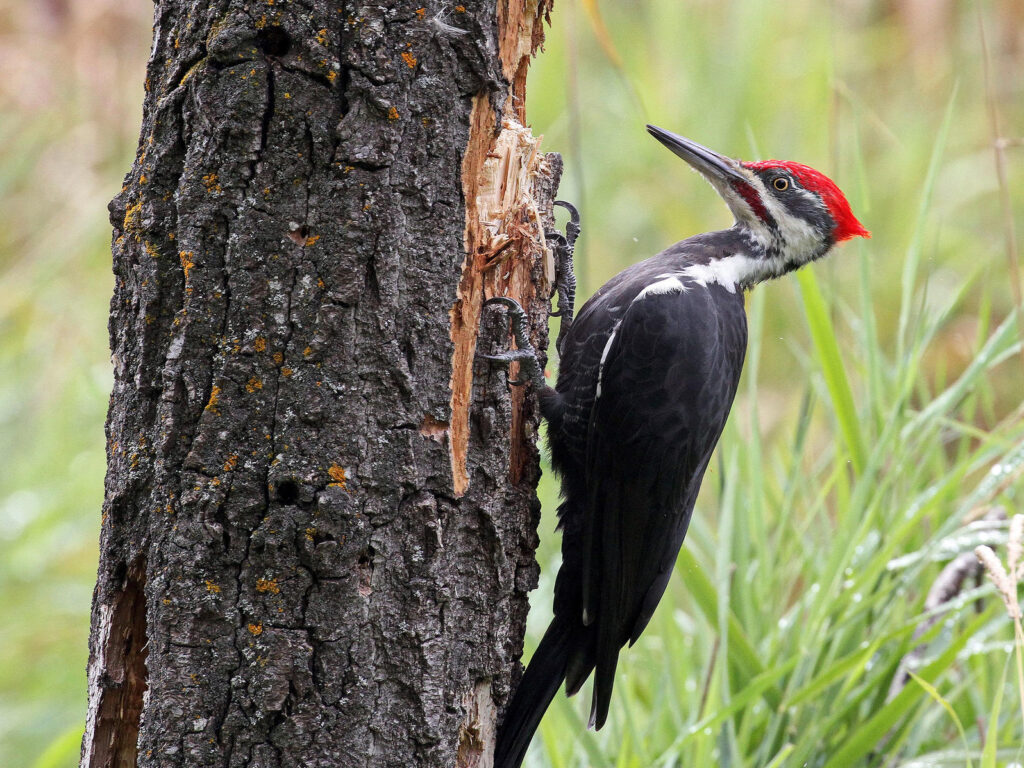
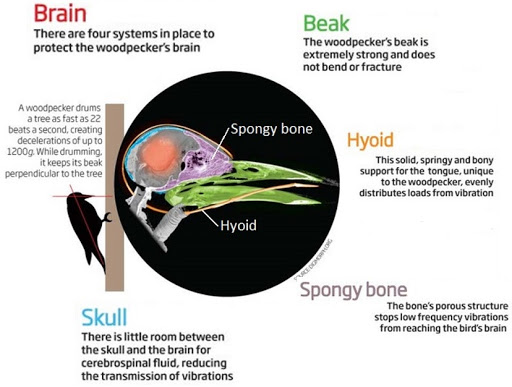
Woodpeckers possess an extraordinary natural ability to rapidly strike tree trunks throughout the day with forces strong enough to jar the tree itself. No other bird can repeatedly hit surfaces with such intensity without sustaining head injuries, except the woodpecker. This incredible resilience is thanks to their specialized skulls, which feature built-in shock absorbers. Scientists are now replicating this natural design for critical applications, such as airplane black boxes.
A woodpecker can drum on a tree as frequently as 22 times per second. Through video analysis and CT scans, researchers from the University of California, Berkeley, discovered that their skulls incorporate four unique structures designed to absorb mechanical shock. Furthermore, their beaks contain an area filled with spongy tissue and cerebrospinal fluid, which effectively dampens vibrations and prevents concussions. This biomimetic insight has been instrumental in creating more shock-resistant flight recorders, commonly known as black boxes.
Camel Nostrils: A Biomimetic Solution for Saltwater Desalination
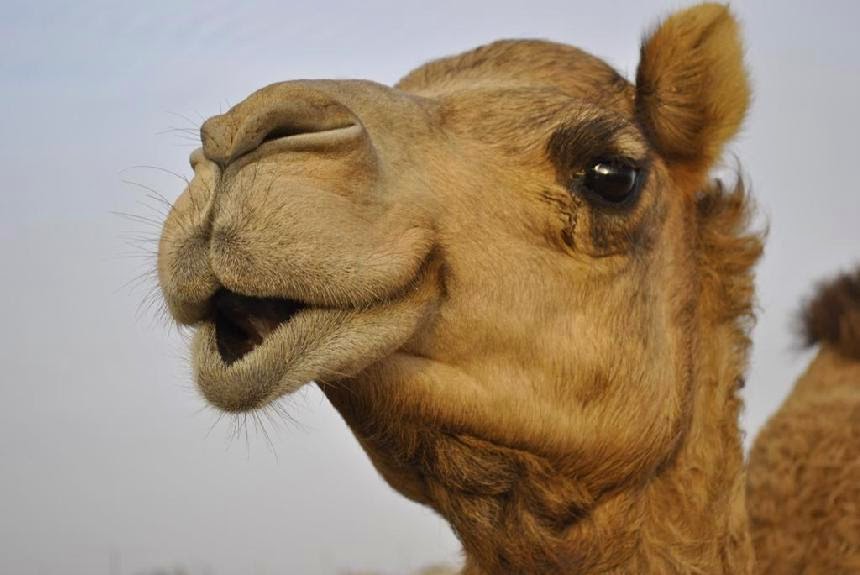
Camels possess uniquely adapted nostrils that play a crucial role in water conservation, enabling them to thrive in the harshest desert climates. The surfaces within a camel’s nasal passages utilize hygroscopic properties to extract water from exhaled air. Effectively, the dry nasal membranes of camels can absorb and retain water molecules from the surrounding environment—a truly ingenious natural design.
Remarkably, camels can also consciously open and close their nostrils. Drawing inspiration from this mechanism, researchers in the Sahara Desert are applying a similar technique for saltwater desalination. This method involves using cool groundwater to evaporate warm seawater, which then condenses into a salt-free form, suitable for plant irrigation.
Giraffes: Advancing Venous Leg Ulcer Treatment through Compression Therapy
Venous leg ulcers in humans are a type of wound that develops due to impaired vein function in the legs. Common contributing factors include blood clots, injury, genetic predisposition, aging, physical inactivity, and obesity. Medical professionals often recommend compression therapy for treatment—an idea directly inspired by the giraffe.
As one of the world’s tallest animals, giraffes must circulate blood through extremely long legs; the distance from a giraffe’s heart to its feet is twice that of a human. Despite having smaller calf muscles, no movable toes, and minimal ankle joint movement, giraffes surprisingly do not suffer from edema. This is because their incredibly tough, fibrous, and non-elastic skin acts as a rigid sleeve, optimizing venous return. Scientists have successfully translated this natural adaptation into the medical field, developing compression therapy to effectively treat venous leg ulcers in humans.
More Biomimicry Innovations
Mussels: Developing Superior Bio-Adhesives
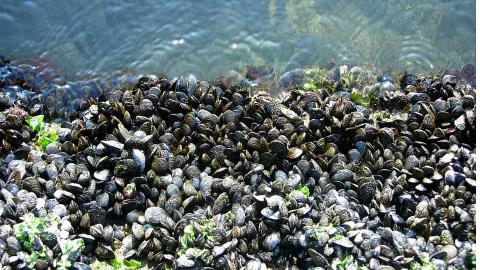
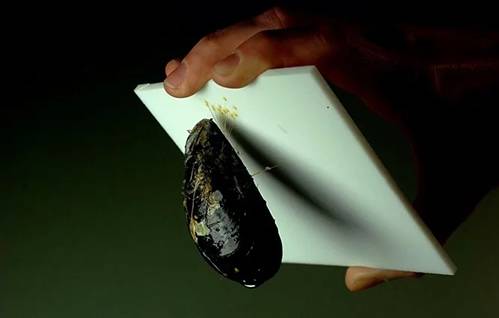
These fascinating underwater mollusks have inspired scientists to create some of the most robust adhesives currently available. Researchers have successfully deciphered the mechanism by which mussels adhere to wet surfaces and have replicated this natural ability into a commercially viable adhesive. They developed a biomimetic polymer model containing proteins with the amino acid DOPA, which is responsible for the glue’s exceptional adhesion. A study published in the journal ACS Applied Materials and Interfaces demonstrated that this new adhesive performed ten times better than other commercial alternatives when bonding polished aluminum surfaces.
Elephant’s Trunk: Inspiring Advanced Bionic Robotic Arms
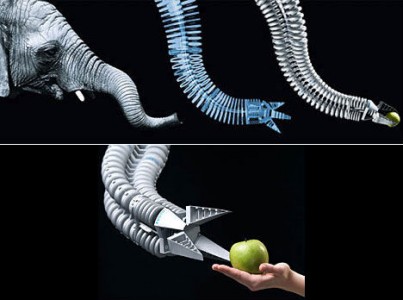
The elephant’s trunk is a remarkable appendage, notable for its significant strength and dexterity, stemming from its composition of over 4,000 muscles with no bones. This extraordinary biological feature prompted researchers at the company Festo to study and emulate its functionality. The outcome is the development of bionic robot arms, often referred to as ‘third-hand systems.’
Just as elephants utilize their trunks for gripping and manipulating objects, these robotic arms are designed for similar tasks, including gripping, grabbing, and holding. They feature three fin-shaped fingers that facilitate these precise movements. Researchers anticipate that these bionic arms will find valuable applications in assisting individuals with disabilities, as well as in diverse medical and industrial settings.
Termites: Paving the Way for Advanced Swarm Robotics


Swarm robotics, a specialized sub-field focused on construction applications, directly mimics the operational strategies of termites. Despite their small individual size, termites are nature’s most ingenious builders, collectively capable of constructing incredibly complex mud structures. The fascinating aspect of their construction method is that termites do not follow commands from a central “architect”; instead, their intricate behavioral rules are naturally encoded within their DNA.
Harvard’s Self-organizing Systems Research Group has extensively studied this phenomenon, leading to the creation of small robots designed to collaborate seamlessly. These “swarm-bots” operate without centralized control; instead, each robot works cooperatively to complete tasks. If one robot malfunctions, others in the swarm can continue the work, much like termites. This field of swarm robotics is rapidly expanding, recognized for its potential to construct buildings in hazardous and remote environments.
Wasps: Advancing Drill Bit Technology for Space Exploration

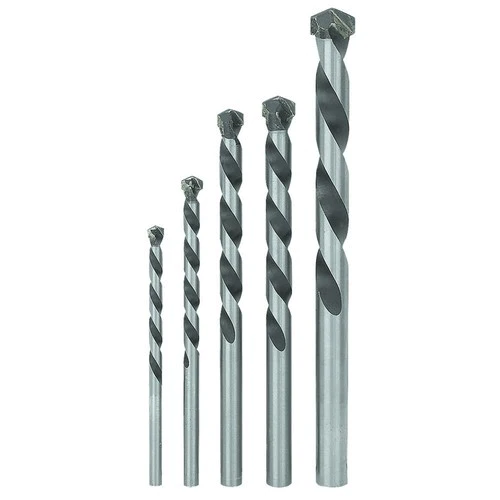
Have you encountered horntail wasps? These insects possess two whip-like ovipositors at their rear, which they expertly use to drill into trees, meticulously depositing their offspring.
For many years, biologists were astonished by how these tiny wasps could drill at various angles with minimal body weight and without apparent external pressure. Extensive study revealed that the two needles incrementally advance into the wood, pushing off and reinforcing each other in a zipper-like motion. Scientists at the University of Bath in England have mimicked this natural drilling method to design tools for drilling into the surfaces of Mars and asteroids, effectively overcoming the challenges of drilling in zero-gravity environments. It’s truly a testament to nature’s ingenuity! Nature continues to be the best teacher.
(For more such interesting informational, technology and innovation content, keep reading The Inner Detail).
Reference: Pictures displayed on this page are credited to their respective owner(s).
Join our community by subscribing to our Weekly Newsletter to stay updated on the latest AI updates and technologies, including the tips and how-to guides. (Also, follow us on Instagram (@inner_detail) for more updates in your feed).
(For more such interesting informational, technology and innovation stuffs, keep reading The Inner Detail).
