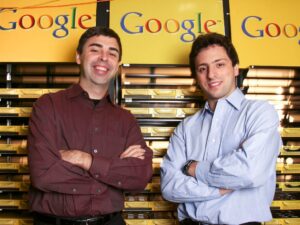

Google released the upgraded pro-version of Nano Banana powered by Gemini, and the images generated by Nano Banana Pro is undifferentiable as created by AI and are making waves over the internet.
The next frontier in generative AI isn’t just creating beautiful pictures; it’s mastering the creation of functionally useful, contextually aware, and legally traceable images.
A highly advanced, specialized model—hypothetically named Gemini Nano Banana Pro—would represent a significant leap, likely built upon a powerful foundation like Gemini 3’s advanced, multimodal architecture. This next-generation model wouldn’t just be an artistic engine; it would be a reasoning engine trained specifically to master complexity, textual accuracy, and geographical context.
Its hypothetical capabilities allow it to generate images that are not just beautiful, but functionally useful, contextually aware, and legally traceable, solving some of the biggest challenges plaguing current AI image models.
Let’s explore five peculiar capabilities of this “Gemini Nano Banana Pro”—that demonstrate a leap in digital complexity of AI-image-generation.
Functionally Accurate Documents with Legitimate Text
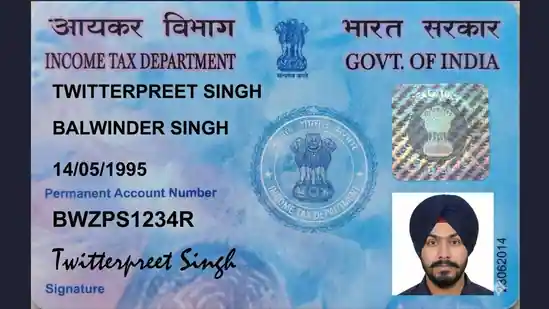
Current image generators often struggle with rendering accurate, coherent text—failing particularly with logos, small print, and structured layouts. A “Gemini Nano Banana Pro” would overcome this by mastering legitimate text generation.
This model would need perfect Optical Character Recognition (OCR) synthesis in reverse. It wouldn’t just draw letters; it would understand the semantic and legal context of the text. For example, generating a perfectly spaced, correctly formatted financial statement complete with serial numbers and company seals.
The Ethical Edge: While the AI could technically create a replica of sensitive documents (like a PAN card or Aadhaar layout) for demonstration or training purposes, the core value lies in its ability to recreate complex, professional paperwork for legitimate business needs, such as automatically generating a compliant legal contract PDF from a simple text prompt.
Data-Driven, Editable Infographics
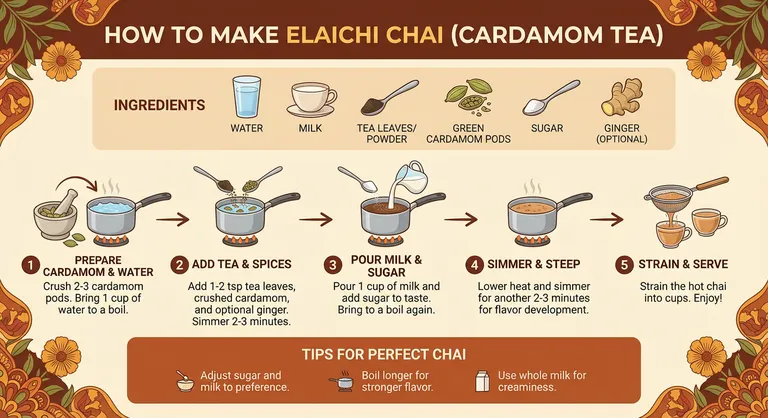
Generating visually appealing infographics from a text prompt is already possible, but a true advanced model would integrate live data analysis and output fully editable, vector-based graphics.
The user would simply input raw data (a CSV file or a direct link to a Google Sheet) and a stylistic prompt (e.g., “Create a dark-mode infographic summarizing Q3 sales trends, using a minimalist aesthetic”). The AI would not just visualize the data; it would choose the correct chart type (bar, line, pie) based on the statistical relationship, label the axes accurately, and output an image file (like an SVG) where the text and graphs are separate, editable elements, making collaboration seamless.
Images Featuring Contextually Perfect Handwriting
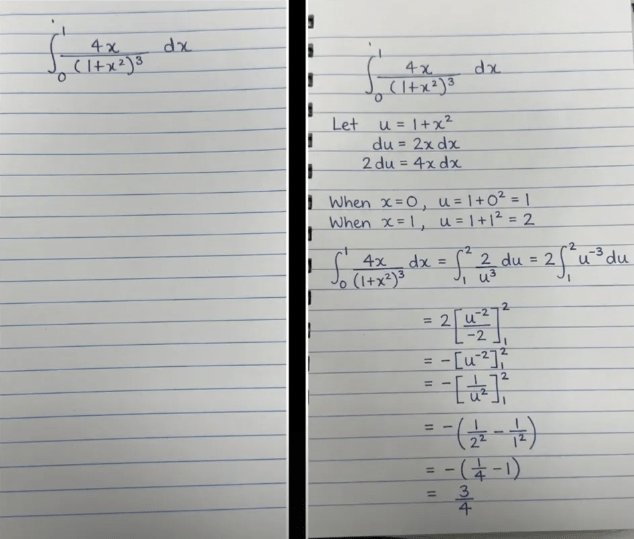
Replicating handwriting is challenging because human penmanship contains fluid, non-uniform variation. A “Gemini Nano Banana Pro” would create images with handwriting that is both aesthetically authentic and contextually legitimate.
The model wouldn’t use a standard font; it would synthesize the subtle imperfections of natural writing—the slight pressure variance of a pen, the smudge of ink, and the change in slant based on the speed of writing. It could be tasked to create an image of a handwritten note that looks like it was quickly scribbled on a napkin or a formal signature meticulously penned on aged parchment, adding tremendous depth to visual storytelling and historical recreation.
Geo-Temporal Reconstruction from Coordinates and Timeline
This capability moves beyond static image generation into sophisticated predictive and reconstructive modeling. By providing only location data and a specific date range, the AI could reconstruct historical or future scenes.
The model would access vast databases of geographical information (satellite data, topography, historical weather patterns, census data, etc.) and temporal data (architectural records, climate change models). For example, a user could input: “Coordinates: 28.7041° N, 77.1025° E (Delhi); Timeline: 1955.” The AI would then generate a photorealistic image of that specific location, accurately depicting the period’s architecture, vegetation, traffic, and fashion, or even predicting the scene in 2050 based on current climate projections.
Here is another example.
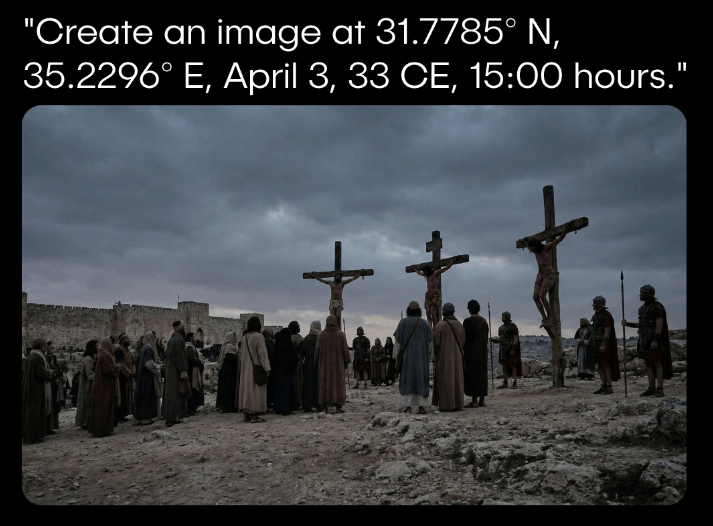
Image with Unremovable, Traceable Watermarking (SynthID)
As AI enables perfect forgery, the most important feature is the ability to enforce digital provenance and accountability. This capability would integrate Google’s existing SynthID technology, but make it absolutely robust.
SynthID is a proprietary technique that embeds a digital watermark directly into the image’s pixels in a way that is invisible to the human eye but detectable by a machine. The “Nano Banana Pro” would create images where this watermark is impossible to remove or degrade, even through common image manipulation techniques like cropping, resizing, or applying filters.
This ensures that every image created by the model is immediately identifiable as AI-generated and traceable back to the source model or user, building essential trust and transparency into the new wave of generative media.
The Takeaway
These hypothetical features show that the future of generative AI is not just about raw creativity, but about functional precision, data integration, and foundational ethics. The next generation of models will become powerful tools for scientific research, professional workflow automation, and verifiable digital creation.
Key Takeaways
- Future AI models will focus on functional precision and data integration.
- Legitimate text generation and contextually perfect handwriting are key capabilities.
- Geo-temporal reconstruction allows for historical and future scene generation.
- Unremovable watermarking ensures digital provenance and accountability.
- The next generation of models will be powerful tools for various applications.
Join our community by subscribing to our Weekly Newsletter to stay updated on the latest AI updates and technologies, including the tips and how-to guides.
(Also, follow us on Instagram (@tid_technology) for more updates in your feed and our WhatsApp Channel to get daily news straight to your Messaging App).