
Global concern over climate change continues to escalate, largely driven by human activities aimed at “enhancement and development.” The climate change clock is ticking faster than ever. Following 2018, a pivotal year when carbon footprints reached alarming levels, the United Nations declared a global climate emergency, projecting only 12 years to avert catastrophic changes.
Since this declaration, the UK and Irish parliaments have also officially recognized climate emergencies. By 2021, a growing number of major corporations are committing to achieving “zero-carbon” or “carbon-neutral” status within specified timelines, highlighting a widespread effort to mitigate environmental impact.
A significant challenge remains: how to effectively remove existing carbon from the atmosphere. Scientists and researchers in Iceland have introduced a potential solution by permanently transforming atmospheric carbon dioxide into solid rock.
Iceland’s Breakthrough: Transforming Carbon Dioxide into Rock
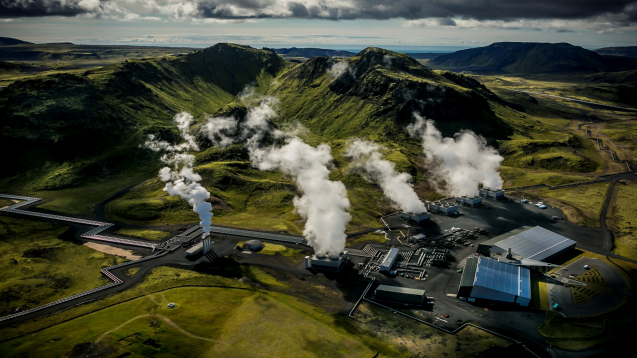
Nestled amidst abundant volcanic rocks, southwestern Iceland hosts one of the world’s largest geothermal power plants. This facility not only provides electricity to the entire city but also supplies hot water, showcasing a remarkable integration of natural resources for sustainable living.
The Hellisheidi power station, situated 25km from Iceland’s capital, Reykjavik, serves as the nation’s primary geothermal facility. Edda Sif Aradottir, the plant’s manager, notes the palpable vibrations from the steam entering the turbines, a testament to the sheer power generated.
Beyond its 100% renewable electricity generation, Iceland is at the forefront of a scientific innovation: absorbing atmospheric carbon and converting it into a stable, stone-like form forever.
Dr. Aradottir on Reversing CO2 Levels: A Crucial Solution
“Mankind has been burning fossil fuels since the industrial revolution and we have already reached the tipping point for CO2 levels,” states Dr. Aradottir. “This is one of the solutions that can be applied to reverse that.”
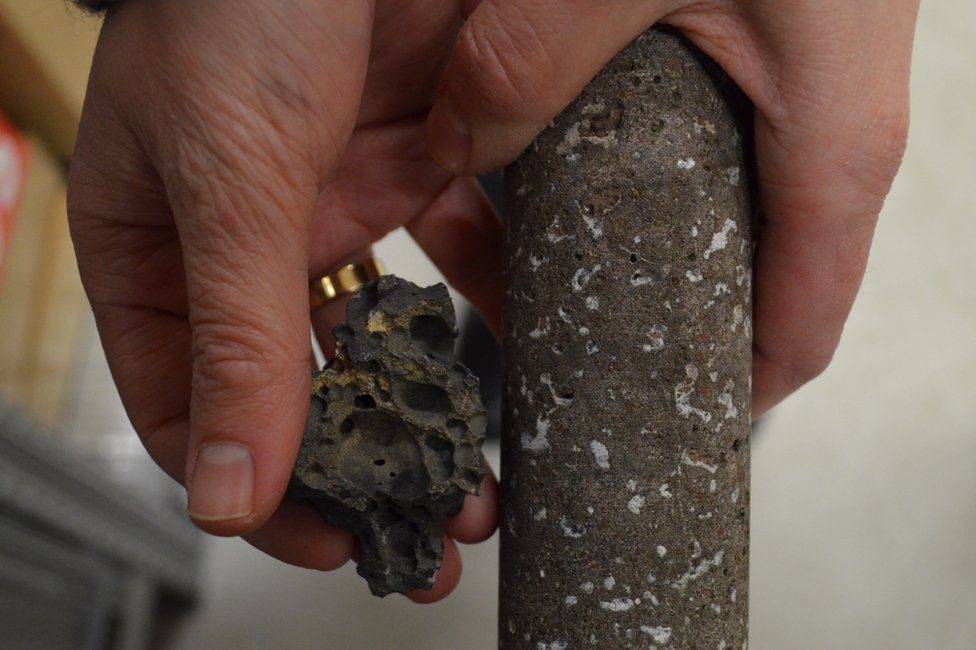
In 2012, an international team of researchers and engineers initiated a groundbreaking experiment in southwest Iceland. They began injecting carbon dioxide (CO2) into porous basalt rock, naturally formed from cooling lava, at an underground test site. By 2014, in just two years, this innovative process successfully converted the injected CO2 into stable carbonate minerals.
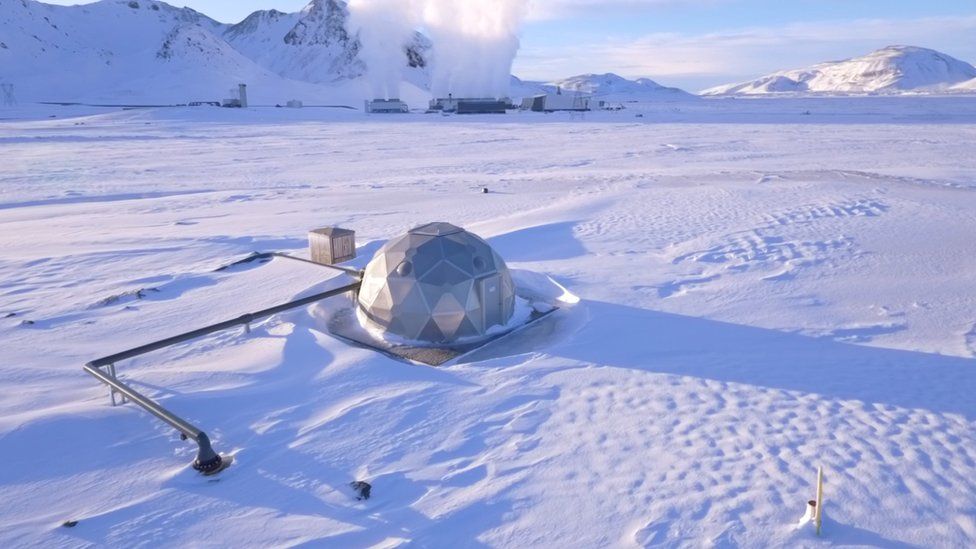
This remarkable research paved the way for the ‘CarbFix’ project, an initiative focused on permanently fixing carbon into rock. CarbFix represents a collaborative effort involving several key organizations: the utility company Reykjavik Energy, the University of Iceland, France’s National Centre for Scientific Research (CNRS), and Columbia University in the US.
The persistent rise in atmospheric CO2 concentrations has spurred scientific efforts in “carbon capture and storage” since the 1970s. CarbFix stands out as a highly effective solution because its carbon capture method is both permanent and remarkably fast, offering a significant advantage over previous approaches.
Understanding the CarbFix Process: How CO2 Becomes Rock
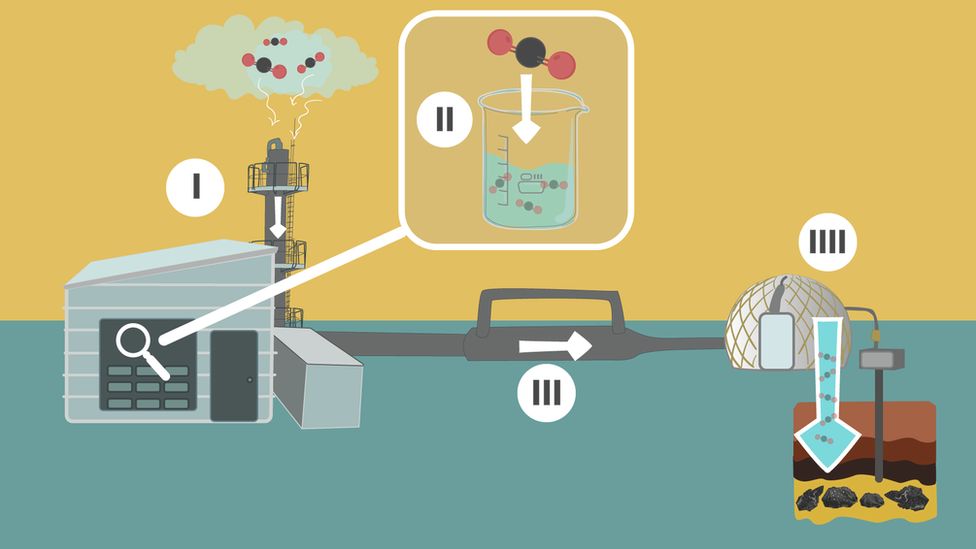
The CarbFix process, conceptually similar to “making soda,” begins by absorbing CO2 from the steam emitted by Hellisheidi’s power station (I). This captured CO2 is then dissolved into substantial volumes of water (II). It’s important to note that the process requires a considerable amount of water, approximately 25 tonnes of water for every ton of stored CO2.
This carbonated water is subsequently pumped into the injection site (III), an igloo-shaped structure. Here, the absorbed CO2 is sent approximately 1000 feet beneath the surface, where it undergoes specific chemical reactions, causing it to permanently affix itself to the surrounding rocks (IIII).
Within a mere few months, these chemical reactions solidify the CO2 into rock, effectively preventing it from escaping back into the atmosphere for millions of years, ensuring permanent carbon sequestration.
Global Scalability: Can CarbFix Be Implemented Worldwide?
Iceland’s landscape is predominantly composed of basalt rock, often referred to as “carbon’s best friend” due to its rich content of calcium, magnesium, and iron. These elements facilitate carbon’s easy binding, forming stable minerals. Given that basalt formations are found globally, the CarbFix team believes this project could be replicated in other regions, provided there is both basalt and a sufficient water supply.
However, the current requirement of 25:1 water-to-CO2 ratio, specifically demanding desalinated water, poses a challenge for implementation in water-scarce regions, such as parts of India. Recognizing this limitation, CarbFix researchers are actively working on adapting the process to utilize saltwater, potentially broadening its applicability.
“Basalt is actually the most common rock type on Earth; it covers most of the oceanic floors and around 10% of the continents. Wherever there’s basalt and water, this model would work,” explains Sandra Osk Snaebjornsdottir, a geologist with CarbFix.
CarbFix’s Current Impact: A Look at CO2 Sequestration Volume
Last year, CarbFix successfully “digested” 10,000 tonnes of CO2. While this is a significant achievement, it represents only a tiny fraction of global emissions – less than the annual output of 650 British citizens or 2,200 American cars. This amount becomes even more negligible when compared to the 30-40 gigatonnes of CO2 (a gigatonne equals a billion tonnes) that humanity releases into the atmosphere annually.
“CarbFix is not a silver bullet. We have to cut emissions and develop renewable energies, and we have to do CCS too,” says Prof Gislason. We have to change the way we live, which has proved very hard for people to understand.”
References:
- https://www.bbc.com/news/world-43789527
- https://www.weforum.org/agenda/2019/05/scientists-in-iceland-are-turning-carbon-dioxide-into-rock/
Join our community by subscribing to our Weekly Newsletter to stay updated on the latest AI updates and technologies, including the tips and how-to guides. (Also, follow us on Instagram (@inner_detail) for more updates in your feed).
(For more such interesting informational, technology and innovation stuffs, keep reading The Inner Detail).