
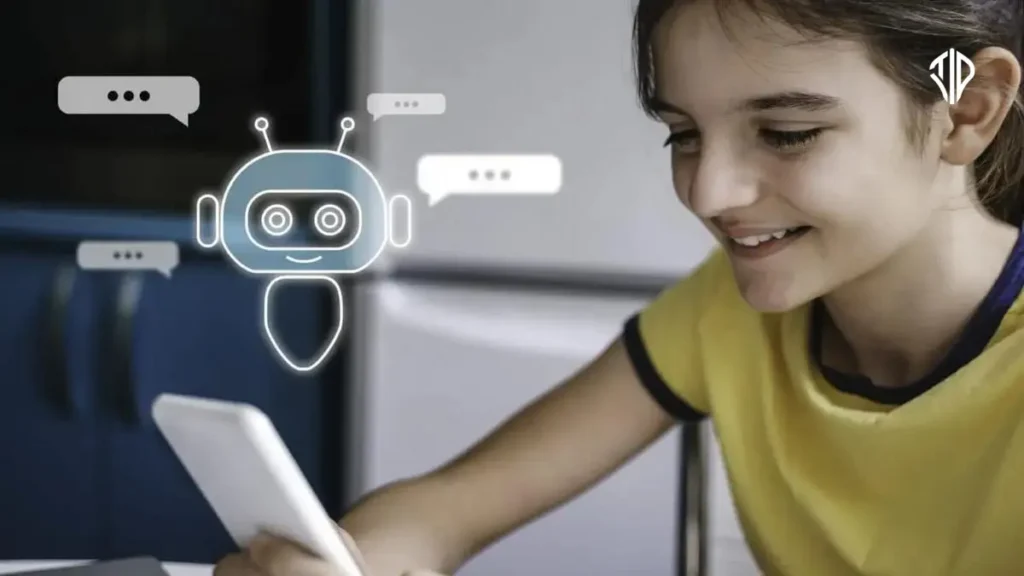
Norway has initiated a landmark policy to restrict generative artificial intelligence in its primary schools, prioritizing foundational learning over technological dependency. This shift signals a global pivot toward re-evaluating the role of digital tools in the development of young minds.
For decades, the global trend in education was a race toward total digitalization. Schools replaced heavy, ink-stained textbooks with sleek tablets, and the promise of the internet was hailed as the great equalizer of knowledge.
Yet, as the novelty of the screen fades, educators are increasingly concerned that the “frictionless” nature of modern technology may be eroding the cognitive stamina required for deep, analytical thought.
This situation is strikingly similar to the introduction of the scientific calculator in the late 20th century. While calculators were revolutionary for advanced physics, early concerns that they would destroy basic arithmetic skills were arguably justified; students who relied on them too early often failed to grasp the underlying logic of mathematics.
Today’s generative AI acts as a sophisticated, linguistic version of that calculator, capable of generating essays and solving problems instantly, effectively bypassing the intellectual heavy lifting that builds foundational competence.
Key Takeaways
- Norway has implemented a ban on generative AI tools for students in grades 1 through 7 to protect foundational literacy and numeracy skills.
- The policy utilizes a tiered approach, allowing for supervised experimentation in middle school and structured training in upper secondary education.
- Beyond AI restrictions, the government is actively reversing its screen-heavy reliance by promoting the use of physical books and enforcing a smartphone ban in schools.
- Global nations, including France, China, Australia, and the United States, are all currently debating how to balance AI literacy with the risk of academic atrophy.
The Rationale Behind the Norwegian Decision
Prime Minister Jonas Gahr Stoere has been clear regarding the motivation behind these new standards: the integrity of basic literacy and numeracy is non-negotiable. Starting in the upcoming school year, pupils from the first through seventh grades (ages 6 to 13) are effectively barred from using generative AI tools.
The concern is that young children, who are still mastering the mechanics of reading, writing, and logic, might skip essential developmental stages if they outsource these tasks to algorithms. By banning these tools, the government hopes to ensure that children learn to structure their own thoughts and solve problems through personal cognitive effort, rather than algorithmic prompting.
The policy adopts a tiered approach:
- Primary level (Ages 6 to 13): A general rule against AI usage.
- Lower secondary level (Ages 14 to 16): Cautious, supervised experimentation.
- Upper secondary level (Ages 17 to 19): Structured training to prepare students for the demands of university and the modern workforce.
Beyond the classroom, the government is also reversing its reliance on screens, proposing new legislation to increase the funding and availability of physical books. This move, coupled with an earlier 2024 ban on smartphones in schools, reflects a broader push to restore order and focus in the Norwegian education system.
The Global Context: Who Else is Evaluating AI?
Norway is far from alone in its skepticism. Several other nations and jurisdictions are grappling with the same dilemma, weighing the benefits of AI literacy against the risks of academic atrophy.
- France: Following pilot programs in various regions, the French education ministry has remained cautious, often restricting the use of AI tools in primary and middle school settings to ensure that plagiarism and critical thinking are addressed.
- China: Beijing has implemented strict guidelines on the use of AI in classrooms, focusing on the ethical implications and the protection of student data, while promoting AI as a tool for teachers rather than a replacement for student effort.
- Australia: While not a blanket ban, many state-level departments have implemented strict restrictions on generative AI, emphasizing that foundational skills must be mastered before students are permitted to experiment with advanced automated assistants.
- United States: While no federal mandate exists, thousands of individual school districts have implemented their own bans or restricted access, citing concerns over privacy, data harvesting, and the potential for students to lose the ability to write original academic prose.
The Repercussions and the Debate: Is This a Good Idea?
The decision to limit AI raises a significant question: are we protecting our children, or are we setting them up for failure in a world that will be defined by these very tools?
The argument for the ban is rooted in cognitive development. Learning is a slow, often frustrating process. When a child writes a paragraph, they are learning how to organize their thoughts, how to understand syntax, and how to present an argument.
If an AI writes that paragraph, the child gains the finished product but loses the process of becoming a writer. In the short term, this leads to a stagnation of critical thinking and creativity.
However, critics of such policies argue that AI is a permanent fixture of the future economy. By shielding children from it, we may be widening the gap between those who know how to wield these powerful tools and those who are kept in the dark. The risk is that students leave school with analog skills but no understanding of the digital leverage that will define their future careers.
Ultimately, Norway’s approach seems to be a pragmatic compromise. They are not banning AI forever; they are delaying its introduction until the foundational cognitive scaffolding is built.
It is a philosophy that suggests you must first learn to walk (or write and calculate) before you are given a jetpack. Whether this policy will succeed in reversing the decline in test scores remains to be seen, but it is an experiment that the rest of the world will be watching closely.
Join our community by subscribing to our Weekly Newsletter to stay updated on the latest AI updates and technologies, including the tips and how-to guides. (Also, follow us on Instagram (@inner_detail) for more updates in your feed).
(For more such interesting informational, technology and innovation stuffs, keep reading The Inner Detail).
