
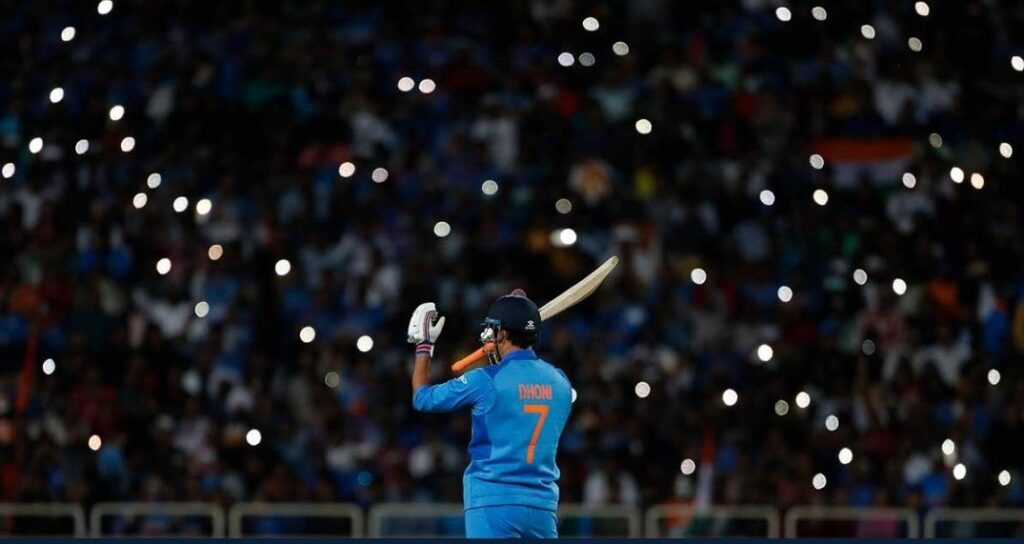
This page delves into the extraordinary journey of Mahendra Singh Dhoni, highlighting his impact as a successful, mindful player and an inspiring human being, extending far beyond his impressive cricket records.
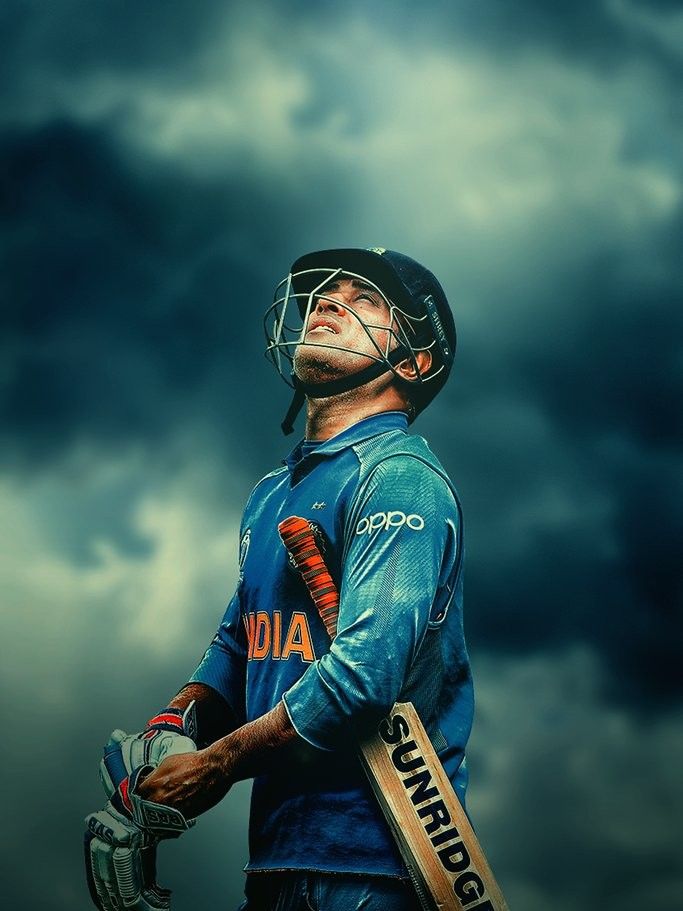
Born: July 7, 1981 (age 38 at the time of writing) in Ranchi, Bihar.
Renowned For: Elite wicket-keeping, exceptional captaincy, and being a formidable finisher.
Awards:
- Rajiv Gandhi Khel Ratna (2007)
- Padma Shri (2009)
- Padma Bhushan (2018)
Nicknames: Mahi, Captain Cool, MSD, Thala
Other Honors: Appointed Lieutenant Colonel on November 1, 2011.
Early Life and Cricket Beginnings
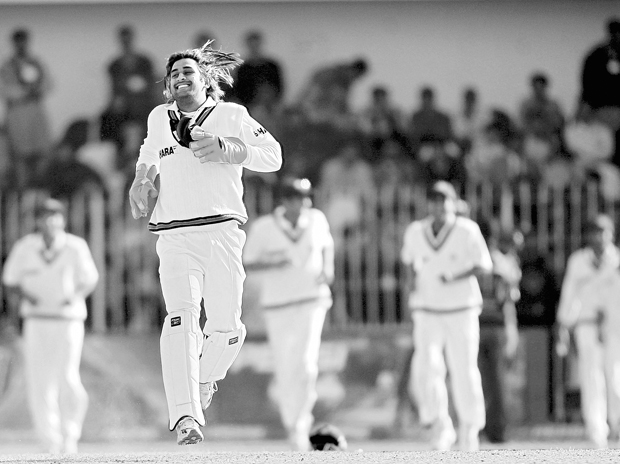
Born in Ranchi, Bihar, Mahendra Singh Dhoni was the third child of Pan Singh. During his schooling at DAV Jawahar Vidya Mandir, he initially showcased his athletic prowess in badminton and football, excelling as a goalkeeper. His journey into cricket began when his coach sent him to fill a wicket-keeper vacancy in a local club team. Dhoni’s impressive wicket-keeping skills soon made him a regular at Commando Cricket Club from 1995 to 1998. His consistent performance at the club level earned him a spot in the Vinoo Mankad Trophy, marking the initial steps of his remarkable career.
Laying the Foundation for a Cricket Career
In 1998, during his 12th standard, Deval Sahay recognized Dhoni’s talent and brought him into the Central Coal Fields Limited (CCL) Team. Dhoni’s powerful shots against the district’s fastest bowlers prompted Sahay to promote him to the Bihar Ranji Team for the 1999-00 season. Balancing his 12th-grade studies with rigorous cricket training was undoubtedly challenging, yet Dhoni adeptly managed it, often rushing from exams directly to the cricket field.
From 2001 to 2003, Dhoni worked as a Travelling Ticket Examiner at Kharagpur Railway Station, all while consistently scoring centuries and half-centuries in the Ranji Trophy. In 2003, Prakash Poddar noticed his batting prowess in Jamshedpur, leading to Dhoni’s inclusion in the National Cricket Academy.
His impressive performance with 362 runs in six innings at an average of 72.4 during an India A tour of Zimbabwe and Kenya caught the attention of then-Indian Captain Sourav Ganguly. This led to his inclusion in the ODI squad for the Bangladesh tour in November 2004. The 22-year-old had an inauspicious debut against Bangladesh, getting out for a duck, followed by a string of low scores. Despite this, Ganguly showed faith and extended his opportunity to the subsequent tour of Pakistan.
The Dawn of Dhoni’s Era in Indian Cricket
It was during the Pakistan tour that MS Dhoni’s impactful era in Indian cricket truly began. He quickly repaid the faith shown in him with a blistering 148 off 123 balls in Visakhapatnam against Pakistan, marking the highest score by an Indian wicket-keeper at the time. Later in 2005, he elevated his game further, smashing an incredible 183* off just 145 balls in Jaipur. This remarkable innings made a mockery of a 300-run chase against a Sri Lankan bowling attack, who were left bewildered by his unconventional yet highly effective stroke-play and immense power.
However, 2007 brought a challenging period when India failed to progress past the group stage in the Cricket World Cup, losing to Bangladesh and Sri Lanka, with Dhoni registering ducks in both matches. This disappointing performance even led to political activists vandalizing his under-construction house in Ranchi.
The Historic ICC World Cup Victory of 2011
Under Dhoni’s astute captaincy in 2011, the Indian team advanced to the finals of the ICC World Cup, facing Sri Lanka. Chasing a target of 275, Dhoni promoted himself up the batting order, forging a crucial partnership with Gautam Gambhir. As the match progressed, requiring more than a run per ball, Dhoni, initially at 60 runs off 60 balls, dramatically accelerated his scoring. He ignited the stadium, striking 17 runs off the last six balls, culminating in a magnificent six that secured India’s World Cup triumph after 28 long years. His unbeaten 91 off 79 balls cemented his legend. The victory was perfectly encapsulated by Ravi Shastri’s iconic commentary, echoing through homes across India, capturing the nation’s collective euphoria.
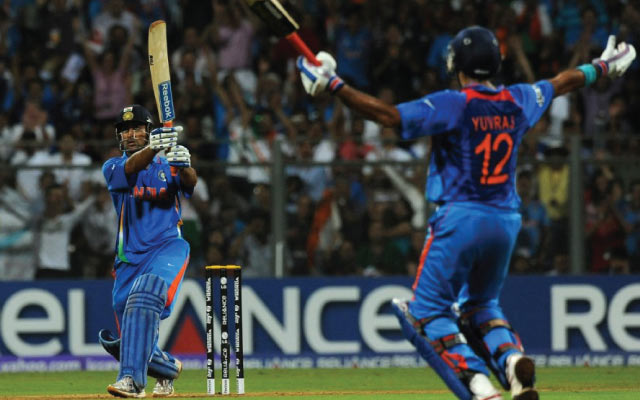
‘Dhoniiiii finishes off in style. A magnificent strike into the crowd. India lift the World Cup after 28 years. The party’s started in the dressing room. And it’s an Indian captain, who’s been absolutely magnificent, in the night of the final.’
Any devoted cricket fan undoubtedly recalls this moment in Ravi Shastri’s dramatic voice, as Mahendra Singh Dhoni mesmerized the Wankhede Stadium on the night of April 2nd, 2011.
Analyzing MS Dhoni’s Unique Cricket Technique
MS Dhoni’s technique is less about rigid steps and more about an intuitive understanding of how to get the job done. He consistently astonishes everyone, both on and off the field, whether through his lightning-fast dismissals or his strategic instructions to teammates. Often, his play is admired for its aesthetics as much as its functionality. From using Hindi to communicate with players to avoid being understood by opponents, Dhoni meticulously plans every stance to secure a win. His insightful fielding suggestions frequently lead to crucial wickets, earning him a reputation for an almost ‘Midas touch’ luck.
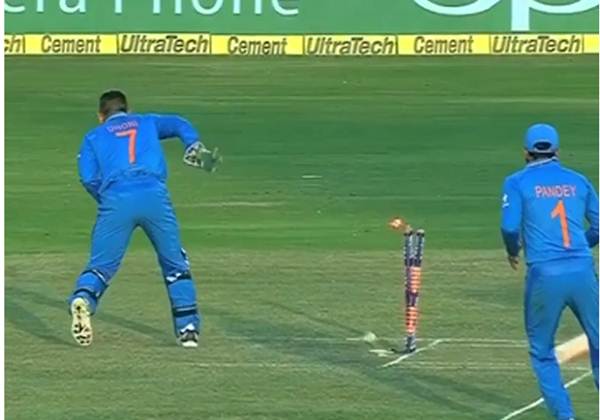
His extensive experience on the field is so profound that the Decision Review System (DRS) was colloquially rebranded as “Dhoni’s Review System.” If Mahi signals for a review, a wicket is almost guaranteed. If Mahi calls for a time-out, it happens within 3-4 seconds. He possesses an uncanny ability to sense where a wicket lies hidden during a match.
Utilizing heavy Kashmir willow bats, light and hollow tennis balls, and long boundaries, Dhoni developed a bottom-hand-dominated technique. This allowed him to impart maximum power on the light tennis ball, which typically experiences significant energy damping upon impact. However, Dhoni truly stood out when he, alongside a friend, innovated an elevated body-weight shot featuring an exaggerated follow-through, effortlessly clearing boundaries. In cricketing folklore, MS Dhoni will forever be remembered as the audacious innovator who introduced the ‘helicopter shot’ to the leather ball.
MS Dhoni: A Masterful Captain and Inspirational Leader
When Rahul Dravid stepped down as skipper in 2007, Sachin Tendulkar and Dravid themselves recommended Dhoni for the captaincy. With his mature approach, he led India to a thrilling victory over Pakistan, earning him the moniker “Captain Cool” after the series and the ODI leadership. Following Anil Kumble’s retirement in late 2008, the Test captaincy was also entrusted to him.
Despite the immense pressure of captaining the national team, Dhoni’s leadership often saw him deliver fearsome hitting performances during his innings. Notably, his explosive batting in the final overs kept viewers on the edge of their seats, and he rarely disappointed. This consistent ability to perform under pressure highlights his immense self-confidence and perfect leadership, inspiring even the “God of Cricket” himself to remark, “Dhoni was the best captain under whom I played.”
- Under Dhoni’s captaincy, India achieved the top rank in Test cricket for the first time in 2009.
- He also holds the record for the most stumpings by a wicketkeeper in international cricket.
- In 2013, Dhoni became the first captain in 40 years to lead India to a whitewash victory against Australia in a Test series.
- Mahi is the only captain to have won all three major ICC trophies: the ICC World T20 against Pakistan in 2007, the ICC World Cup against Sri Lanka in 2011, and the ICC Champions Trophy against England in 2013.
- His captaincy and leadership have garnered praise from numerous cricket legends. AB de Villiers famously stated, “Let MSD be 80, in a wheelchair, not able to perform well; Still, he would be in my team,” hypothetically emphasizing MSD’s composed and mature leadership.
MS Dhoni’s Enduring Legacy with Chennai Super Kings in IPL
The bond between MS Dhoni and Chennai Super Kings is a celebrated “yellove” story within the cricketing world. While detailing all of MSD’s contributions to the IPL would require extensive discussion, let’s highlight some key aspects.
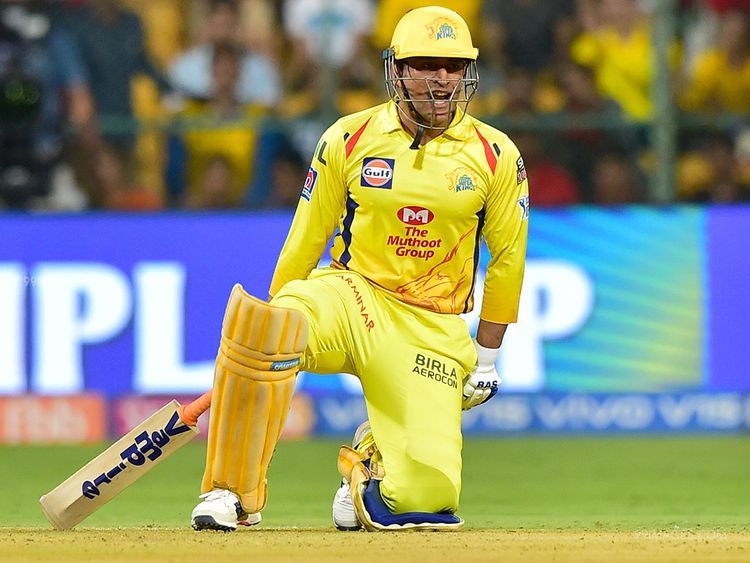
- MSD remains the only player to have captained a single IPL team throughout all its seasons to date.
- Under his leadership, Chennai Super Kings reached the IPL finals eight times, made it to the playoffs ten times, and lifted the championship trophy three times (in 2010, 2011, and 2018) across 12 IPL seasons.
- His team, Chennai Super Kings, is widely regarded as one of the most vocally supported and popular franchises among all IPL teams.
- Dhoni has an extraordinary ability to mold any group of 11 players into a cohesive unit, guiding them to strong performances and often to the finals, consistently proving this remarkable talent.
The Gradual Transition: Beginning of the End of an Era
During the away Border-Gavaskar trophy in 2014, immediately after helping India secure a draw in the Boxing Day Test at Melbourne, Dhoni made a significant announcement: he was stepping down from Test captaincy and retiring from Test cricket. He cited excessive workload as the primary reason for relinquishing the longest format of the game.
On January 4, 2017, Dhoni further stepped down as the captain of both the Indian ODI and T20I teams, officially marking the end of a golden era in Indian cricket leadership.
While his batting form saw a noticeable dip in 2018, particularly as top-order batsmen were in turbo-hitting mode, Dhoni continued to cement his brand through his incredibly fast stumpings, his invaluable guidance to young bowlers, and his expert handling of spinners in limited-overs cricket.
His final international match was the World Cup 2019 semi-final against New Zealand, where he was unfortunately run out, just two inches short of the crease. “Why didn’t I dive? is what I always ask myself,” Dhoni later reflected in a recent interview, highlighting his commitment and self-analysis.
The Mindset of a Champion: MS Dhoni’s Enduring Character
Dhoni seemingly embodies his father’s advice: “Don’t take success to your head; Keep going,” a principle vividly depicted in his biopic, “MS Dhoni: The Untold Story.” He continues to serve as an ideal icon for young, aspiring minds across the country. A unique blend of aggression tempered with decorum, modesty paired with superstardom, and an apparent happy-go-lucky Midas touch, Dhoni stands as the perfect role model and pin-up star.
His interactions with media consistently showcase him as a person who tackles criticism with humor and grace. Facing failures head-on while celebrating wins with humility further solidifies his stature as an exceptional human being.
Years may go on, players may do vigorously the playoffs, but a player as like MS DHONI, would never turn upon;
Error 404 for his replacement.
References: