
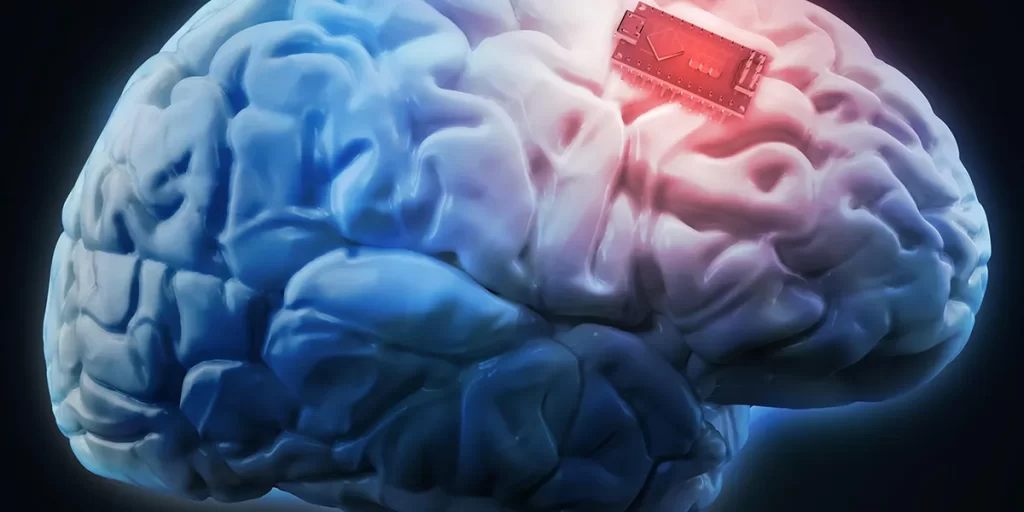
The ability to interact with the human brain—to analyze, stimulate, experiment, deduce, and integrate information or function—is rapidly becoming a defining technological achievement of our era. Recent advancements, from gaming headsets that scan brainwaves to alert users of weaknesses, to brain chips enabling paralyzed individuals to write thoughts with their minds, highlight the significant progress in brain implant technology over the past five years.
Intriguingly, an artificial intelligence (AI) expert suggests that the future may allow for direct knowledge downloads into the human brain, surprising students and the global community alike.
Nikolas Kairinos, a prominent AI expert, predicts that we will likely see brain implants capable of enabling comprehensive learning within mere minutes.
Instant Knowledge: No More Memorization
“You won’t need to memorize anything,” Kairinos affirmed.

With over two decades of experience working with startups and leveraging artificial intelligence for problem-solving, Kairinos envisions a future where humans can silently access answers to any question directly within their minds, without speaking or typing.
Seamless Information Access: Asking Questions with Your Mind
“Without making a sound or typing anything, you can ask something like ‘how do you say this in French?’ and instantly you’ll hear the information from the AI implant and be able to say it,” he elaborated.
While this concept sounds highly futuristic and almost unbelievable, its underlying principles are plausible, with similar neuro-related experiments already underway in various projects worldwide.
“The necessity to learn something by rote will vanish because we will have instant access to information,” Kairinos stated. “Google will essentially be in your head, and that’s not a far-fetched idea. It will be like having an incredibly smart assistant that almost thinks alongside you.”
The vision Kairinos describes for the future of brain implants closely aligns with projects like Elon Musk’s Neuralink.
Current Brain Implant Innovations and Projects
Neuralink’s Progress in Brain-Computer Interfaces

Elon Musk’s Neuralink, a pioneering brain-chip project, aims to implant devices into the skull to record brain activity directly into a computer. This technology is currently in its testing phase, with human trials potentially commencing this year, meaning Neuralink could begin implanting chips into human skulls for testing purposes.
Discover More: Brain Chip Enables Paralyzed Man to Write Thoughts with His Mind
In July 2019, Neuralink demonstrated significant progress when a monkey with an annexed brain chip successfully controlled a computer mouse remotely, allowing it to play the game Pong solely with its mind.
Decoding Brainwaves: Identifying Songs in a Person’s Mind

Imagine a form of telepathy: identifying the song a person is humming internally by analyzing their brainwaves. Researchers from the Human-Centered Design department at Delft University of Technology in the Netherlands and the Cognitive Science department at the Indian Institute of Technology – Gandhinagar achieved this feat. They used electroencephalography (EEG) in conjunction with an artificial neural network (ANN).
Their methodology involved connecting 20 participants to EEG machines while they listened to a song. The brainwave data was then fed into the ANN, which successfully identified the corresponding song with an impressive 80% accuracy.
Read more about this research here.
NeuroLeet: A Gaming Headset Revealing Your Mental Strengths and Weaknesses
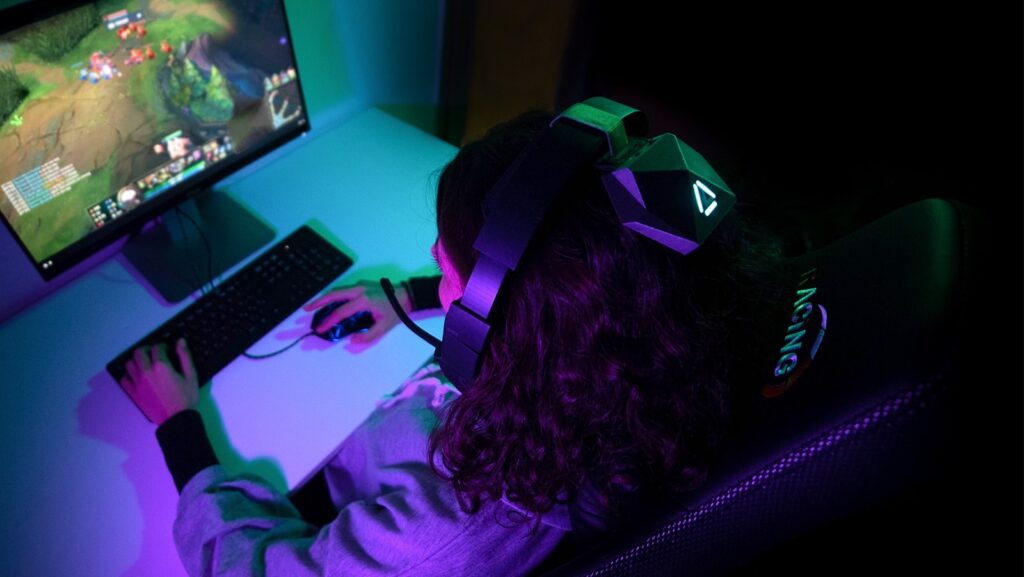
NeuroLeet, developed by MindRove, functions as a brain training wearable. It transforms a standard gaming headset into an EEG-based brain-sensing device.
Comprising a device and an accompanying app, NeuroLeet provides insights into your brain activity, assisting you in achieving “improved brain performance.” The app analyzes your gaming patterns, develops corresponding brain patterns, and compiles a comprehensive report on your brain’s performance, scrutinizing how effectively you achieve in-game success (e.g., a “chicken dinner”). This process ultimately helps identify a user’s mental strengths and weaknesses.
Explore More on Brain-Computer Interface Topics!
Kairinos further emphasized the accelerated pace of AI development: “If you look at the development of AI, the progress we are going to see in the next five years is going to tower what we have seen in the last 50.”
He added, “We are at a pivotal moment where we anticipate massive, transformative changes. Therefore, in just five years, the technological landscape will be profoundly different from what we experience today.”
Optimistically, Kairinos believes these advancements will ultimately benefit humanity rather than cause harm. “I know it sounds a little bit idealistic, but our focus is on artificial intelligence that will genuinely make the world a better place—AI designed to significantly improve people’s lives on a global scale,” he concluded.
Join our community by subscribing to our Weekly Newsletter to stay updated on the latest AI updates and technologies, including the tips and how-to guides. (Also, follow us on Instagram (@inner_detail) for more updates in your feed).
(For more such interesting informational, technology and innovation stuffs, keep reading The Inner Detail).