

Typically, researchers and surveyors analyze specific populations for new studies or theses. A notable example involves a cognitive neuroscience professor who chose London’s taxi drivers to examine their brains, seeking potential insights into protecting against diseases like Alzheimer’s.
While taxi and cab drivers exist globally, the specific focus on London’s black cab drivers is particularly compelling. These drivers undertake “The Knowledge,” one of the world’s most challenging memorization tests, requiring them to recall approximately 26,000 central London streets and master navigation without GPS devices. This rigorous test, which can take three to four years to complete, ensures they can efficiently determine the shortest and fastest routes between any two points.
Consequently, researchers at University College London are investigating the brains of these highly trained London taxi drivers. Their aim is to understand how such intense memory training and navigational expertise might strengthen the brain, potentially offering resilience against debilitating conditions like Alzheimer’s disease.
Professor Hugo Spiers, a cognitive neuroscience expert leading this study with his graduate students, noted, “London cabbies possess extraordinary brains. Notably, a specific brain region, the hippocampus, which typically atrophies early in Alzheimer’s disease, is found to be larger in these drivers.”
How London Taxi Drivers’ Brains Aid Alzheimer’s Research
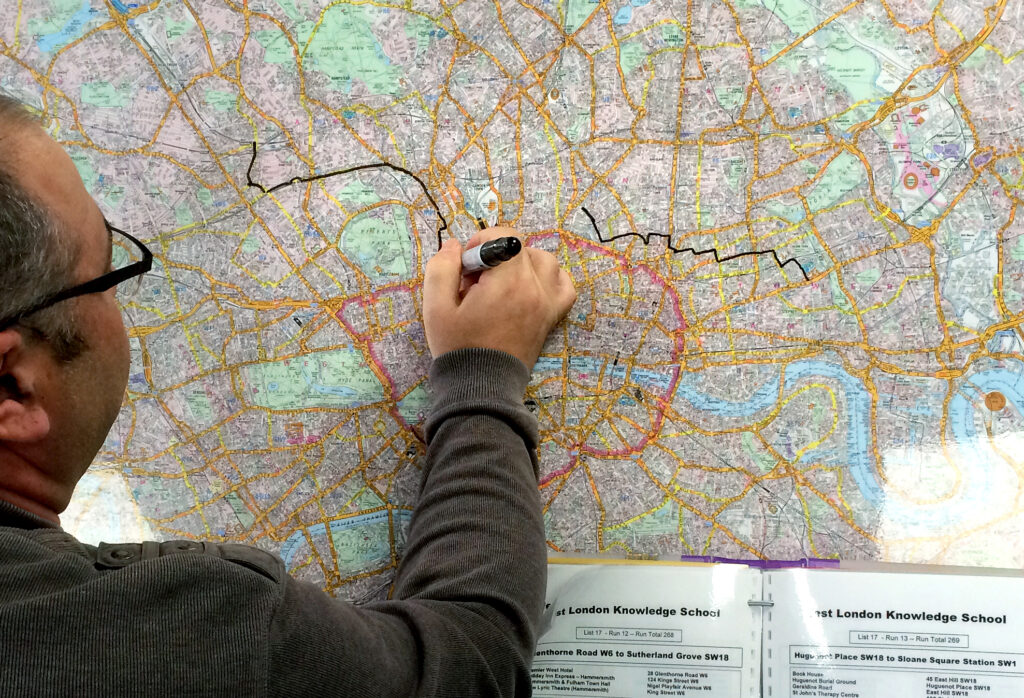
The “Taxi Brains” research enrolled 30 London black cab drivers who had successfully passed “The Knowledge” test. Their remarkable ability to reliably navigate complex street networks and dynamically plan routes amidst traffic highlights their exceptional cognitive skills. Professor Spiers observed that the hippocampus region of these drivers’ brains, crucial for learning and memory, tends to enlarge with more years on the job. This is particularly significant, as the hippocampus is known to shrink in individuals affected by Alzheimer’s disease.
Spiers elaborated, “Our understanding of how taxi drivers utilize their hippocampus during route planning is limited. Furthermore, how do other brain regions contribute to their ability to navigate 26,000 streets? Can we pinpoint why they might quickly devise one route yet require more time for another? These are critical questions we aim to answer.”
The findings from this study hold immense potential, possibly paving the way for earlier diagnostic tools for dementia.
Thirty taxi drivers volunteered for the three to four-month research period, expressing enthusiasm for finding a new application for the extensive memorization skills honed through “The Knowledge.” Each participant received $39 for their involvement and a detailed image of their brain. The study protocol included an MRI scan, administered after participants demonstrated their proficiency in planning London routes.
London Taxi Driver Earnings: A Look at the Income Potential

One might wonder why London’s cab drivers alone undergo such an extraordinarily challenging memorization test. The primary reason is to ensure unparalleled proficiency in navigation and route optimization, while a significant secondary motivation is the attractive income potential.
Matt Newton, 44, a participant in the study, recounted his dedication to passing “The Knowledge,” stating, “I studied 12 hours a day, seven days a week for three and a half years.” Before becoming a taxi driver, Newton spent two decades as a network analyst. Despite the immense difficulty, he shared, “I actually enjoyed studying the Knowledge, though most individuals tend to quit.”
Explore More: Related Articles
London cabbies who successfully complete “The Knowledge” can earn between $50,000 and $100,000 annually, with earnings varying based on driving hours. This income range translates to approximately ₹37.25 Lakhs to ₹74.51 Lakhs per year, representing at least a 300% higher annual income compared to an average engineering graduate in India.
Considering a career as a London cabbie? It’s a tempting thought! However, achieving this highly respected profession requires years of dedicated study and effort.
Join our community by subscribing to our Weekly Newsletter to stay updated on the latest AI updates and technologies, including the tips and how-to guides. (Also, follow us on Instagram (@inner_detail) for more updates in your feed).
(For more such interesting informational, technology and innovation stuffs, keep reading The Inner Detail).