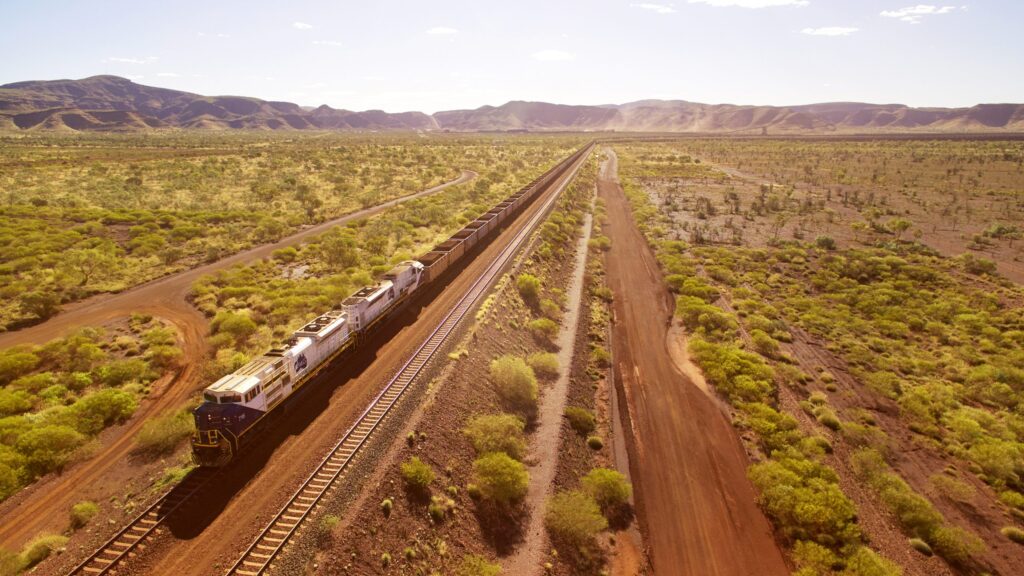
Following last month’s blog post about a solar-charging car, Australia is now home to an equally groundbreaking innovation: the “Infinity Train.” This revolutionary train, currently under development, aims to entirely eliminate the diesel consumption that has powered rail transport for years. Instead, it harnesses a completely novel energy source for locomotion: gravity.
The Australian mining giant Fortescue and its subsidiary, Fortescue Future Industries (FFI), have partnered with the U.K.-based Williams Advanced Engineering, a renowned technology and engineering services firm. Together, they are developing the world’s first Infinity Train – an electric vehicle designed to transport massive loads of iron ore without the need for traditional charging infrastructure.
Fortescue CEO Elizabeth Gaines: The World’s Most Efficient Battery Electric Locomotive
How Does the Gravity-Powered Infinity Train Operate?
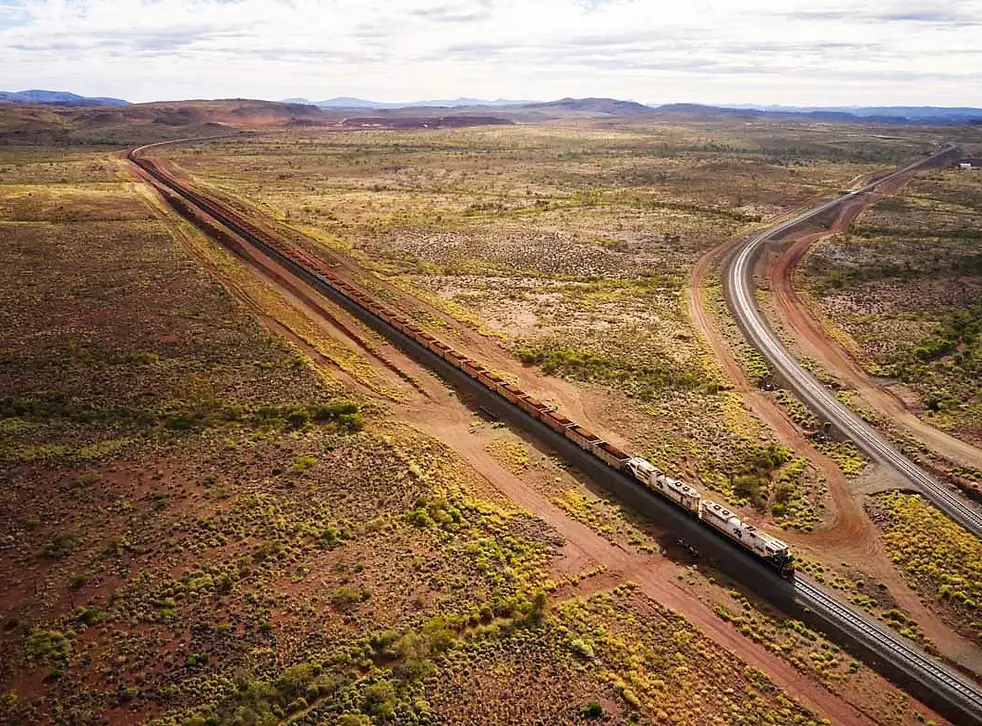
The Infinity Train is engineered to efficiently load and unload iron ore by navigating a valley between a mountain peak and its base. The train transports a staggering 34,404 tons of iron ore from the mining area down the valley. Applying fundamental physics principles – specifically, the conversion of gravitational potential energy into kinetic energy as an object descends – this collaboration has successfully conceptualized a self-charging train. Once the ore is unloaded, the train becomes significantly lighter, with enough stored energy to effortlessly ascend back to the top for its next load.
Gravity-Powered Regeneration: A Capital-Efficient Solution for Diesel Elimination
The Infinity Train’s innovative approach will eliminate the need for costly renewable energy generation and charging infrastructure. According to Gaines, this makes it a highly capital-efficient solution for Fortescue, significantly reducing diesel consumption and emissions from their crucial rail operations.
This immense train stretches approximately 2.8 kilometers in length and comprises 244 ore cars – an extraordinary scale that inspired its “Infinity Train” moniker. In 2021 alone, Fortescue’s rail operations consumed 82 million liters of diesel, highlighting the profound environmental impact this new technology could mitigate.
Related Posts
Revolutionary Smart Bricks: Construction Materials That Store Energy
Superconductivity Breakthrough: Ushering in a New Energy Revolution?
Scientists Test Space Solar Panels for Beaming Earth Electricity
Space Manufacturing Emerges: Satellites That 3D Print Themselves In Orbit
Icelandic Scientists Combat Climate Change by Storing Carbon Dioxide in Rocks
With an investment of 45 million euros over the next two years for its implementation, the Infinity Train project is a cornerstone of Fortescue’s ambitious goal for net-zero emissions by 2030. The company is also actively pursuing other groundbreaking eco-friendly initiatives, including the development of the world’s first ammonia-fueled ships and hydrogen fuel cell-powered mining trucks.
While details remain limited, the company is optimistic about the future of this technology, hoping it extends beyond a single use case into various other industrial applications.
From self-charging cars to gravity-powered trains, the future of sustainable transportation is rapidly evolving. Imagine a world where airplanes also run on renewable principles, paving the way for a fully sustainable global infrastructure. If you have an eco-friendly idea, now is the time to pursue it – life is too short for regrets!
Join our community by subscribing to our Weekly Newsletter to stay updated on the latest AI updates and technologies, including the tips and how-to guides. (Also, follow us on Instagram (@inner_detail) for more updates in your feed).
(For more such interesting informational, technology and innovation stuffs, keep reading The Inner Detail).