
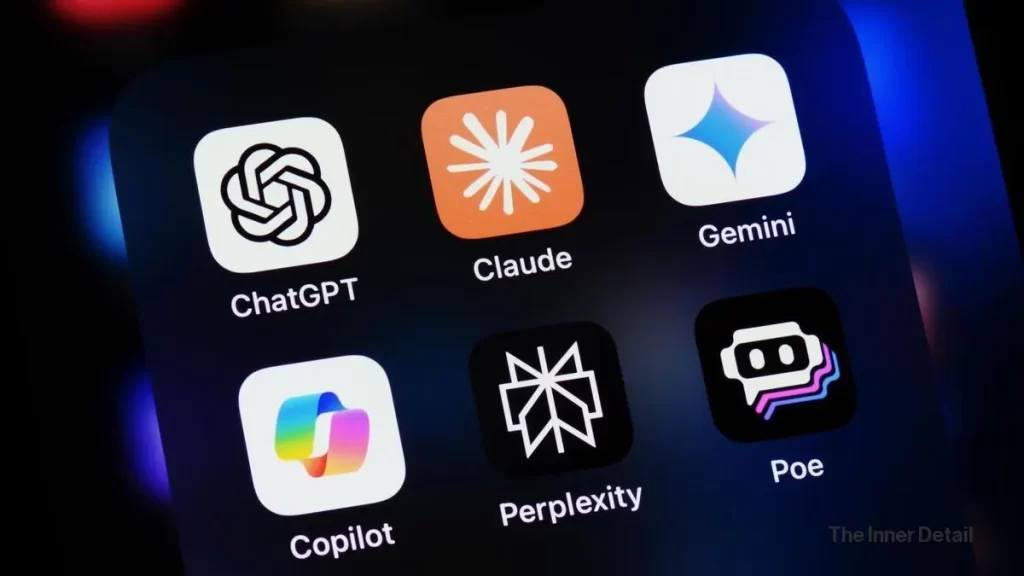
The artificial intelligence economy has entered a mature phase defined by architectural specialization, operational transparency, and dynamic pricing models. The market has evolved beyond simple conversational interfaces into autonomous agentic workflows, long-context reasoning engines, and integrated tool orchestration platforms.
As intelligence capabilities have scaled, the financial structures governing AI access have grown increasingly complex. Navigating this ecosystem requires a granular understanding of both consumer and enterprise subscription tiers and metered developer API token economics.
The primary economic driver in the current market is a sharp structural split: rapid price decreases for standard text generation running alongside premium pricing for extended reasoning, multi-turn agent execution, and long-context processing.
Organizations and individual practitioners must constantly weigh flat-rate consumer subscriptions against pay-as-you-go API architectures and multi-model aggregator applications.
Evaluating the cost structure of six major platforms—ChatGPT (OpenAI), Claude (Anthropic), Gemini (Google), Perplexity, Grok (xAI), and universal aggregator platforms like ChatBot.com—reveals how top-tier model performance, benchmark scores, and developer token rates shape total operational spend.
Consumer and Enterprise Subscription Frameworks
Consumer and prosumer access to frontier artificial intelligence is distributed through tiered monthly and annual subscriptions.
These packaged plans bundle model inference with graphic user interfaces, web retrieval engines, workspace integrations, document processing, and multimodal creation tools.
Pricing tiers vary significantly across platforms, reflecting divergent target markets, feature sets, and underlying compute requirements.
| Platform | Free Tier | Tier-I Plan | Tier-II Plan | Tier-III Plan | Core Features & Starter Value Proposition |
| ChatGPT | Available | ₹399 / month (~$4.80) [Go Plan] | ₹1,999 / month (~$24.00) [Plus Plan] | ₹10,699 / month (~$128.00) [Pro / Team] | High message caps, GPT-5.6 access, DALL-E image generation, advanced voice mode, extended memory retention. |
| Claude | Available | ₹2,399 / month (~$28.80) [Pro Plan] | ₹11,999 / month (~$144.00) [Max Plan] | N/A | Integrated Cowork workspace, Claude 5 model suite, 1M context windows, multi-agent execution teams. |
| Perplexity | Available | ₹23,315 / year (~$280.00) [Pro Annual] | ₹23,307 / month (~$280.00) [Max Monthly] | N/A | 4,000 monthly execution credits, deep research agents, web synthesis, automated app/document creation. |
| Gemini | Available | ₹399 / month (~$4.80) [Basic Plan] | ₹1,950 / month (~$23.50) [Advanced Plan] | ₹6,500 / month (~$78.00) [Enterprise] | Flash thinking models, Google Workspace integration, live audio/video analysis, AI Music Studio suite. |
| SuperGrok | Not Available | ₹2,900 / month (~$35.00) [Pro Tier] | $100 / month (~₹9,519) [Heavy Tier] | $300 / month (~₹28,557) [Max Tier] | Advanced coding suites, live X social context ingestion, real-time media generation, 2M context window. |
| ChatBot.com | 14-Day Trial | $99 / month (~₹9,428) [Monthly Rate] | $79 / month (~₹7,521) [Annualized Rate] | N/A | Multi-model unified workspace, agent builder, direct API key integration, team workspace routing. |
Subscription Packaging and Value Differentiation
OpenAI’s ChatGPT pricing tier strategy targets broad market penetration. The entry-level Go plan at ₹399 per month (~$4.80) provides affordable access to budget models in price-sensitive regional markets, while the standard Plus plan at ₹1,999 per month (~$24.00) unlocks access to flagship models like GPT-5.6 subject to rolling abuse guardrails.
The high-end Pro and Team plans, which scale to ₹10,699 per month (~$128.00), cater to power users and research teams requiring dedicated compute allocations, unrestricted o-series reasoning access, deep research execution, and strict corporate data isolation guarantees.
Anthropic’s Claude subscription model focuses heavily on professional productivity, complex instruction following, and software engineering workflows. The Pro plan at ₹2,399 per month (~$28.80) provides individual engineers with daily limits for Claude Sonnet 5 and Artifacts.
The higher-tier Max plan at ₹11,999 per month (~$144.00) targets professional developers and enterprise power users. This top plan provides access to Claude Opus 5 and Fable 5, unlocking parallel “Agent Teams” capable of running long-horizon code refactoring, context parsing, and system execution directly inside developer workspaces.
Google’s Gemini tier structure builds value through integration across the broader Google Workspace ecosystem. The Advanced plan at ₹1,950 per month (~$23.50) embeds Gemini 3.6 Pro natively into Gmail, Docs, Drive, and Google Flow, while bundling specialized multimodal tools such as the AI Music Studio and real-time audio/video processing.
The Enterprise tier at ₹6,500 per month (~$78.00) expands these capabilities to commercial organizations requiring centralized administrative governance, audit logging, and data privacy protections.
Perplexity positions its platform as an AI-native research and search engine rather than a generic text generator. Its subscription options include an annual Pro membership at ₹23,315 per year (~$280.00) alongside a monthly Max tier priced at ₹23,307 per month (~$280.00).
Subscriptions provide 4,000 monthly bonus execution credits that power multi-step web crawling, real-time research synthesis, deep citation verification, and automated document synthesis.
xAI’s SuperGrok diverges from competitors by omitting a permanent free tier, requiring immediate paid commitment. Subscriptions start at ₹2,900 per month (~$35.00) for the base Pro plan and extend to $100 per month (~₹9,519) for the Heavy tier and $300 per month (~₹28,557) for the Max tier. This tiered structure targets quantitative analysts, coders, and technical power users who require unthrottled access to Grok 4’s 2-million-token context window, real-time X platform data streams, and high-throughput video generation engines.
Multi-model aggregators, represented by platforms like ChatBot.com, offer a unified alternative to single-vendor subscriptions. Rather than locking organizations into individual platforms, these services provide consolidated workspaces priced between $79 and $99 per month (~₹7,521–₹9,428).
Subscriptions include pooled execution balances and multi-agent routing engines that dynamically allocate user prompts across OpenAI, Anthropic, Google, and open-weight models based on cost constraints and required capabilities.
Frontier Model Intelligence and Benchmark Standards
Evaluating AI subscription value requires looking beyond monthly cost figures to standardized benchmark performance. Older benchmarks such as legacy MMLU and HumanEval have suffered from score saturation, with top-tier models clustering near maximum scores above 90%.
Consequently, performance evaluation relies on harder, contamination-resistant test suites: GPQA Diamond (graduate-level science reasoning), SWE-bench Verified (real-world GitHub issue resolution), AIME (competition-level mathematics), and MMMU (multimodal university-level evaluation).
Quantitative Performance Dynamics
OpenAI’s GPT-5.6 Sol delivers strong results in competitive mathematics and scientific reasoning.
Achieving 97.8% on the MATH benchmark and 89.6% on GPQA Diamond, GPT-5.6 Sol leads in theoretical problem-solving and multi-step academic research. Its 74.6% score on SWE-bench Verified confirms its strength as an autonomous agentic engine for software development tasks.
Anthropic’s Claude Fable 5 and Opus 5 models demonstrate leadership in complex code editing, long-horizon project management, and agentic precision.
Claude Fable 5 leads general knowledge and software engineering metrics with a 94.6% score on MMLU and 79.4% on SWE-bench Verified. The Claude 5 architecture excels at maintaining long-context coherence, retrieving information across its full 1-million-token context window without degrading during repository-scale refactoring.
Google’s Gemini 3.6 Pro holds a clear edge in native multimodal performance. Scoring 89.7% on MMMU, Gemini 3.6 Pro outperforms competing models when processing complex, mixed inputs containing high-resolution visual data, technical charts, video frames, and raw audio streams.
Paired with a 2-million-token context window, it provides strong capabilities for large-scale document parsing and media archive analysis.
xAI’s Grok 4 demonstrates specialized mathematical capabilities, scoring a perfect 100% on the AIME competition math test when executing under maximum extended reasoning constraints.
Its 87.5% score on GPQA Diamond places it close behind GPT-5.6 Sol for scientific reasoning, while its 2-million-token context window supports deep research across real-time social streams and massive datasets.
Developer API Economics and Token Metrics
While end-user subscriptions charge flat monthly fees for web access, commercial software applications rely on metered developer APIs. API expenditures are calculated on an exact usage basis, measured in dollars per million tokens ().
Total developer spend across programmatic workloads is calculated using a standard token economics equation:

Across all provider pricing structures, output tokens cost three to eight times more than input tokens. This discrepancy reflects the underlying compute mechanics: processing input prompts occurs in parallel, whereas auto-regressive output generation requires sequential forward passes through the network for every token produced.
| Provider | Model Tier | Input Cost / 1M | Output Cost / 1M | Cached Input / 1M | Context Window | Primary Developer Use Case |
| OpenAI | GPT-4.1 Nano | $0.10 | $0.40 | $0.025 | 1.0 Million | Request routing, text classification, simple extraction. |
| OpenAI | GPT-4.1 Mini | $0.40 | $1.60 | $0.100 | 1.0 Million | Mid-tier production applications, budget agents. |
| OpenAI | GPT-4.1 Workhorse | $2.00 | $8.00 | $0.500 | 1.0 Million | Standard production applications, software development. |
| OpenAI | GPT-5.6 Sol | $5.00 | $30.00 | $0.500 | 1.1 Million | Extended academic reasoning, scientific research, math proofs. |
| OpenAI | o4-mini Reasoning | $1.10 | $4.40 | $0.275 | 200,000 | Value-optimized reasoning, multi-step logic pipelines. |
| Anthropic | Haiku 4.5 | $0.80 | $4.00 | $0.080 | 200,000 | High-throughput chat support, low-latency parsing. |
| Anthropic | Sonnet 5 | $3.00 | $15.00 | $0.300 | 1.0 Million | Enterprise coding, document parsing, agent tools. |
| Anthropic | Opus 5 | $5.00 | $25.00 | $0.500 | 1.0 Million | Software architecture, strategic analysis, deep refactoring. |
| Anthropic | Fable 5 | $10.00 | $50.00 | $1.000 | 1.0 Million | Flagship research, autonomous repository engineering. |
| Gemini 3 Flash | $0.10 | $0.40 | $0.010 | 1.0 Million | High-volume tasks, real-time multimodal processing. | |
| Gemini 2.5 Flash | $0.30 | $2.50 | $0.030 | 1.0 Million | Cost-sensitive general inference. | |
| Gemini 3.1 Pro | $1.25 | $10.00 | $0.125 | 2.0 Million | Multimodal archive processing, long-context research. | |
| xAI | Grok 4 Mini | $0.30 | $0.50 | $0.030 | 256,000 | High-speed data processing, budget analysis. |
| xAI | Grok 4 Flagship | $3.00 | $15.00 | $0.300 | 2.0 Million | Live trend retrieval, quantitative reasoning. |
| Perplexity | Sonar Pro | $3.00 | $15.00 | $0.300 | 200,000 | Grounded web search synthesis, live QA pipelines. |
| Perplexity | Sonar Deep Research | $2.00 | $8.00 | $0.200 | 200,000 | Automated literature reviews, multi-step research. |
Advanced Production Cost Optimization
Optimizing API expenses across high-volume production applications relies on three core techniques: prompt caching, batch execution discounts, and dynamic model routing.
Prompt caching provides significant cost savings for enterprise workloads that reuse static system instructions, repository context, or base document templates. Once a prompt prefix is written to a provider’s context cache, subsequent calls hitting that cached context receive substantial discounts:
- OpenAI charges 10% to 25% of baseline input rates for cached prompt reads.
- Anthropic applies a flat 90% discount on cache hits, charging 10% of standard input costs.
- Google applies a similar 90% reduction for context caching hits across its Gemini Pro and Flash models.
For non-interactive operations—such as offline log analysis, night-time batch code auditing, dataset translation, or bulk content generation—providers offer dedicated Batch APIs. Submitting requests via asynchronous batch queues provides a flat 50% discount off standard real-time rates across OpenAI, Anthropic, and Google platforms.
Dynamic model routing offers a high-impact strategy for enterprise spend management. Sending all user prompts to flagship frontier models like Claude Opus 5 or GPT-5.6 Sol results in unnecessarily high operational costs. Production architectures implement intelligent routing layers that evaluate incoming prompt complexity and route requests across three distinct operational tiers:
- Approximately 70% of standard user queries (simple extractions, basic formatting, routine classification) are routed to low-cost models like GPT-4.1 Nano ($0.10/$0.40) or Gemini 3 Flash ($0.10/$0.40).
- Approximately 20% of intermediate queries (technical writing, multi-file code editing, complex conversational flows) are directed to workhorse models like Claude Sonnet 5 ($3.00/$15.00) or GPT-4.1 ($2.00/$8.00).
- The remaining 10% of demanding queries (advanced mathematical proofs, deep agentic planning, repository-wide bug fixes) are escalated to top-tier reasoning engines like GPT-5.6 Sol or Claude Fable 5.
This tiered routing approach reduces overall token costs by 60% to 80% compared to uniform flagship routing, while maintaining high output quality across user workloads.
The Billing Mechanics of Reasoning Tokens
A major factor in production API budgeting is the billing treatment of chain-of-thought “reasoning tokens”. Advanced models—including OpenAI’s o-series (o3, o4-mini) and Anthropic’s extended thinking modes—generate internal reasoning tokens as they process complex logic, plan multi-step execution paths, and evaluate intermediate steps.
While these internal reasoning tokens are filtered out from final user outputs in graphical user interfaces, API providers bill them as standard output tokens. A prompt that produces a concise 200-word visible answer may consume 3,000 internal reasoning tokens during its decision-making phase. Because output tokens command premium pricing ($4.40 to $50.00 per million tokens), extended reasoning workloads can cost 3x to 5x more than standard generation tasks. Enterprise forecasting must account for this output token expansion factor when deploying reasoning models at scale.
Strategic Comparison: Subscriptions vs. API Architectures vs. Aggregators
Selecting the most cost-effective deployment model requires matching consumption volume and technical requirements against the right delivery mechanism.
Workload volume dictates the economic threshold where pay-as-you-go APIs become more cost-effective than fixed monthly subscriptions. Light usage patterns generating under 50 requests per day typically incur monthly API bills between $2.00 and $5.00, making programmatic access far cheaper than a $20.00 to $30.00 flat subscription. Conversely, interactive power users generating high daily prompt volumes benefit from the fixed pricing of individual subscriptions. At the enterprise scale, application pipelines require metered API infrastructure backed by prompt caching and batch processing to optimize unit economics.
Individual Creators and Non-Technical Professionals
For individual creators, writers, and research analysts, fixed monthly consumer subscriptions provide predictable cost structures. Subscriptions absorb fluctuating usage spikes, cover high-context document processing, and eliminate variable billing uncertainty.
- Best All-Around Consumer Value: Gemini Advanced at ₹1,950 per month (~$23.50) offers a strong bundle, combining access to Gemini 3.6 Pro with 2TB of Google One cloud storage and Workspace integration.
- Best for Knowledge Synthesis: Perplexity Pro at ₹23,315 per year (~$280.00) provides real-time web retrieval, structured inline citations, and automated research synthesis tools.
- Best for Interactive Software Development: Claude Pro at ₹2,399 per month (~$28.80) provides individual developers with access to Claude Sonnet 5, Artifacts, and Cowork workspaces.
Developers and Technical Software Teams
Software engineers building custom applications or agentic tools often find metered API access more cost-effective than managing individual web subscriptions.
Consider an active developer generating 40 interactive coding requests daily, with each request sending 10,000 input tokens of codebase context and receiving 1,000 output tokens:
Using Claude Sonnet 5 via the API without prompt caching:
- Daily Input:

- Daily Output:

- Daily Total:

Enabling prompt caching (assuming an 80% cache hit rate on repeated system prompts and project context):
- Cached Input:

- Fresh Input:

- Daily Output:

- Monthly Total:

With prompt caching active, developer API spend drops to $28.08 per month—aligning closely with a $28.80 Pro web subscription while adding the flexibility of direct IDE integration, custom background triggers, and programmatic workflows.
Enterprise Deployment and Multi-Model Aggregation
For mid-sized companies and enterprise operations, managing multiple single-vendor subscriptions introduces administrative complexity and tool fragmentation. Purchasing separate $20.00 to $144.00 monthly seats across ChatGPT, Claude, and Gemini for dozens of employees often leads to underutilized licenses and uncoordinated corporate spend.
Enterprises generally address these challenges through two primary strategies:
- Deploying Centralized Gateway Infrastructure: Organizations build internal developer gateways backed by direct API connections to OpenAI, Anthropic, and Google. Centralized gateways enforce company-wide prompt caching, process background workloads through Batch APIs, and implement automated model routing to manage overall AI spend.
- Adopting Unified Multi-Model Aggregators: Platforms such as ChatBot.com ($79.00–$99.00 per month) provide unified team workspaces that aggregate multiple underlying model engines. This approach simplifies seat management, eliminates single-vendor lock-in, and provides built-in fallback routing across models without requiring custom internal gateway development.
Industry Recommendations and Strategic Frameworks
The AI market offers clear pricing and performance options tailored to specific deployment needs. Standard text generation has largely commoditized, bringing entry-level processing costs down to $0.10 per million tokens. At the same time, top-tier vendors differentiate their flagship offerings through extended context windows, high reasoning reliability, and autonomous agent capabilities.
- For Cost-Sensitive Production Applications: High-volume applications should use low-cost models like GPT-4.1 Nano ($0.10/$0.40) or Gemini 3 Flash ($0.10/$0.40) alongside prompt caching and Batch APIs to minimize unit costs.
- For Complex Software Development: Software engineering teams gain the highest efficiency from Claude Sonnet 5 ($3.00/$15.00 API) or Claude Max subscriptions, leveraging strong SWE-bench Verified coding performance and reliable context processing.
- For Scientific Research and Advanced Logic: OpenAI’s GPT-5.6 Sol ($5.00/$30.00 API) and xAI’s Grok 4 offer top-tier performance for advanced mathematical proofs, scientific research, and complex academic reasoning.
- For Multimodal and Large Document Pipelines: Google’s Gemini 3.6 Pro ($1.25/$10.00 API) combines a 2-million-token context window with strong MMMU multimodal benchmark performance, making it a cost-effective option for processing large media archives and extensive document suites.
By matching operational requirements with the right model tier, pricing structure, and cost optimization techniques, organizations can effectively deploy frontier AI capabilities while maintaining long-term financial efficiency.
Join our community by subscribing to our Weekly Newsletter to stay updated on the latest AI updates and technologies, including the tips and how-to guides.
(Also, follow us on Instagram (@tid_technology) for more updates in your feed and our WhatsApp Channel to get daily news straight to your Messaging App).
