Google, the technology giant synonymous with answers, has reportedly achieved a groundbreaking feat by unearthing “time crystals” within a quantum computer. This unprecedented discovery appears to challenge fundamental principles of physics, including Newton’s first law of motion and the second law of thermodynamics, marking a significant moment in scientific history.
What exactly do these “time crystals” mean for the world and for us? This article aims to simplify the complexities of quantum physics, offering a clear, layman’s understanding of this remarkable development.
Understanding Quantum Computing
To fully grasp the concept of time crystals, it’s essential to first understand quantum computing. This advanced form of computation leverages quantum mechanics to solve incredibly complex problems with unprecedented speed. For instance, a quantum computer can complete calculations in approximately 200 seconds that would take a conventional i5/i7 computer an astounding 10,000 years. Such immense processing power highlights the transformative potential of quantum computers.
The core of quantum computers lies in ‘qubits,’ or quantum bits. Unlike traditional logical bits that can only represent either a 0 or a 1 at any given time, qubits possess the unique ability to manipulate both 0s and 1s simultaneously, enabling far more complex computations.
To gain a deeper understanding of quantum computing, its applications, and necessity, explore the linked resource below:
Google’s Quantum Computers Unveil Time Crystals
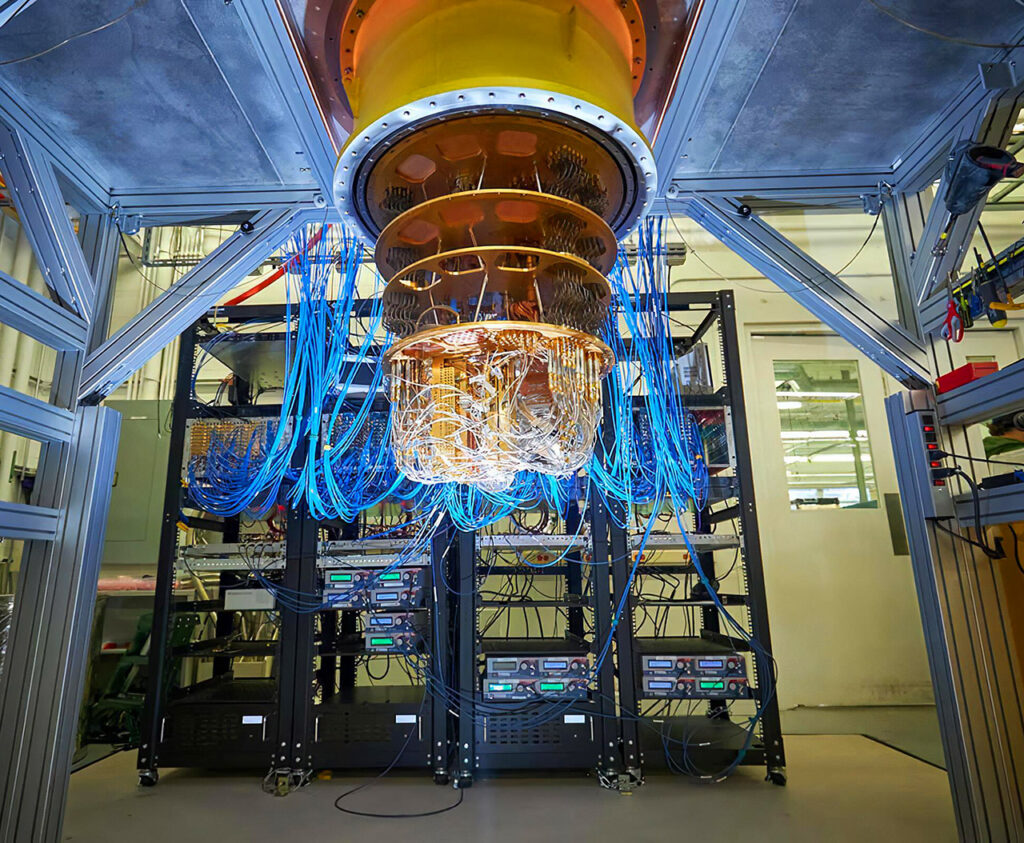
In a collaborative effort, researchers from Google, alongside physicists from Stanford, Princeton, and other esteemed universities, assert that they have successfully demonstrated a true “time crystal” using Google’s quantum computer. This significant finding is detailed in a preprint posted online.
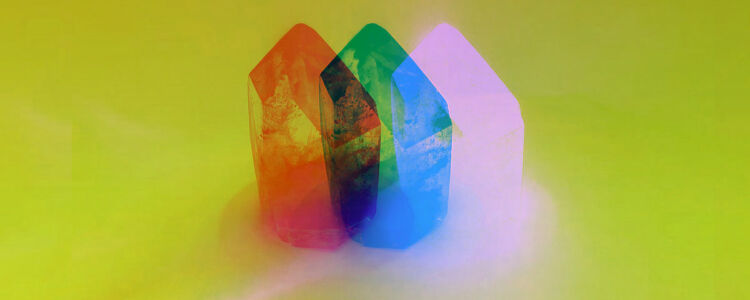
According to Wikipedia, time crystals are a unique quantum system of particles. Their lowest energy state is characterized by continuous, repetitive motion. Essentially, a time crystal is a fascinating object where its components move in a consistent, repeating cycle, remarkably maintaining this perpetual change without expending any energy.
Imagine a clock whose hands rotate tirelessly in a regular cycle, yet it never requires a battery to sustain its motion. This perpetual, energy-free movement is the essence of a time crystal. This analogy helps clarify the extraordinary nature of this new state of matter.
Time crystals represent a novel phase of matter, distinct from traditional states like solid, liquid, gas, and plasma. Their theoretical existence was first predicted by physicist Frank Wilczek in 2012, and since then, scientists have strived to prove their physical reality.
Time Crystals Defy Fundamental Scientific Laws
Challenging the Concept of Equilibrium
As a distinct category within the phases of matter, the time crystal diverges from conventional phases such as water or ice by exhibiting an ‘out-of-equilibrium’ state. Remarkably, it maintains order and perfect stability even while existing in an excited and constantly evolving condition.
Typically, equilibrium describes a state where matter adapts to its surroundings until their properties equalize. For example, ice melts to match the ambient temperature, achieving thermal equilibrium. However, a time crystal astonishingly remains in its elevated, active state, resisting the urge to settle into equilibrium. This implies that a “time-crystal ice” would theoretically remain frozen even outside a freezer—a truly mind-bending concept.
“This is just this completely new and exciting space that we’re working in now,” stated Vedika Khemani, a condensed matter physicist at Stanford. Khemani, who co-discovered this novel phase during her graduate studies, also co-authored the recent paper with the Google research team, underscoring the significance of this evolving field.
The Second Law of Thermodynamics and Entropy
The Second Law of Thermodynamics postulates that any isolated system naturally progresses towards a state of increased disorder. This implies that during any energy conversion, a portion of that energy will inevitably be dissipated as heat or waste. This inherent disorder, known as entropy, tends to increase throughout such processes.
The time crystal presents a puzzling anomaly in physics because it does not dissipate energy when transitioning between states. “The result is incredible; you are escaping the second law of thermodynamics,” affirmed Roderich Moessner, a co-author of the study and director at the Max Planck Institute, highlighting the profound implications of this discovery.
Future Applications of Time Crystals
Time crystals hold immense promise for practical applications. Their unique properties could significantly enhance existing atomic clock technology, which are highly precise timekeeping instruments. Furthermore, they may lead to advancements in technologies like gyroscopes and various systems that depend on the accuracy of atomic clocks, including GPS.
Recent theoretical findings by researchers at the California Institute of Technology (Caltech) and the Weizmann Institute in Israel suggest the possibility of creating systems that merge time crystals with topological superconductors. This combination could unlock entirely new technological capabilities.
“Something that’s as stable as this is unusual, and special things become useful,” Roderich Moessner remarked, emphasizing the potential utility of such a uniquely stable phenomenon.
Superconductivity, a phenomenon with the potential to revolutionize energy by eliminating the need for batteries and optimizing power generation, could significantly benefit from the advancements offered by time crystals in this scientific domain.
Delve deeper into Superconductivity by reading more:
Despite the excitement, Google expresses a degree of uncertainty regarding the experimental feasibility of their time crystal claim. Their current demonstration relies on theoretical comparisons with peer research. Nevertheless, transforming what was once considered impossible into a tangible reality remains a compelling prospect for the future of physics.
To learn more about time crystals and Google’s recent findings, click here.
Join our community by subscribing to our Weekly Newsletter to stay updated on the latest AI updates and technologies, including tips and how-to guides. Also, follow us on Instagram (@inner_detail) for more updates in your feed).
(For more such interesting informational, technology and innovation stuffs, keep reading The Inner Detail).