
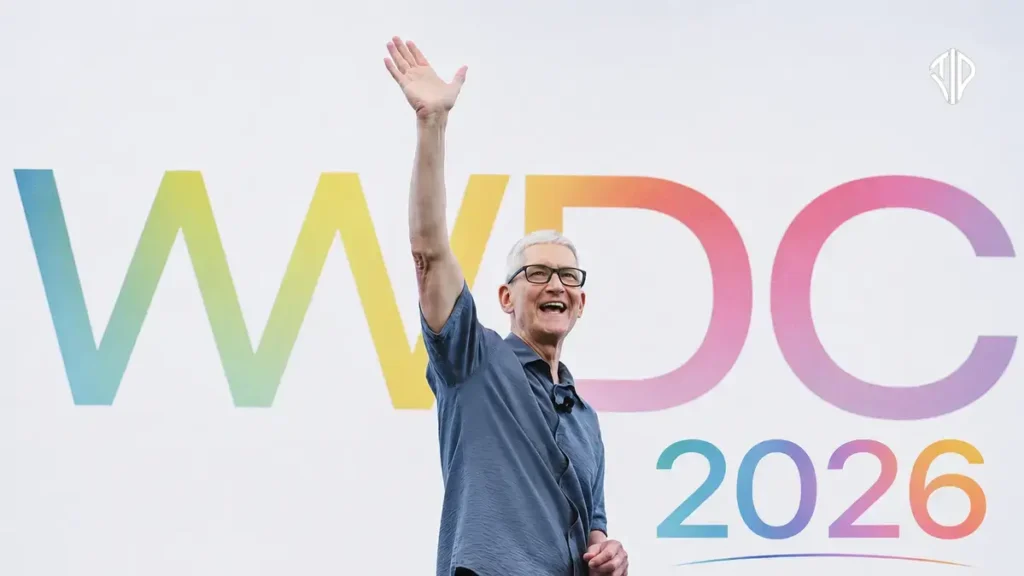
Apple’s WWDC 2026 unveiled a sweeping push into artificial intelligence, headlined by a revamped Siri, the debut of Apple Intelligence, and a host of new AI-powered features.
The event signaled Apple’s bold leap into the future of AI, captivating the entire tech world. The centre of gravity at Apple Park shifted entirely toward artificial intelligence, serving as Apple’s clearest acknowledgement yet that AI is no longer just an add-on, but is becoming the platform itself.
After spending the last two years racing to catch up to aggressive AI deployments by rivals, Apple used this year’s keynote to lead with structural fixes and reveal a heavily upgraded, deeply integrated system.
By blending on-device capabilities with secure cloud processing, Apple has fundamentally restructured how users will interact with their iPhones, iPads, and Macs. Here is a comprehensive breakdown of the ten biggest announcements from Apple’s WWDC 2026 keynote.
1. The Total Transformation into Siri AI

The most highly anticipated announcement was the massive overhaul of Apple’s long-standing digital assistant, which has been officially rebranded as Siri AI. After facing growing user expectations in the generative AI era, Apple has transformed Siri from a simple command-based tool into a highly conversational, context-aware digital assistant powered by a partnership with Google’s Gemini models.
Visually, Siri AI introduces an entirely new way to interact. On newer iPhones featuring a Dynamic Island, a distinct Siri animation will appear at the top of the screen when processing requests, shifting away from the traditional glowing orb at the bottom. Alternatively, users running iOS 27 can simply swipe down from the middle of their screen to bring up the new Siri AI interface.
When you ask a question, responses will neatly pop up in a conversational card, allowing you to maintain context across multiple prompts in an ongoing chat. Apple has also introduced a dedicated Siri chatbot app, aiming to make it a one-stop destination for all your information needs, complete with options to customize the voice’s expressiveness and rate of speech.
Siri AI’s real power, however, lies in its Visual Intelligence. Siri can now take action based on what is currently on your screen. For instance, if you are looking at a photo of a garden shed, you can trigger Siri AI and ask how best to convert it into a maker space.
Using the screenshot tool on macOS Golden Gate, you can highlight a festival schedule and ask Siri AI to parse the image and automatically add the performances you want to your calendar.
Siri AI will initially be available in English for devices like the iPhone 16 lineup, iPhone 15 Pro, and newer iPads and Macs, though its rollout in the European Union is currently delayed due to the Digital Markets Act.
2. Apple Intelligence and Private Cloud Compute

Underpinning the new Siri AI is a broader, system-wide architecture called Apple Intelligence. Apple’s AI strategy fundamentally differs from companies like Google and Microsoft; instead of building an autonomous agent that browses the open web independently, Apple focuses deeply on personal context.
Apple Intelligence acts as an orchestrator, constantly building a live understanding of your personal data by indexing your messages, emails, photos, and documents.
This allows for incredibly complex, personalized actions. You can ask Siri AI to retrieve a specific detail from an old text conversation, find a hidden document, or suggest recipes for a watch party based on which countries are playing in the World Cup.
Furthermore, Apple Intelligence powers system-wide writing tools that can proofread your text, adjust your tone, and generate smart replies that perfectly mimic your personal writing style across apps like Mail and Messages.
Because handling this much personal data is a massive security concern, Apple leaned heavily into a privacy-first approach by utilizing Private Cloud Compute. Apple’s Senior Vice President Craig Federighi stated that privacy in AI is “non-negotiable”.
The hybrid architecture relies on on-device processing first, but when a complex task requires server-side computation, Private Cloud Compute takes over. Apple designed this system so that your data is never stored, nor is it ever accessible to Apple, ensuring that highly personalized experiences can happen securely.
3. iOS 27 and Massive Performance Boosts

The announcement of iOS 27 proved that Apple is focusing heavily on foundational stability and speed. In a major victory for users holding onto older hardware, Apple announced that iOS 27 will be available to all iPhone models that currently support iOS 26, meaning the update will stretch all the way back to the iPhone 11. Apple completely modified the CPU scheduler in this update to ensure these older devices feel noticeably faster and more capable.
The promised performance improvements are staggering. Users can expect AirDrop transfers to process up to 80 percent faster, while messages loading in the Mail app and playback in Apple Music will see similar incredible speed boosts.
Furthermore, Apple claims that third-party apps will launch up to 30 percent faster, photos will appear in your camera roll up to 70 percent faster, and your iPhone will automatically switch to a cellular connection much quicker when moving out of Wi-Fi range.
Aesthetically, Apple is rolling back and tweaking its divisive “Liquid Glass” design language introduced last year. iOS 27 includes an opacity slider so users can decide how transparent they want the UI to look, alongside a new layered approach to app icons to address recent criticisms.
The update also introduces highly requested features like full-screen homepage widgets, completely separate volume controls for alarms, timers, and alerts, and new dynamic design tweaks for the Weather app.
4. Agentic Automations: Passwords and Shortcuts
While Apple generally focuses on user-driven AI interactions, the company is selectively stepping into the realm of “agentic AI” to handle tedious digital chores. The best example of this is the newly upgraded Passwords app.
Utilizing Apple Intelligence, the app can identify weak or compromised login credentials and allow you to strengthen them with a single tap. More impressively, the agentic AI will automatically navigate to the relevant website in the background and update those credentials on your behalf, turning a frustrating security task into a frictionless experience.
Similarly, the visual-scripting automation app, Shortcuts, is getting a massive natural language upgrade. Previously, building a complex multi-step shortcut required a bit of technical logic. Now, you can simply describe the automation you want in plain English, and the AI will generate the workflow for you.
This natural language approach opens up the powerful Shortcuts app to non-technical users, allowing anyone to easily program their own custom iOS automations.
5. Advanced AI Photo Editing and Image Playground

Apple is taking the fight directly to popular third-party AI image editors by baking incredibly powerful generative tools right into the default Photos app. The new Spatial Reframing feature utilizes AI to let you adjust the perspective of an image after it was taken, giving the illusion that you physically repositioned the camera.
If you need a photo to be wider, the new Extend tool uses generative fill to expand the scene and adjust the aspect ratio—a tool that mirrors capabilities Adobe introduced to Photoshop in 2023.
Additionally, the popular Clean Up tool has been upgraded to provide much more realistic generative infill when erasing unwanted objects or photobombers from your pictures. Beyond editing real photos, Apple is launching the Image Playground app.
This app allows users to easily generate photorealistic images or entirely new Lock Screen wallpapers from scratch using AI prompts. Recognizing the potential issues with AI generation, Apple explicitly noted that it will not train its models on photos generated using this app.
Furthermore, any image generated or heavily tweaked using Apple Intelligence will automatically be embedded with a SynthID watermark to transparently label it as AI-manipulated media.
6. Smarter Safari and System-Wide Search Overhauls
The Safari web browser is receiving some of the most genuinely useful AI features of the entire WWDC 2026 showcase. Through Apple Intelligence, Safari will now automatically and smartly organize your massive list of open tabs into unified topics.
The browser will also act as a personal monitor, proactively notifying you when changes occur on a web page, such as a sudden price drop on a product you want, a restock of a sold-out item, or even a quiet update to a company’s terms of service.
Locating items on your devices is also getting much easier. Apple fully admitted that its previous system search could be incredibly frustrating. In response, Apple’s Vice President of OS Program Management, Stacey Ford, announced that the foundation of search that powers Spotlight, Photos, and Mail across iOS, iPadOS, and macOS has been completely rebuilt from the ground up.
This new infrastructure is dramatically more stable, context-aware, and efficient, instantly indexing new files and data “almost immediately” so you never lose track of a document again.
7. Next-Generation Parental Controls
With governments around the globe increasing their scrutiny of tech companies regarding child safety, Apple dedicated a notable segment of the keynote to rolling out robust new parental controls at the device level.
Moving forward, parents and guardians can easily establish dedicated child accounts. These specific profiles will be mandatory for any user under the age of 13, and the safeguards can remain active until the child turns 18.
Apple noted that these accounts enable deep system-wide protections tailored specifically to the child’s age. Parents are given total granular control, allowing them to dictate exactly who their child can communicate with via Phone, Messages, and FaceTime.
The defaults for these child accounts are incredibly strict. “Ask to Browse” limits web access, and “Ask to Buy” blocks unauthorized App Store purchases by default. Children can, however, ping their parents to request permission to visit blocked websites or download specific apps. Furthermore, Apple has created a new way for parents to set up an Apple Watch for younger kids who do not yet own an iPhone.
8. New Health App Insights and AI Dictation

Apple continues to expand its footprint in the digital wellness space through the default Health app. Building on its existing cycle tracking capabilities, the Health app is introducing comprehensive support and insights for perimenopause and menopause.
This update addresses a rapidly expanding digital health market, directly serving an older demographic that has frequently been underserved by traditional tech platforms.
On the productivity side, Apple is launching a powerful new systemwide dictation experience baked directly into the iOS 27 keyboard. Taking direct aim at rising third-party AI dictation apps like Wispr Flow and Willow, Apple’s native dictation will intelligently correct your spellings, punctuation, and capitalization on the fly.
This system uses deep context to strip out filler words and perfectly format your speech into polished text without requiring a separate app.
9. App Store Bundles and Foldable iPhone Teases
In a major shift for developers and consumers alike, the App Store is officially introducing subscription bundles. For the first time, independent developers can partner with one another to bundle their apps—such as a suite of productivity or photography tools—together for a lower, unified subscription price.
Additionally, the App Store will begin serving deeply personalized app recommendations based on your behavior, complete with specific “App Notes” explaining exactly why the algorithm thought you would enjoy that application.
While the WWDC keynote was strictly focused on software, the newly released developer betas contained massive hardware teases. Data researchers digging through the underlying code of the iOS 27 developer beta discovered explicit references to device variables such as “foldState” and “angleDegrees”.
These code strings heavily allude to an operating system preparing to handle the unique states of a foldable device, pouring gasoline on the widespread rumors that Apple’s first foldable iPhone is actively in development.
10. Natural Language Calendar Upgrades and Cross-Platform iCloud
Apple is significantly reducing the friction of everyday scheduling. The Calendar app is receiving a major Apple Intelligence upgrade, allowing users to add or modify events by simply describing them in everyday language.
The AI is smart enough to parse these conversational descriptions and automatically attach the relevant contacts and physical locations to the calendar invite.
In a surprising move that slightly breaks down Apple’s traditional “walled garden,” the company is also expanding its photo ecosystem. iCloud shared albums will now support full-resolution photos, and this high-quality sharing capability will be officially supported on competitor platforms, including Android and Windows
Tim Cook’s Historic Farewell and the Leadership Handover
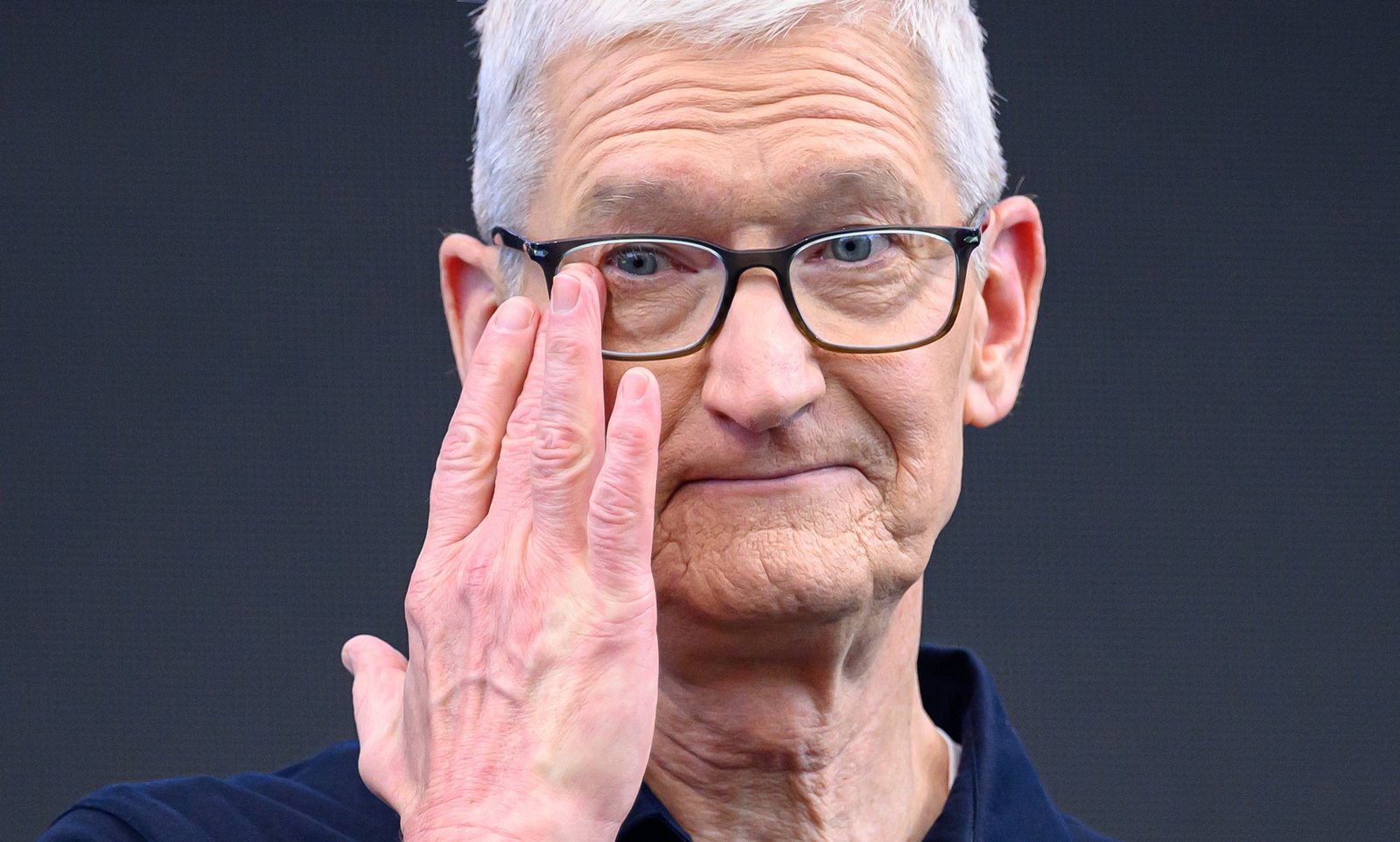
Beyond the software updates, WWDC 2026 was a deeply historic moment for the tech giant. This keynote marked the final WWDC for CEO Tim Cook. It was previously announced that Cook will be stepping down from his role and officially passing the torch to John Ternus, Apple’s current Senior Vice President of Hardware Engineering, on September 1, 2026.
At the conclusion of the massive, fast-paced keynote, Cook took a moment to reflect on his legacy at the helm of the world’s most valuable company. “Getting the best products in the world to deliver experiences that enrich people’s lives has always been our North Star,” Cook told the audience. Confident in the new AI-driven architecture they had just unveiled, Cook concluded his final WWDC by stating his true belief that “the best is still ahead at Apple”.
From completely redefining Siri and implementing a privacy-focused Private Cloud Compute infrastructure, to drastically speeding up older iPhones, WWDC 2026 proved that Apple is fully committed to the AI era.
With Tim Cook bowing out and a new foundational AI layer taking shape across every device, Apple’s ecosystem is heading into a radically intelligent new future.
Key Takeaways
- Apple unleashed the flood of AI updates in its WWDC 2026 majorly touching about the revamp of Siri AI, Apple Intelligence and so on.
- Siri AI: A complete rebranding and overhaul powered by Google Gemini, featuring Visual Intelligence and a dedicated chatbot app.
- Apple Intelligence: A new system-wide AI architecture that uses personal context and Private Cloud Compute to ensure user data remains secure.
- Legacy Support: iOS 27 brings massive performance boosts to devices as old as the iPhone 11, including 80% faster AirDrop transfers.
- Executive Transition: Tim Cook delivered his final WWDC keynote, confirming his retirement and the handover of the CEO role to John Ternus.
- Foldable Future: iOS 27 beta code explicitly references foldable device states, hinting that a foldable iPhone is imminent.
Join our community by subscribing to our Weekly Newsletter to stay updated on the latest AI updates and technologies, including the tips and how-to guides.
(Also, follow us on Instagram (@tid_technology) for more updates in your feed and our WhatsApp Channel to get daily news straight to your Messaging App).
