
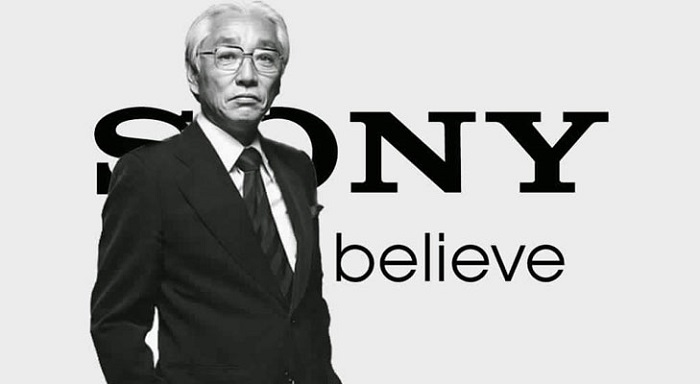
A significant portion of the global population consistently chooses Sony for their electronic gadgets and devices, a testament to its renowned performance and unwavering reliability. This trust has established Sony as a leading consumer brand worldwide. Following World War II, Sony played a pivotal role in Japan’s economic revival, becoming a beacon of innovation and quality. Yet, few realize that this global electronics powerhouse began as a humble radio repair company. This incredible journey and monumental success are largely attributed to Akio Morita, who co-founded the company with Masaru Ibuka in the 1940s.
“It had to be something different, something that nobody else was making”
– Akio Morita
Delve into the inspiring biography of Sony’s legendary co-founder, Akio Morita, and discover the path he forged in this in-depth blog post!
Akio Morita: The Visionary Co-founder of Sony – 20 Key Insights
- Akio Morita, born on January 26, 1921, in Nagoya, Aichi, Japan, hailed from a family deeply rooted in soya-sauce production. Despite expectations to join the family business, Morita’s profound interest lay in the fields of mathematics and and physics, a path he chose to pursue instead.
- Morita’s early fascination with electronics led him to experiment and even construct his own ham radio during his school years. His academic pursuits culminated in a physics degree from Osaka Imperial University in 1944.
- During World War II, Morita served as a sub-Lieutenant in the Imperial Japanese Navy. It was during this period that he befriended Masaru Ibuka, an electronics engineer with the Wartime Research Committee, who would later become his crucial business partner.
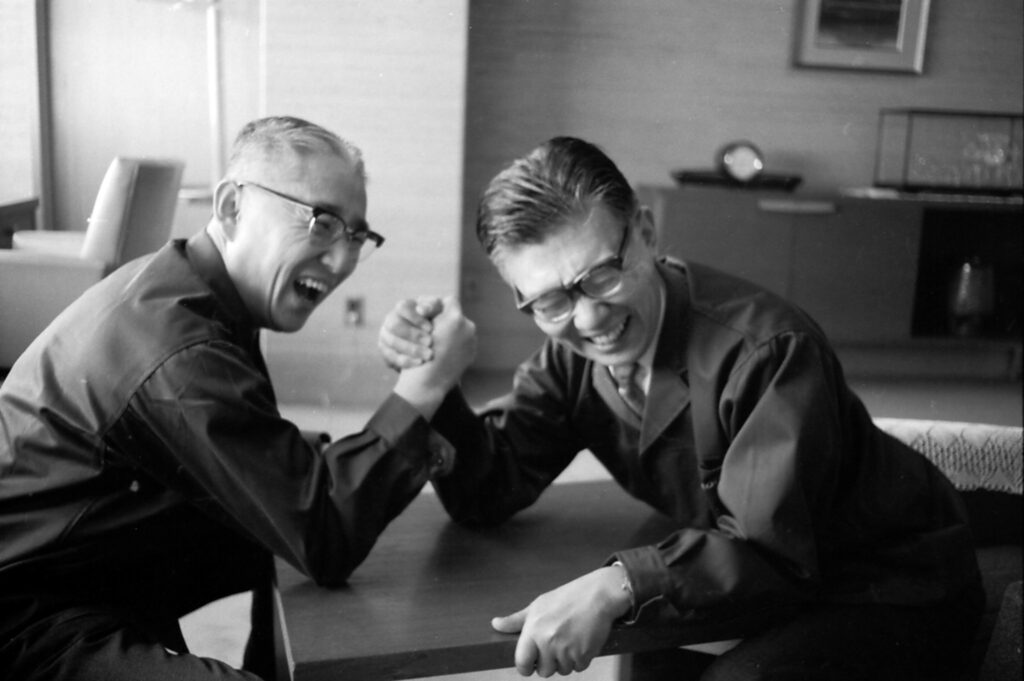
- After the war, Morita served as a physics professor. It was during this period that he stumbled upon a newspaper article detailing a new venture by his wartime acquaintance, Masaru Ibuka, in war-torn Tokyo. Ibuka’s radio repair shop intrigued Morita, and following some correspondence, he decided to join forces with Ibuka.
- In 1946, Morita and Ibuka formally established their new enterprise, the “Tokyo Telecommunications Engineering Corporation”. This pivotal moment, considered the forerunner of Sony, began modestly with only 20 employees and a capital investment of $1700 from Morita’s father.
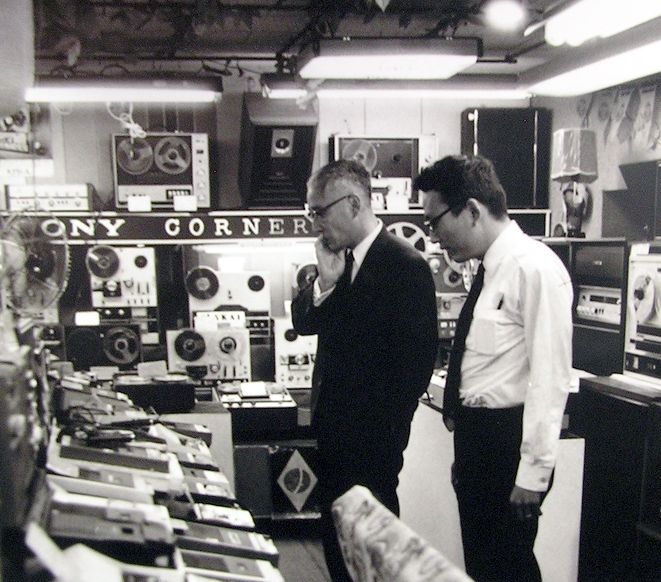
- The company achieved a breakthrough in 1949 with the development of magnetic recording tape, followed by the launch of Japan’s first Tape Recorder in 1950. This early success proved instrumental, paving the way for numerous future innovations and product developments.
- In the 1950s, Ibuka successfully secured the licensing rights for transistor technology from Bell Labs. This significant achievement made their company the first to utilize transistors for civilian applications, moving beyond military use.
- The company’s Pocket-Sized Radio, introduced in 1957, generated immense public demand. Interestingly, despite not truly fitting into standard pockets, Morita famously marketed it by showcasing shirts with specially stitched larger pockets, a clever adaptation that maximized its appeal.
- In 1958, Akio Morita officially rebranded the company as “SONY”. This name was thoughtfully derived from the Latin word “sonus,” signifying ‘sound.’ Masaru Ibuka served as the company’s President from its initial establishment in 1950 until 1971.

- Driven by a vision to expand products globally, Akio Morita established Sony Corporation of America (SONAM) in 1960. Upon his arrival in America, he keenly observed the high standards and fierce competition among American companies. Returning to Japan, Morita passionately encouraged middle-aged individuals to re-evaluate their careers and consider joining Sony, a call that inspired both prospective employees and other industry leaders to elevate their efforts.
- A significant milestone occurred in 1961 when Sony made history as the first Japanese company to be listed on the New York Stock Exchange through American Depository Receipts (ADRs).
- Sony collaborated with Columbia Broadcasting System (CBS) Records to develop software for its hardware products. This partnership eventually led to Sony’s acquisition of the CBS Records group for $2 billion in 1988, expanding its reach into content creation.
- In 1971, Akio Morita took over the presidency of Sony from Ibuka. A key element of Sony’s enduring success was Morita’s unwavering commitment to “staying two steps ahead of the competition” in product development. This foresight led Sony to numerous industry firsts, including:
- The first AM transistor radio
- The first pocket-sized transistor radio
- The first two-band transistor radio
- The first FM transistor radio
- The first all-transistor television set
- The first Betamax home-use VCR in 1975
- The first 8 mm video camera
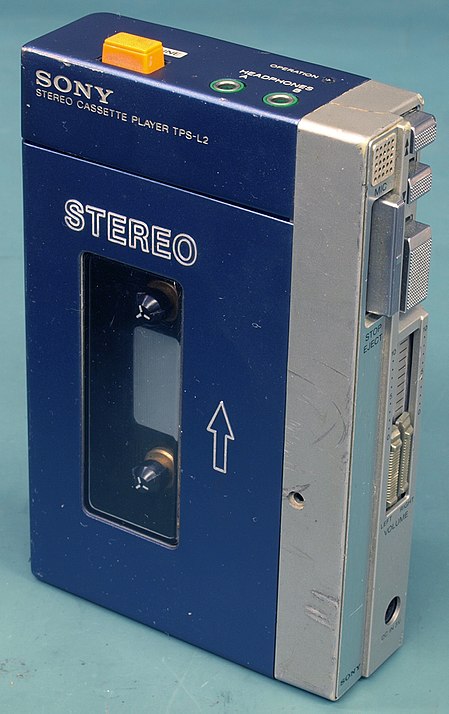
- The first portable Music player – Walkman in 1979
- The first Compact Disc player in 1981
- The first 3.5” Floppy disk in 1981
- The first portable CD player – Discman in 1984.
- Morita’s expansive vision propelled Sony into diverse new businesses and ventures. A notable move in 1989 saw Sony acquire Columbia Pictures Entertainment for a substantial $3.4 billion, diversifying its portfolio significantly.
- In 1989, Morita transitioned from the President’s role, handing it over to Norio Ohga, who also became Chairman in 1994. Ohga’s tenure was notably crucial for the establishment of Sony Computer Entertainment, which famously launched the highly successful “Playstation” gaming console.
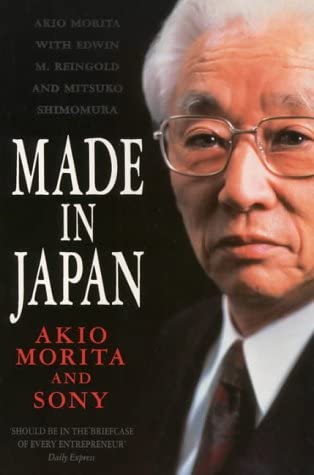
- Akio Morita also shared his insights through writing. In 1966, he authored “Never Mind School Records”, a book that argued against the overemphasis on academic achievements for professional and life success. Later, in 1986, he published his autobiography, famously titled “Made in Japan”.
- While playing tennis in 1993, Morita suffered a cerebral hemorrhage. He later passed away from pneumonia on October 3, 1999, at the age of 78.
- Beyond Sony, Morita held significant positions, including Vice Chairman of the Japan Business Federation. Both he and Sony served as vital pillars for Japan during its post-World War II economic reconstruction. Morita was also a distinguished member of the influential “Wise Men’s Group”.
- Morita received numerous international accolades for his contributions. In 1982, he was awarded the Albert Medal by the United Kingdom’s Royal Society of Arts, marking him as the first Japanese recipient of this honor. Two years later, he was bestowed with the prestigious Legion of Honour, and in 1991, he received the First Class Order of the Sacred Treasure from the Emperor of Japan.
Sony’s Enduring Legacy: The Vision of Akio Morita
The profound success of Sony’s co-founders’ vision and mission is evident in households worldwide, where at least one Sony product can typically be found. Morita’s philosophy for the company and his perspective on the world instilled a global mindset of striving for the “Best for the Best.” This enduring principle suggests that true excellence and growth are achieved only through continuous dedication and the relentless pursuit of one’s utmost potential.
“Our plan is to lead the public with new products rather than ask them what kind of products they want. The public does not know what is possible, but we do.”
Join our community by subscribing to our Weekly Newsletter to stay updated on the latest AI updates and technologies, including tips and how-to guides. Also, follow us on Instagram (@inner_detail) for more updates in your feed.
For more interesting informational, technology, and innovation content, keep reading The Inner Detail.