
AI-powered children’s toys are no longer a futuristic concept; they are a fresh reality rapidly emerging as a potential game-changer in childhood development and memory.
Marketed as an ideal alternative to iPad screen time, these interactive companions offer both promise and peril for young minds. Leading manufacturers like Curio and Miko are already building these interactive “AI robots” and “AI stuffed animals,” with even iconic toymaker Mattel partnering with OpenAI to explore the integration of AI into beloved characters like Barbie and Ken.
But what exactly are these toys, and should you consider one for your child?
Meet Curio – AI Toy
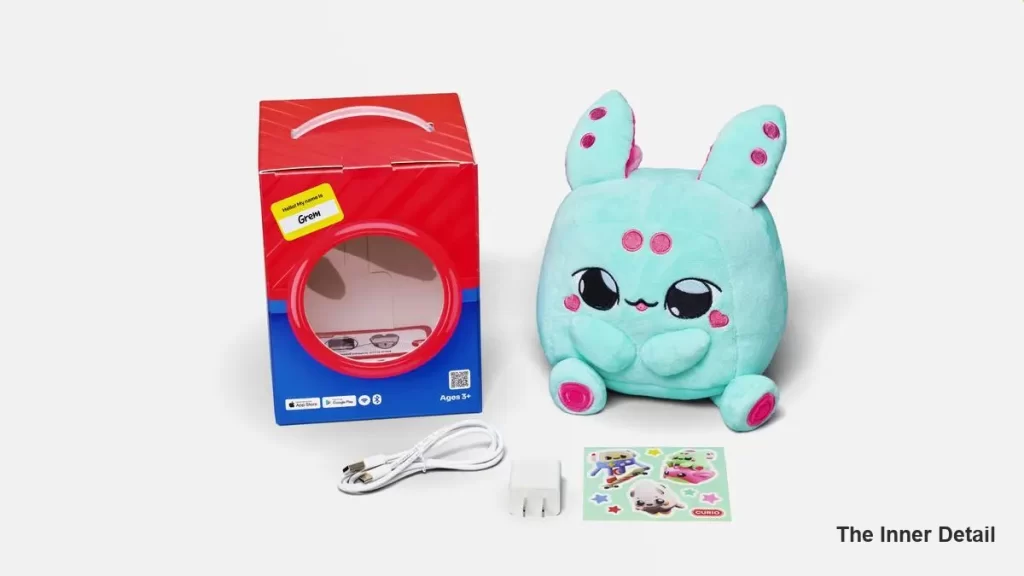
Curio is at the forefront of this new market, offering a line of screen-free AI plushies including Grok, an anthropomorphized rocket ship voiced by musician Grimes; Gabbo, resembling a plush Gameboy; and Grem, a cyan bunny with hearts on its cheeks. These beta versions are available for preorder at $99 each and are recommended for children aged 3 to 7.
Encased within each plushie is a rechargeable, Wi-Fi-connected speaker and microphone, which connects to a parent-controlled app. These toys are designed to hold full conversations, answer questions about topics like how rocket ships are made, play games, and encourage children to develop listening and communication skills.
Grimes herself, an investor in Curio and a mother, articulated her vision for these toys as a way to “bring more imagination” and make it “easy to access imagination” rather than just observing it on screens.
AI toy to disrupt Screen-time
The primary appeal of these AI toys lies in their marketing as a screen-time alternative. Parents are increasingly concerned about digital overdose, with children aged 8 and under spending an average of 2 hours and 19 minutes per day on screens, more than double the recommended limit. Curio’s plushies aim to disrupt this trend by offering stimulating playtime that can potentially free up parents.
Grimes has explicitly stated her desire to “replace iPads” and keep children’s interactions verbal, believing this approach can improve their working memory and overall brain development. The toys are positioned to encourage creativity and dynamic conversations, moving beyond static prompts. For many, the idea of an educational and interactive toy that serves as a screen-time disruptor sounds like a perfect application for AI technology.
Can AI Toy replace Human interactions?
Despite the appealing promises, introducing AI into playtime, especially during critical stages of children’s brain development, raises very real concerns. Amanda Hess, a New York Times journalist who reviewed a Curio offering, highlighted several issues:
- Ironic “Screen-Time Alternative”: Hess pointed out the irony of marketing these toys as a screen-time alternative, as both are fundamentally rooted in the same technological foundations.
- Impact on Human Interaction: One of the most significant concerns is how these toys might affect children’s social development. While the idea of an AI companion (like droids in Star Wars or the premise of Big Hero Six) can be exciting, these companions could potentially create an alternative to real human interactions and normalize not socialising with other people, relying on AI instead. Hess even noted that Curio’s Grem felt “more like a replacement for [her]” rather than an upgrade to a lifeless teddy bear.
- Privacy Concerns: This is a major concern raised by Hess’s reporting. Curio states that conversations between children and the AI toys are recorded, transcribed, and sent to parents to keep them informed about what their children are discussing. While Curio claims these conversations are not kept for any other purpose, its privacy policy creates gaps for data usage, including the sending of those conversations to third-party organizations like OpenAI and Perplexity AI. This also raises ethical questions about a child’s privacy from their own parents, potentially creating a secret tool for parents to spy on their children.
It is worth noting a contrasting claim made by Forbes contributor Jeetendr Sehdev, who states that Grok “boldly talks about the product’s doubts – no it doesn’t store your kid’s voice, and no there are no hidden transcripts”. This directly contradicts the information about recorded conversations and data sharing presented in the New York Times report. Viewers should be aware of these differing accounts regarding data privacy.
- Stifled Imagination: Hess’s personal experiment revealed another potential drawback. After removing the voice box from the Grem AI toy, her children interacted with it as a regular stuffed animal. They used their imagination and created their own adventures, suggesting that traditional, non-AI toys might be more personal and promote growth better than their AI counterparts.
The Other Grok
Interestingly, Curio’s “Grok” plushie shares its name with Elon Musk’s AI chatbot, which Musk described as having a “rebellious streak”. While Grimes’ Grok was trademarked first, the timing of the AI announcements led to a situation where two AI entities now share the name. Grimes lightheartedly commented on the overlap, expressing anticipation for the two AI’s to “become friends”.
The Verdict: A Balancing Act
AI-powered toys like Curio’s offerings present an intriguing blend of innovation and concern. While they offer the promise of interactive, educational play and a potential solution to excessive screen time, the implications for social development and privacy are significant.
Robotic or tech-powered toys like “Emo” are increasingly growing in the market, given its cute compact size and its ability to be a companion to humans either during work or in leisure time.
The debate over whether these toys are “worth it” ultimately comes down to a careful weighing of their marketed benefits against the very real risks they introduce, particularly as children’s minds are still developing. Parents are encouraged to consider these factors thoughtfully before integrating such technology into their children’s play.
Key Takeaways
- AI-powered toys offer potential benefits such as screen-time disruption and educational value.
- Significant concerns exist regarding children’s social development and privacy.
- Conversations with some AI toys are recorded and potentially shared with third parties, raising ethical questions.
- Traditional toys may be more effective at fostering imagination.
- Parents should carefully weigh the benefits and risks before introducing AI toys to their children.
Join our community by subscribing to our Weekly Newsletter to stay updated on the latest AI updates and technologies, including the tips and how-to guides. (Also, follow us on Instagram (@inner_detail) for more updates in your feed).
(For more such interesting informational, technology and innovation stuffs, keep reading The Inner Detail).