
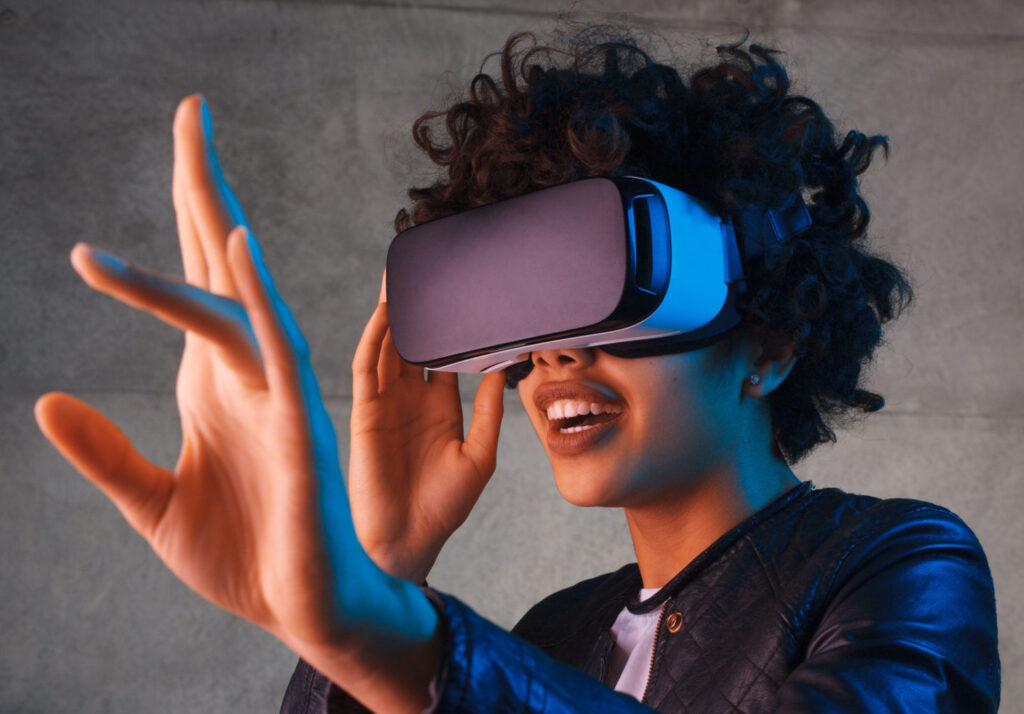
As key sectors like education, healthcare, and the global economy experience significant advancements, the entertainment industry is also undergoing a transformative uplift. This evolution is evident in innovations like Sony’s immersive PlayStations for avid gamers and 3D movies that elevate the cinematic experience. A monumental leap in this sector is Virtual Reality (VR), which generates entirely virtual worlds tailored to user expectations. This cutting-edge technology extends its impact beyond entertainment, benefiting numerous other fields, as we will explore in this detailed blog post.
Understanding Virtual Reality Technology
Virtual Reality (VR) is an innovative technology designed to create simulated, interactive environments. Unlike traditional user interfaces, VR completely immerses the user within a fabricated world or a highly detailed, superficial environment through advanced sensors. Users can experience this virtual environment through sight, sound, touch, and even smell, allowing for profound immersion and dynamic interaction within these expansive 3D worlds.
Users can experience these captivating 3D virtual worlds primarily through two methods: the widely recognized Virtual Reality component, the Head-Mounted Display (HMD), or by transforming a physical room into a virtual space where content is projected onto large, room-sized screens. In both scenarios, users are visually engaged within the virtual world and can also experience haptic feedback, adding to the immersive experience.
As of 2020, Virtual Reality applications are predominantly integrated into the entertainment and education sectors.
Key Technologies Powering VR
Virtual Reality systems are the culmination of several fundamental technologies, including gyroscopes, motion sensors for precise body tracking, high-definition (HD) screens, and powerful computer processors. These essential technologies collectively contributed to the independent development of the groundbreaking Oculus Rift VR headset, which originated as a Kickstarter project in 2012.
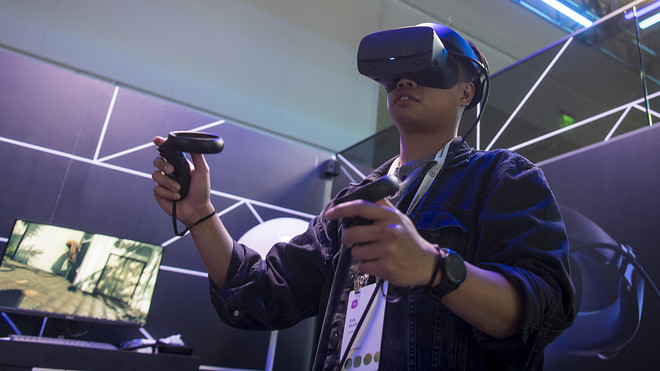
Achieving a true sense of immersion in virtual worlds requires specialized output devices. Prominent examples include advanced head-mounted displays (HMDs) and Cave Automatic Virtual Environments (CAVEs). To effectively convey a spatial impression, two distinct images are generated and displayed from slightly different perspectives, a technique known as stereo projection. Various technologies facilitate delivering the correct image to each eye, broadly categorized into active technologies, such as shutter glasses, and passive technologies, like polarizing filters or Infitec systems.
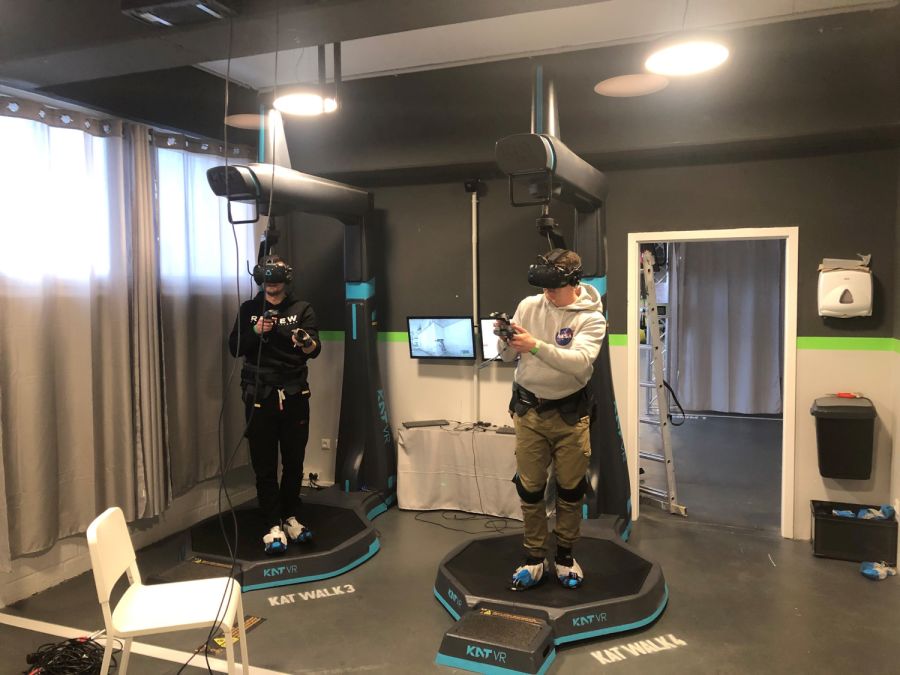
To enable seamless interaction within these virtual environments, specialized input devices are utilized, including 3D mice, wired gloves, motion controllers, and optical tracking sensors. These devices often incorporate force feedback mechanisms, allowing users to physically “feel” sensations on their hands or other body parts. This haptic feedback, combined with advanced sensor technology, enables users to truly adapt to the artificial reality, orient themselves within the 3D space, and engage in highly realistic simulations. For example, if your virtual avatar in a game like WWE receives a punch, you might experience a corresponding physical sensation, enhancing the immersive experience.
Virtual Reality vs. Augmented Reality: Key Differences
Virtual Reality (VR) is frequently confused with Augmented Reality (AR), yet these two technologies represent fundamentally distinct approaches. Augmented Reality overlays artificial, computer-generated objects onto a real-world environment, whereas Virtual Reality creates an entirely simulated environment. In AR, a computer leverages sensors and algorithms to ascertain a camera’s position and orientation. AR technology then renders 3D graphics from the camera’s perspective, seamlessly superimposing these computer-generated images onto the user’s view of the actual world.
In contrast, Virtual Reality employs similar sensor technology and mathematical principles. However, instead of tracking a real camera in a physical setting, VR systems pinpoint the user’s eye position within the simulated environment. As the user’s head moves, the virtual graphics respond dynamically. Instead of blending virtual objects with a real scene, VR technology constructs a fully convincing and interactive virtual world for the user to explore.
Diverse Applications of Virtual Reality
Within the entertainment industry, VR headsets are extensively utilized for immersive gaming and advanced 3D cinema experiences. Users are increasingly opting for more realistic gaming and cinematic encounters over traditional interfaces, significantly enhancing the overall enjoyment. This compelling virtual world has contributed to a rapid increase in its user base over recent years.
Virtual worlds are also proving to be a valuable form of therapeutic intervention, serving as a powerful tool for studying and analyzing interactions within controlled environments, particularly in the field of psychology. A notable example is Virtual Reality Exposure Therapy (VRET), a specialized form of exposure therapy effectively used to treat various anxiety disorders, including Post-Traumatic Stress Disorder (PTSD) and phobias.
Virtual Reality offers significant utility in simulating workspaces for various educational and training purposes, as well as for occupational safety and health applications. It can create immersive environments across diverse fields, including military training, architectural design, journalism, anatomical studies, and driving simulations, allowing for direct, experiential learning. For instance, in engineering, VR enables the creation of detailed 3D models of complex devices or equipment and their operational mechanisms, profoundly enhancing understanding of intricate topics.
Furthermore, VR is increasingly utilized in digital marketing to offer comprehensive, immersive shopping experiences, accessible simply with a mobile device and a VR headset.
”Virtual Reality is poised to remain a potent technology for individuals with disabilities, consistently enhancing existing activities by making them simpler and more accessible. A clear example: by the close of 2019, virtual grocery shopping from the comfort of one’s kitchen will become a common sight. “
Leading Innovators in the VR Market
While technology giants like Google, HP, and Lenovo are actively pursuing opportunities in the Virtual Reality domain, the current market leaders are Sony’s PlayStation VR (PSVR), Facebook’s Oculus Rift, and the HTC Vive. Sony’s PlayStation VR (PSVR) holds a significant market presence, largely attributable to the established quality and widespread appeal of its PlayStation series since the 1990s. The global reach of Sony’s PS4 console, coupled with the integration of HMDs to enhance its gaming experience, further solidified its position. Consequently, the PSVR stands as the best-selling Virtual Reality HMD on the market, having sold over 4 million units since its initial launch, unequivocally demonstrating the enduring presence and growth of VR gaming.

Initiated as a Kickstarter project in 2012 and developed with the expertise of John Carmack, co-founder of Id Software (renowned for Doom and Quake), Oculus swiftly emerged as an early frontrunner in Virtual Reality hardware, particularly for video gaming. In 2014, Facebook acquired Oculus, subsequently introducing the company’s premium VR HMD to the consumer market. More recently, Oculus achieved success with its more affordable, less powerful Oculus Go. The year 2019 also marked the release of several new hardware iterations, including the tethered Rift S and the standalone Oculus Quest, further solidifying its market presence.
The HTC Vive has consistently ranked among the top VR HMDs since its consumer debut in 2016. Produced by HTC, the Vive holds the distinction of being the first VR HMD to support SteamVR. It has demonstrated robust performance as a reliable solution for enterprise applications while simultaneously providing one of the most compelling consumer VR experiences available. Since its initial release in 2016, the Vive has undergone several enhancements, including the introduction of a wireless module. The Vive Pro launched in 2018, with the Vive Pro Eye and the HTC Vive Cosmos both scheduled for release in the latter half of 2019.
The Future of Virtual Reality
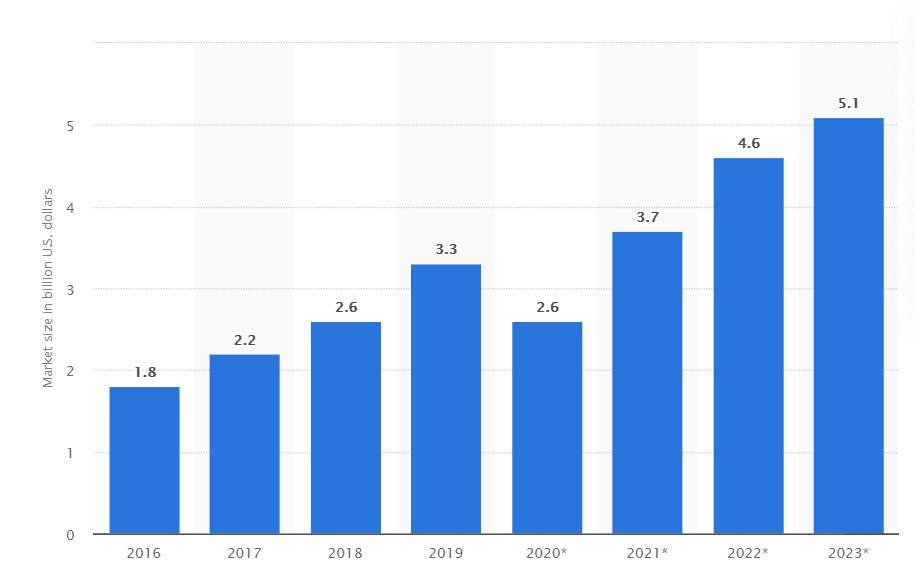
Virtual Reality (VR), an immersive environment designed for unparalleled experience and interaction, is experiencing rapid industry growth. The consumer Virtual Reality market alone is projected to expand significantly, from $6.2 billion in 2019 to an estimated $16 billion by 2022. VR gaming and VR video currently represent the largest consumer use cases for VR technology, with forecasts indicating a staggering $20.8 billion in spending on these segments by 2023.
Despite its vast potential, experts caution that the immersive nature of Virtual Reality could lead to addiction for some individuals, much like the reported case of someone resigning their job to dedicate time to playing Pokémon Go. Nevertheless, the widespread utility and diverse applications of VR firmly establish its growing significance in the market, undeniably elevating its industry standards.
References:
Join our community by subscribing to our Weekly Newsletter to stay updated on the latest AI updates and technologies, including the tips and how-to guides. (Also, follow us on Instagram (@inner_detail) for more updates in your feed).
(For more such interesting informational, technology and innovation stuffs, keep reading The Inner Detail).