We often encounter the phrase ‘educated idiots,’ reflecting a common misdirection in the pursuit of education and knowledge today. Current educational systems frequently prioritize rote memorization, leading to a theoretical understanding without true application. Modern education can often feel imposed on students. It’s crucial that the emphasis shifts from merely ‘what to learn’ to effectively understanding ‘how to learn.’
Before delving deeper, consider the fundamental distinction between studying and true learning. Often, studying merely for the sake of it, without genuine comprehension, is prevalent in many educational institutions. Society frequently places more value on academic certificates than on practical skills. While formal studying may conclude, the process of learning is continuous throughout life. Learning is an essential life skill, often unfortunately overshadowed by the focus on studying. As highlighted, hands-on practices and real-world experiences are paramount for effective learning.
Identifying the World’s Top Education Systems: A Global Perspective
How are the best global education systems identified?
Each year, the World Top 20 Education poll undertakes the task of ranking the globe’s premier educational systems. This initiative, championed by NJ MED (New Jersey’s Minority Educational Development), meticulously evaluates outcomes from six international organizations to determine the top performers annually.
These assessments consider student outcomes, segmented by age to capture developmental progress across various stages, from 3-year-olds to 25-year-olds. The criteria for this comprehensive ranking are detailed below:
- Early Childhood Enrollment Rates (3-4 years old)
- Primary Completion Rates (6-11 years old)
- Lower Secondary Completion Rates (11-14 years old)
- High School Graduation Rates (14-18 years old)
- College Graduation Rates (18-25 years old)
- Primary Test Scores (6-11 years old)
- Lower Secondary Test Scores (11-14 years old)
- School Safety Levels (3-25 years old)
- Number of Out-of-School Children (3-14 years old)
- Adult Illiteracy Levels (15 years old and up)
Considering all these critical factors, NJ MED identifies and validates the leading educational systems globally. As of 2019, the following three countries consistently stood out as top performers:
Let’s explore the key reasons behind their educational excellence and how these nations have achieved such remarkable success.
Finland’s Educational Excellence
Finland consistently ranks among the world’s leaders in fostering intelligent young minds. It has secured the top position in both the WorldTop20 Education poll and the Programme for International Student Assessment (PISA), underscoring its commitment to educational innovation.
The Finnish education system is broadly structured into the following key categories:
- Early Childhood Education & Care (8 months to 6 years old)
- Basic Education (7 to 16 years old)
- General Upper Secondary Education (16 to 19/20 years old)
- Tertiary Education (leading to Master’s Degrees)
- Professional Development (Adult Education)
Key Factors Behind Finland’s Educational Success:
1. Government Directives and Supportive Policies:
Finland’s educational philosophy prioritizes mathematics, science, and reading, believing that optimal learning occurs alongside natural brain development. Their early childhood education and care programs welcome children from 8 months to 6 years. While attendance isn’t mandatory, 90-95% of parents enroll their children, largely due to neurological research indicating that 90% of brain development occurs within the first five years of life. To further encourage literacy, the government even provides three books to new parents—one for the father, one for the mother, and one for the child.
2. Completely Free Education, Including Meals:
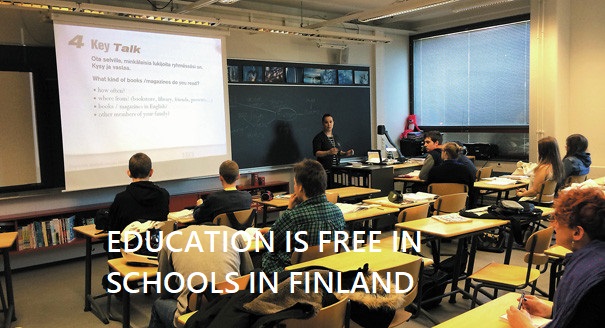
Over 90% of schools in Finland are government-operated by municipalities, ensuring that no tuition or other fees are charged. This comprehensive system also includes free school trips and nutritious lunches for all students. While private schools exist, the government strictly regulates them, prohibiting tuition fees and mandating free lunch provision. Most private institutions are faith-based or Steiner schools. Furthermore, all Finnish schools are legally forbidden from admitting children based on selective criteria, promoting equitable access to quality education.
3. Fostering a Flexible and Supportive Learning Environment:
Finnish education offers remarkable flexibility, allowing students to select their upper secondary education paths based on personal interest. They can also choose their academic course difficulty, with advanced curricula available where students define their challenge level at the start and before matriculation exams. The grading system, ranging from 4-10, emphasizes cooperation over competition. Schools assign minimal homework, instead promoting practical field trips and outdoor learning experiences.
Know more about Finnish Educational System here..!
South Korea’s High-Achieving Education System
South Korea consistently produces a highly educated population and stands as a top-performing OECD nation in reading, mathematics, and science. The country boasts one of the most educated workforces globally. Both the nation and its parents exhibit an intense drive, often termed “education fever,” pushing children towards academic excellence.
The general structure of South Korea’s education system is outlined as follows:
- Kindergarten
- Primary Education (Grades 1-6)
- Secondary Education (Middle and High school: Grades 7-12)
- Higher Education (Universities & Colleges)
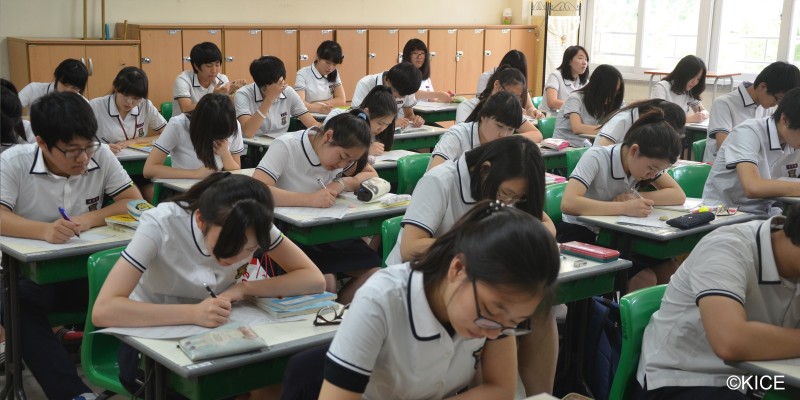
Factors Fueling South Korea’s “Education Fever”:
1. The Rigor of South Korean Education:
South Korea’s public and private school systems instill a highly disciplined approach to education from an early age. Starting at three years old, children are introduced to subjects like Math, English, and Science, often alongside play-based learning. The immersion in an English-speaking environment even in kindergarten helps children acclimate quickly.
During secondary education, particularly in high school, students face immense academic pressure. Historically, students often had minimal sleep (as little as 2-3 hours until 2010), engaging in intense self-study sessions known as ‘Yaja’ from 6 PM to 3 AM, only to wake up again at 5 AM.
2. Societal and Parental Emphasis on Academic Achievement:
The national environment strongly promotes and reveres higher education, particularly admission to elite universities. A fierce competitive atmosphere prevails, with parents often pressing their children to excel academically and become intellectual professionals. Nearly 90% of parents aspire for their children to enter one of the “SKY” universities—an acronym for South Korea’s three most prestigious institutions: Seoul National University, Korea University, and Yonsei University. Students themselves are motivated from a young age to become high-achieving individuals, reflecting this pervasive societal expectation.
3. The Influence of Private Tutoring (Hagwon):
A remarkable statistic reveals that over 95% of South Korean students attend private tutoring agencies known as ‘Hagwon’ after regular school hours. These independent centers offer focused instruction in subjects like Math, Korean, and English, or provide comprehensive academic enhancement. Hagwon sessions can extend as late as 2 AM, a practice widely encouraged by both the Ministry of Education and parents.
Japan’s Distinctive Education System and Cultural Impact
It’s widely recognized that Japanese individuals are often intellectual, technologically adept, polite, and possess good health. A significant contributing factor to these qualities is their highly effective education system. Japan’s educational framework played a crucial role in the nation’s remarkable recovery and resurgence after the devastation of World War II. Consistently, Japan ranks among the top five performers in both OECD and PISA examinations.
The Japanese education system is generally structured into the following stages:
- Elementary School (Grades 1-6)
- Junior High School (Grades 7-9)
- Senior High School (Grades 10-12) / Vocational Programs
- Higher Education: Universities & Junior Colleges (or)
- Tertiary Education: Colleges of Technology & Special Training Colleges
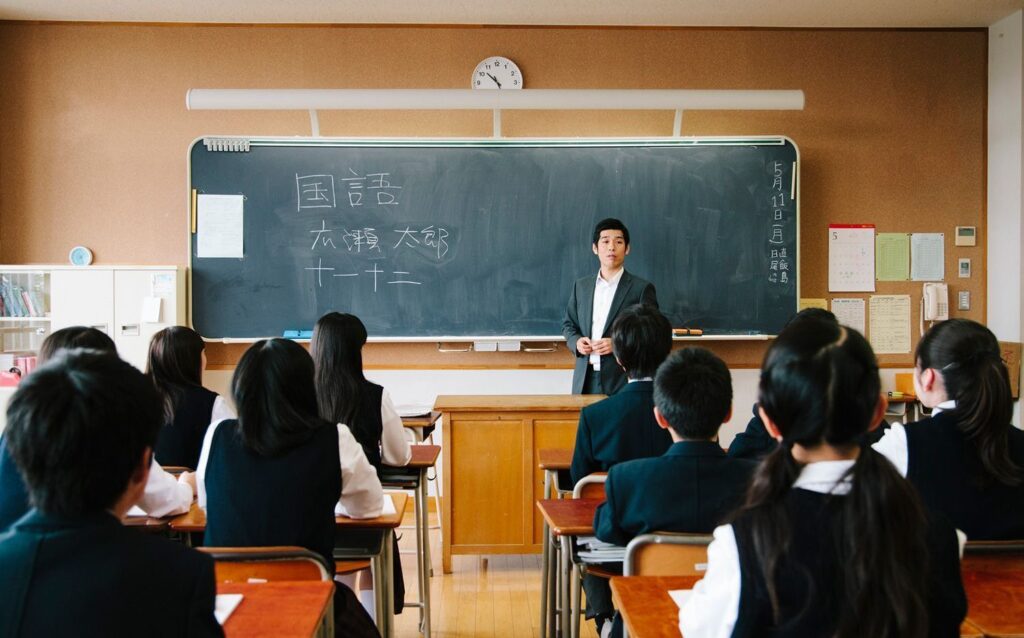
Key Elements of Japan’s Educational Strengths:
1. Nurturing School Environments and Highly Skilled Educators:
Japanese schools foster a calm and supportive atmosphere, with an average class size of 38 students and a focus on essential rules like attendance. Children are educated on core values such as respecting others, being kind to animals, and appreciating nature. They also cultivate generosity, compassion, empathy, grit, self-control, and a sense of justice. Nearly all students (99%) wear uniforms and are accustomed to sharing lunch within their classrooms.
The majority of teachers are highly skilled, typically holding a four-year college degree, and interact amiably with students. Many educators also leverage supplementary teaching methods, including online courses. Since 2011, there has been a significant emphasis on English language acquisition, with children being introduced to it from kindergarten.
2. Cultivating Self-Reliance and Discipline:
In Japanese schools, students are organized into groups and regularly tasked with cleaning their classrooms, including sweeping, mopping, and wiping surfaces. This daily practice from a young age instills discipline and responsibility. Additionally, students are encouraged to join clubs such as sports, music, or art, fostering holistic development.
The Ministry of Education further encourages students to participate in extracurricular activities, often referred to as ‘shadow education,’ which can significantly influence university admissions via formal examinations. Approximately 86% of senior high school students engage in at least one form of shadow education, with 60% participating in two or more. For example, ‘Juku’ refers to private tutoring centers that supplement students’ knowledge and academic performance.
3. Emphasis on Understanding and STEM Leadership:
Given Japan’s prominence as a global leader in science and technology, its education system actively nurtures and encourages students who gravitate towards these fields rather than traditional academic paths. The country’s vocational programs are highly specialized and effective, with nearly 50% of students opting for these after junior high school.
Students who show less inclination towards conventional academics are identified and supported in pursuing vocational courses aligned with their interests. They are provided ample opportunities to discover their passions and are motivated to achieve excellence in their chosen areas, effectively guiding all learners towards success.
“Education is the key to success”
References:
- Wikipedia
- worldtop20.org
- Brightside.me
- educationfinland.fi
- bigthink.com
- asiasociety.org
- web-japan.org
Join our community by subscribing to our Weekly Newsletter to stay updated on the latest AI updates and technologies, including the tips and how-to guides. (Also, follow us on Instagram (@inner_detail) for more updates in your feed).
(For more such interesting informational, technology and innovation stuffs, keep reading The Inner Detail).