
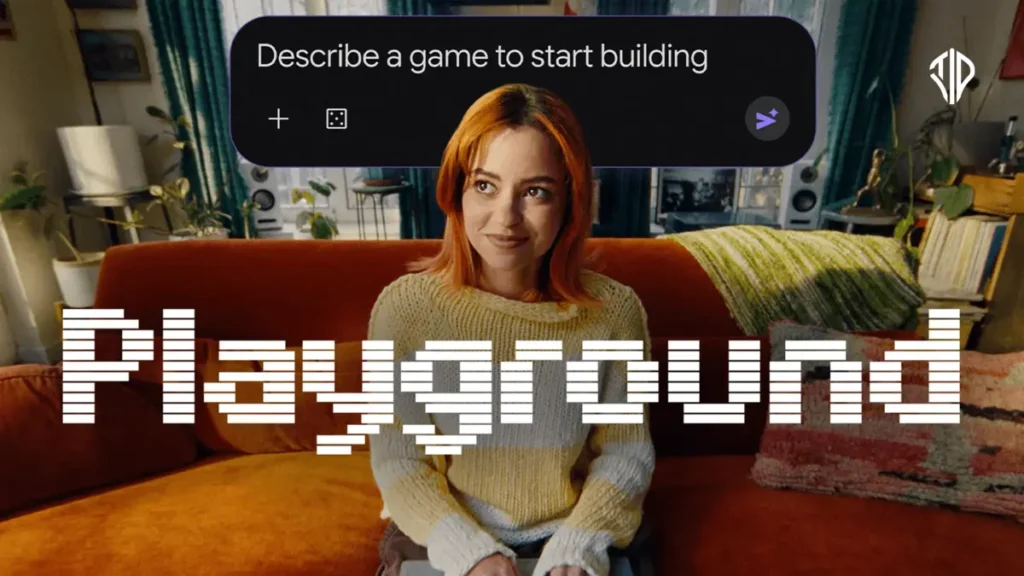
Google Playground is a groundbreaking experimental platform from Google Labs that turns plain-text descriptions into fully playable browser games without requiring a single line of code. This revolutionary tool empowers creators of all technical backgrounds to design, iterate, and publish digital experiences seamlessly.
The evolution of generative artificial intelligence has fundamentally shifted how we interact with technology. Just as text-to-image generators transformed the way we visualize ideas and natural language processors democratized coding, the boundary between consumer and creator is rapidly dissolving. We are moving from an era where technology is something we passively consume to an era where it is something we actively converse with to build our own digital worlds.
For decades, video game development remained locked behind complex barriers of syntax, proprietary game engines, and rigorous mathematical logic. Creating even a simple interactive experience demanded years of specialized training in computer science or digital asset creation.
Today, the convergence of advanced neural networks and intuitive user interfaces is tearing down these historical walls, inviting anyone with an internet connection and an imagination to step into the role of a game director.
Key Takeaways
- Google Playground allows users to build playable games using only natural language prompts without writing code.
- The platform includes a full ecosystem for publishing, social profiles, leaderboards, and community interaction.
- It utilizes advanced AI models like Gemini, Nano Banana, and Lyria to handle logic, visuals, and audio respectively.
- Advanced creators can look forward to Unity Spark, a tool designed to bring professional-grade development capabilities into the Playground environment.
Understanding Google Playground
Google Playground operates as a chat-based interface where users dictate the type of game they wish to build. Whether you envision a classic 2D arcade shooter, an intricate 3D puzzle, a trivia challenge, or a fast-paced racing game, the system translates conversational prompts into working mechanics. Currently live for users aged 18 and older in the United States via Google Labs, this platform marks a major milestone in browser-based game creation.
The platform is not merely a novelty demo generator designed for quick social media clips. Google has engineered a comprehensive end-to-end pipeline that spans from initial concept generation to public publishing, complete with Google Play Games player profiles, community leaderboards, and custom usernames. Spearheaded by Maryam Karimzadehgan and her team within the AI Innovation + Research group, this launch represents a fundamental shift in how tech giants approach the gaming ecosystem.
From First Idea to Published Game in Six Steps
The journey of creating a game inside Google Playground is streamlined into an intuitive workflow that removes technical friction.
- Sign in with a verified Google account at playground.google, ensuring you meet the regional and age requirements.
- Select a starting point from a blank canvas, pre-made starter prompts, or a guided path designed to help structure your initial game concept.
- Configure core parameters by selecting 2D or 3D environments, single-player or multiplayer modes, and specific genres like quizzes or arcade action.
- Describe your game rules, character mechanics, and visual style using natural language, or upload personal reference images to serve as direct graphic assets.
- Test the newly generated game instantly within your browser, fineering physics, scoring rules, and settings through ongoing conversational prompts.
- Choose whether to keep your creation private, share it directly via a private link, or publish it publicly to the Explore gallery.
The fourth step represents the core innovation of the platform. By allowing users to upload personal drawings or asset ideas, Google ensures that the final game reflects a distinct artistic vision without requiring complex 3D modeling programs. Furthermore, projects remain fully editable even after publication, allowing creators to continually refine and polish their work based on community feedback.
The Engine Under the Hood
Powering this seamless creation process is a sophisticated orchestration of in-house artificial intelligence models. While Google maintains a streamlined user interface, the backend relies on multiple specialized systems working in tandem.
Gemini serves as the master director, handling the complex game logic, rulesets, and code generation. Nano Banana takes charge of the visual spectrum, generating high-quality image assets that match the stylistic demands of the prompt. Lyria rounds out the experience by composing dynamic background music tailored to the mood of the game. All of these components are coordinated by a custom-built orchestration harness tuned specifically on games developed in-house by Google.
Community, Exploration, and Leaderboards
Unlike traditional development environments that require complex exporting and manual hosting, Google Playground games run instantly inside standard web browsers on both mobile phones and laptops. Creators retain total control over distribution, choosing to keep projects restricted to personal links or submitting them to the public Explore gallery.
The social architecture of the platform is designed to foster an active community. By linking with a Google Play Games profile, players can assign custom usernames, follow favorite creators, leave likes, and compete for top positions on competitive leaderboards.
Pricing, Tokens, and Resource Management
Access to Google Playground operates on a tiered token system designed to manage the substantial computational costs associated with generating real-time 3D environments, graphics, and audio. Browsing and playing games in the Explore gallery remains completely free for all users.
| Activity | Free Plan | Google One AI Subscribers |
| Browsing and Playing | Free Access | Free Access |
| Creating and Editing Games | Limited Weekly Tokens | Higher Weekly Token Limits |
| Token Transparency | Undisclosed Allocation | Undisclosed Allocation |
Because generating interactive 3D simulations demands immense server-side processing, Google utilizes weekly token allocations to balance platform usage and infrastructure costs. Subscribers to Google One AI plans receive extended token pools to support more frequent creation and iteration.
Stepping Up with Unity Spark
For creators looking to push past the limitations of simple prompt-based generation, Google and Unity have partnered to introduce Unity Spark. Currently available via a waitlist and undergoing closed beta testing, Spark brings professional-grade development tools directly into the ecosystem.
Unity Spark bridges the gap between conversational AI and high-end game engine architecture. Creators gain access to high-fidelity 3D graphics, advanced physics mechanics, and direct integration with the Unity Asset Store. This connection allows builders to incorporate thousands of professional, artist-created models, textures, and sound files into their AI-assisted projects.
Platform Comparison: Playground vs. Unity Spark vs. Roblox Build
| Feature | Google Playground | Unity Spark | Roblox Build |
| Primary Creator | Google Labs | Unity, in partnership with Google | Roblox |
| Current Status | Available in the US (Oct 2026) | In testing, closed beta upcoming | Alpha phase in New Zealand |
| Target Audience | American adults | Professional creators and advanced modders | Younger creators via mobile app |
| Execution Environment | Browser on phone and laptop | Inside Playground integration | Roblox gaming platform |
| Monetization and Cost | Free play, token-based creation | Undisclosed pricing structure | Paid tiers announced |
The Broader Industry Shift: Vibe Coding in Gaming
The introduction of Google Playground reflects a broader software trend known as vibe coding, where human intent is articulated entirely through natural language while artificial intelligence handles the underlying syntax. This paradigm shift has already transformed software development, doubling new App Store submissions and empowering non-technical founders to launch robust applications.
Frequently Asked Questions
1. Do I need a Google account to use Google Playground?
Yes, access requires a standard Google account login. Utilizing community features like leaderboards and custom profiles also requires a free Google Play Games profile.
2. Can games made with Playground be downloaded or sold?
Currently, Google does not support exporting project files or direct commercial monetization. Games run exclusively within the browser environment for sharing or public gallery display.
3. What is the difference between Playground and Play with Putty?
Putty is an experimental Google Labs tool focused on general-purpose collaborative software development, whereas Playground is an end-to-end platform dedicated exclusively to video game creation.
4. Is Google Playground a revival of Google Stadia?
No. Stadia was a cloud-based streaming service for playing commercial third-party titles. Playground is a generative creation platform where users build and play their own original games.
Join our community by subscribing to our Weekly Newsletter to stay updated on the latest AI updates and technologies, including the tips and how-to guides. (Also, follow us on Instagram (@inner_detail) for more updates in your feed).
(For more such interesting informational, technology and innovation stuffs, keep reading The Inner Detail).
