
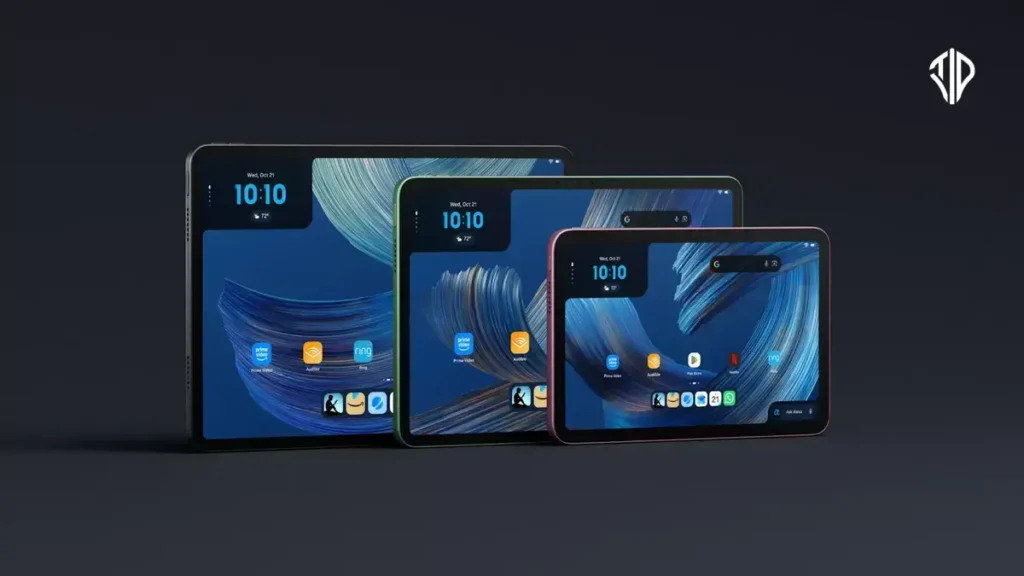
Amazon is officially retiring its familiar Fire tablet brand after a 15-year run, replacing the lineup with a new generation of devices that run mainstream Android. According to recent industry reports, the newly branded Alexa tablets drop the proprietary Fire OS interface in favor of standard Android complete with native Google Play Store access.
This strategic pivot addresses the single biggest complaint consumers and reviewers had about past Amazon tablets: their severely restricted app selection. Older Fire models relied on the walled garden of the Amazon Appstore, which frequently lacked popular modern productivity and media applications.
With mainstream Android onboard, users finally gain native access to essential software like Gmail, YouTube, Google Docs, and Microsoft Office tools. This shift places Amazon’s hardware on a level playing field with mainstream competitors from Samsung and Lenovo while retaining deep integration with existing Amazon services like Kindle and Prime Video.
Key Takeaways
- Amazon is replacing its 15-year-old Fire tablet brand with new Alexa tablets running mainstream Android and native Google Play Store access.
- The new hardware lineup spans higher price tiers, featuring the Alexa Tablet 8 at $229, Tablet 11 at $329, and the flagship 12 Pro starting at $499.
- Flagship models include powerful 4nm processors, up to 16GB of RAM, 120Hz displays, and specialized nanomatte screen options.
- The operating system deeply integrates conversational AI via Alexa+ and features On-Screen Intelligence for contextual assistance.
The Push for Higher-End Hardware
Alongside the software overhaul, Amazon is moving its tablet hardware into a distinctly higher price tier to compete directly with premium devices. The entry-level Alexa Tablet 8 starts at $229, while the mid-range Tablet 11 is priced at $329.
At the top of the stack sits the new 12 Pro, starting at $499, with an alternative model featuring a glare-reducing nanomatte screen starting at $549. These pricing adjustments signal that Amazon no longer wants to be known solely as a maker of ultra-cheap, compromise-heavy media consumption devices.
The flagship 12 Pro packs serious internal specifications, including an 8-core processor built on a 4nm manufacturing process. It supports up to 16GB of RAM and starts with a robust configuration of 8GB of RAM and 128GB of internal storage.
Amazon claims these components deliver nearly three times the general processing performance and nine times the graphics performance of previous generations. The device features a spacious 12-inch display boasting a smooth 120Hz refresh rate, 280 pixels per inch, and a productivity-friendly 3:2 aspect ratio.
Integrating Advanced On-Screen AI
The new lineup places heavy emphasis on Alexa+, a conversational artificial intelligence assistant embedded deeply into the tablet operating system. Users can summon the assistant at any time via a voice command or an on-screen button without having to close or leave active applications.
An optional feature known as On-Screen Intelligence allows the assistant to use whatever is currently displayed on the device as immediate conversational context. This capability enables the AI to extract dates from a messy schedule, automatically add appointments to a digital calendar, or help users interpret a complex webpage.
Privacy advocates will note that Amazon has built this feature to be disabled by default, requiring explicit user opt-in alongside a clear visual indicator when active. For consumers comfortable with digital assistants, this represents a more fluid interaction model than traditional voice commands that require repetitive wake words.
Display Innovations and Accessories
For users willing to invest in the top-tier hardware, Amazon is introducing a special nanomatte display option developed in partnership with glass manufacturer Corning. Using advanced photolithography, the screen features a microscopic texture aligned precisely with individual subpixels.
This engineering approach successfully diffuses ambient light to eliminate harsh glare without degrading color accuracy or fine image detail. It provides a paper-like reading and writing experience that appeals directly to digital artists, students, and professionals.
Productivity enthusiasts can also purchase dedicated accessories, including a $149 magnetic keyboard that attaches instantly without messy Bluetooth pairing processes. An optional $89 USI 2.0 stylus offers 4,096 levels of pressure sensitivity, tilt detection, and wireless charging via magnetic dock integration.
By ditching Fire OS and embracing the broader Android ecosystem, Amazon has fundamentally transformed its tablet ambitions. These new devices bridge the gap between affordable media tablets and genuine productivity machines, giving consumers a compelling new option in the portable computing market.
Join our community by subscribing to our Weekly Newsletter to stay updated on the latest AI updates and technologies, including the tips and how-to guides.
Also, follow us on Instagram (@tid_technology) for more updates in your feed and our WhatsApp Channel to get daily news straight to your Messaging App.
