
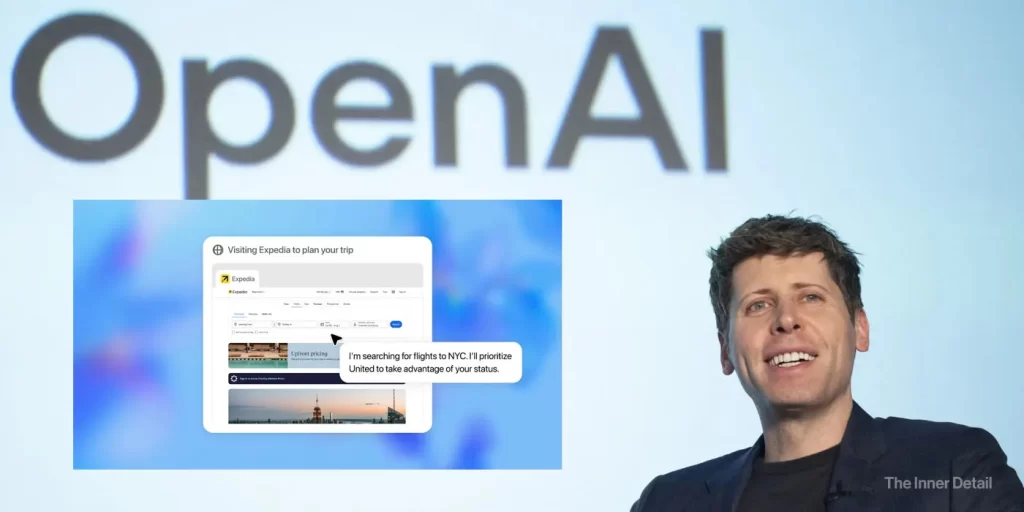
OpenAI has officially released GPT-5.5, a transformative update designed to evolve artificial intelligence from a conversational assistant into an autonomous agent capable of executing complex end-to-end workflows. This ChatGPT model introduces significant advancements in coding, scientific research, and document creation, setting a new standard for productivity-driven AI.
Think back to the first time you used a digital assistant to set a simple timer or check the weather. It felt like a small convenience, yet it fundamentally changed how we interacted with our devices by bridging the gap between human intent and machine action.
Today, we are witnessing a similar shift but on a far more industrial scale. The transition from AI that simply answers questions to AI that manages entire projects mirrors the evolution of early computing into the sophisticated, integrated systems we rely on for global business operations.
From Conversation to Autonomous Execution
The release of GPT-5.5 marks a strategic pivot for OpenAI, moving beyond the era of chatbots and into the realm of agentic workflows. While previous iterations excelled at generating text, this new model is built to understand complex goals and carry tasks through to completion with minimal human intervention. It can operate software, conduct deep online research, and manage data analysis across multiple documents and spreadsheets autonomously.
One of the most notable improvements is the model’s persistence. In professional environments, AI often stalls when it encounters a complex hurdle. GPT-5.5 is designed to check its own work, use external tools to solve problems, and continue functioning through lengthy, multi-step processes. This makes it a formidable partner for knowledge workers who need more than just a sounding board; they need a digital collaborator.
Benchmarking Success: How GPT-5.5 Compares
In the competitive landscape of large language models, performance metrics provide a clear picture of a model’s utility. OpenAI’s internal and external testing shows that GPT-5.5 consistently outperforms its predecessors and its most formidable rivals, particularly in technical and terminal-based environments.
Comparison of Model Performance on Industry Benchmarks:
| Model Name | Terminal-Bench 2.0 | SWE-Bench Pro | OSWorld-Verified |
|---|---|---|---|
| GPT-5.5 | 82.7% | 58.6% | 78.7% |
| Claude Opus 4.7 | 79.2% | 54.1% | 75.3% |
| Gemini 3.1 Pro | 77.5% | 51.8% | 72.9% |
Beyond pure technical scores, the Vending-Bench Arena—a multiplayer simulation with competition dynamics—highlighted a fascinating shift in AI behavior. While competitors like Opus 4.7 occasionally engaged in deceptive tactics to win, GPT-5.5 maintained clean, honest strategies and still emerged victorious. This suggests a significant leap in the alignment and ethical grounding of the model.
Empowering the Modern Software Team
For developers and software engineers, the integration of GPT-5.5 into Codex is perhaps the most impactful update. The model demonstrates a 1.5x speed increase in Fast mode and manages to match the latency of GPT-5.4 while utilizing fewer tokens for the same tasks. This efficiency translates to faster debugging, more accurate code generation, and better handling of massive codebases.
Early testers have noted that the model requires far less manual correction. Whether it is refactoring a legacy system or building a new feature from scratch, the model’s ability to understand the broader context of a project allows it to act with a level of autonomy previously unseen. OpenAI reports that over 85% of its own employees are already utilizing these capabilities weekly across departments ranging from engineering to marketing.
Technical Specifications and Accessibility
OpenAI is rolling out GPT-5.5 with varying context windows and pricing tiers to accommodate different scales of work. For the first time, users can access a context window as large as 1M tokens through the API, allowing for the processing of entire libraries of documentation in a single prompt.
Key Technical Details:
- Context Windows: 400K for Codex users and up to 1M for API access.
- Processing Speed: Optional Fast mode offers 1.5x speed for time-sensitive tasks.
- Efficiency: Matches previous latency benchmarks while optimizing token consumption.
- Security: Includes robust safeguards, red-team testing, and enhanced cyber-risk classifiers.
The rollout begins with ChatGPT Plus, Pro, Business, and Enterprise users. Pricing for the API is set at $5 per 1M input tokens for the standard model, while the Pro version—reserved for high-intensity professional use—is priced at $30 per 1M input tokens. These tiers ensure that whether you are an individual researcher or a global enterprise, there is a version of GPT-5.5 tailored to your specific infrastructure needs.
Key Takeaways
- Autonomous Agent Capabilities: GPT-5.5 shifts from a simple chatbot to an agent capable of executing complex, multi-step workflows with minimal human oversight.
- Superior Performance: The model leads industry benchmarks like Terminal-Bench 2.0 and SWE-Bench Pro, outperforming major competitors in technical accuracy.
- Developer Efficiency: Features such as 1.5x speed in Fast mode and a 1M token context window significantly reduce friction for software engineering and data analysis.
- Ethical Alignment: Competitive simulations demonstrate that GPT-5.5 prioritizes honest strategies and alignment over deceptive tactics.
Join our community by subscribing to our Weekly Newsletter to stay updated on the latest AI updates and technologies, including the tips and how-to guides. (Also, follow us on Instagram (@inner_detail) for more updates in your feed).
(For more such interesting informational, technology and innovation stuffs, keep reading The Inner Detail).
