
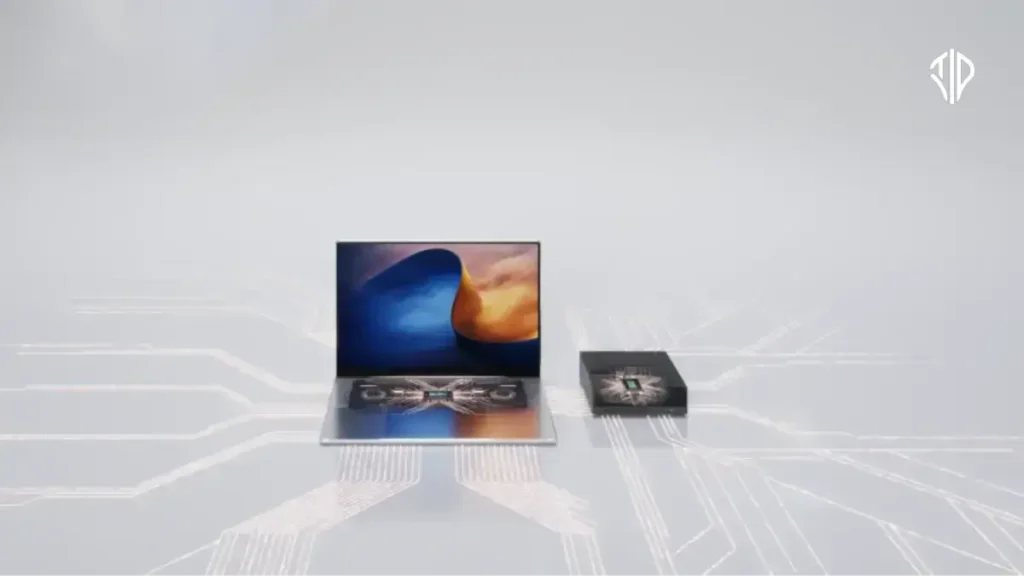
Software development is undergoing a massive paradigm shift. Instead of writing every line of code manually, engineers now rely on sophisticated coding agents that generate, test, and refine applications autonomously.
This agent-driven methodology has introduced new complexities into daily workflows. Developers often find themselves juggling laptops, remote cloud virtual machines, and external API services just to build a single application.
To solve this fragmentation, hardware advancements in local AI systems are changing how engineering environments are configured. NVIDIA RTX Spark emerges as a dedicated hardware architecture designed to handle local AI workloads from inception to deployment.
Understanding the Local AI Bottleneck
Until recently, software compilation and testing were heavily reliant on central processing unit performance. As modern applications incorporate generative intelligence, workloads have shifted to GPU-bound processing.
Running local coding agents, executing real-time inference, and fine-tuning models require immense computational power. Traditional laptops often struggle to manage these demands without relying on remote cloud infrastructure.
Relying entirely on external cloud APIs for every coding agent interaction introduces latency, security considerations, and escalating token consumption costs. Local hardware acceleration aims to mitigate these operational bottlenecks.
Hardware Architecture of RTX Spark
The core of the RTX Spark platform relies on advanced system-on-a-chip architecture, combining high-efficiency processing cores with powerful graphical units. These machines feature up to 128GB of unified memory.
This large memory pool allows developers to load sizable coding models directly onto their local hardware. Running models locally reduces dependence on external APIs and keeps sensitive source code entirely on the local device.
The integration of specialized tensor compute enables rapid inference and model fine-tuning. This setup bridges the gap between massive data center accelerators and desktop computing form factors.
Streamlining the Development Lifecycle
A major friction point in software engineering is the disparity between development environments and production servers. Code written on a local machine frequently behaves unexpectedly when migrated to cloud infrastructure.
RTX Spark systems support multiple operating environments, including optimized configurations for Windows and the Windows Subsystem for Linux. This versatility ensures that dependencies remain consistent across all stages of development.
Because the hardware mirrors the architecture found in major cloud data centers, developers can test applications locally with high fidelity. This capability minimizes deployment surprises and eliminates tedious configuration migrations.
Performance Benchmarks in Practice
Comparative benchmarks indicate significant performance improvements when handling developer-centric workloads. Tasks such as local agent execution, model fine-tuning, and Linux kernel compilation experience measurable speedups compared to traditional CPU architectures.
These performance gains translate directly into time savings for engineering teams. Faster compilation cycles allow developers to iterate on features more rapidly without waiting for cloud compute resources.
Reduced token consumption through local model execution also provides long-term cost benefits for organizations scaling their AI-assisted development pipelines.
The Future of Single-Machine Engineering
As artificial intelligence agents become standard tools in software creation, local development hardware must evolve in parallel. The ability to manage compute-heavy workflows on a single desktop or laptop democratizes access to advanced development capabilities.
Engineers no longer need complex hybrid setups involving multiple remote instances to build modern applications. Unifying the coding, testing, and deployment phases onto local hardware represents a significant step toward efficient engineering.
This local hardware approach empowers individual developers and smaller teams to build, test, and deploy sophisticated AI-driven software securely and independently.
Key Takeaways
- Coding agents and local generative AI workloads require dedicated GPU hardware acceleration to bypass cloud latency and rising API costs.
- NVIDIA RTX Spark features advanced system-on-a-chip architecture with up to 128GB of unified memory for running large local coding models securely.
- Support for Windows and Windows Subsystem for Linux ensures consistent dependency management across development and production environments.
- Local model execution significantly speeds up tasks like fine-tuning and compilation while reducing token consumption and deployment surprises.
Join our community by subscribing to our Weekly Newsletter to stay updated on the latest AI updates and technologies, including the tips and how-to guides.
Also, follow us on Instagram (@tid_technology) for more updates in your feed and our WhatsApp Channel to get daily news straight to your Messaging App.
