
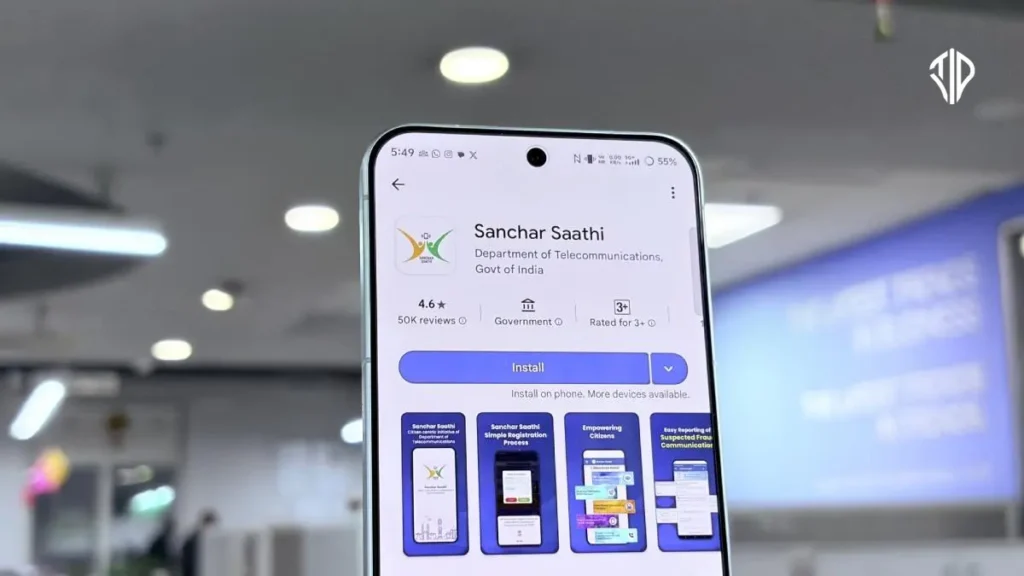
The digital security landscape in India is rapidly changing. In a significant move to combat rising cyber fraud and protect telecom resources, the Department of Telecommunications (DoT) has issued sweeping directions mandating that all new smartphones sold in India must come pre-installed with its proprietary cybersecurity application, “Sanchar Saathi”.
This directive is set to dramatically alter the mobile phone ecosystem, affecting major manufacturers globally and sparking intense debate over compliance, usability, and user privacy.
Understanding Sanchar Saathi App
The Sanchar Saathi initiative was initially launched as a portal by the DoT in 2023, with the mobile application officially debuting on January 17, 2025. The primary goal of the app is to curb the misuse of telecom resources for cyber fraud and enhance overall telecom cybersecurity. By August 2025, the app had already crossed 50 lakh downloads.
The app brings a comprehensive suite of security and fraud-reporting features directly to the user’s smartphone, providing protection against identity theft, forged KYC, device theft, and banking fraud.
Key Features Empowering Users:
- IMEI Tracking and Blocking: Users can report and block lost or stolen phones anywhere in India, which assists police in tracing these devices, prevents counterfeit phones from entering the black market, and blocks attempts at device cloning. By October 2025, the app had helped recover more than 7 lakh stolen or lost mobile phones.
- Chakshu: This vital tool enables users to report suspected fraudulent communications received via calls, SMS, or WhatsApp, specifically targeting KYC-updating scams.
- Connection Verification: Users can verify the number of mobile connections registered in their name and report or block suspicious connections created using forged KYC details.
- Handset Genuineness Check: The app offers an easy way to verify the authenticity of a purchased mobile device using its IMEI number.
- Fraud Reduction Impact: This proactive initiative has already led to the termination of more than 3 crore fraudulent mobile connections and the blocking of over 42.14 lakh mobile devices.
The Centre’s Mandate and Manufacturer Compliance
The directive, issued by the DoT on November 28, 2025, requires manufacturers and importers of mobile handsets to ensure that the Sanchar Saathi mobile application is pre-installed on all new devices manufactured or imported for use in India.
The government emphasized that the app must be readily visible and accessible to users upon first use, and crucially, its functionalities must not be disabled or restricted. Smartphone makers, including giants like Samsung, Xiaomi, Oppo, and Vivo, were given 90 days to complete the implementation and 120 days to submit a report.
Best Smartphones to buy in 2025
For devices already in the sales channels, manufacturers were asked to push the app through software updates. The DoT stated the move was necessary to “safeguard the citizens from buying the non-genuine handsets” and increase the effectiveness of the Sanchar Saathi initiative.
However, according to an industry source, these directions were issued without any prior consultation with the smartphone manufacturers.
Apple’s Resistance to Sanchar Saathi
The mandate is likely to create significant friction with Apple, which controls an estimated 4.5% of the smartphone market in India.
Apple has historically refused such requests from governments. The company’s internal policies strictly prohibit the pre-installation of any government or third-party app before the sale of a smartphone, opting instead to pre-install only its own proprietary applications. This is not the first time Apple has locked horns with Indian regulators; the company previously resisted the Telecom Regulatory Authority of India’s (TRAI) draft regulations for installing an anti-spam app due to concerns over permissions requirements, which included access to SMS messages and call logs.
Experts suggest that Apple may seek a middle ground in this scenario, perhaps negotiating to instead nudge users toward installing the app rather than mandatory pre-installation.
Privacy Concerns of Sanchaar Saathi
While the DoT frames the Sanchar Saathi mandate as a necessary measure against rising cybercrime, the directive—especially the provision that users cannot disable the app—has raised significant privacy and security concerns among advocates and industry observers.
A lawyer specializing in technology matters noted that requiring the pre-installation of an undeletable app “effectively removes user consent as a meaningful choice”. Critics are concerned that this move mirrors similar mandates seen internationally, such as Russia’s requirement for a state-backed messenger app to be pre-installed on phones. The fact that the app is used to verify the authenticity of IMEI numbers, coupled with the mandatory installation, leads to fears about government overreach and the potential for increased data control over the populace.
It is important to note the ambiguity surrounding data access: it remains unclear whether the Sanchar Saathi app will automatically have access to the device’s IMEI number once pre-installed, or if the user must manually input this hardware identifier.
The Government’s Stance on Privacy
In response to potential concerns, the DoT affirms that the Sanchar Saathi app prioritizes user privacy. The platform reportedly collects only the minimum personal information necessary to provide its services. The government explicitly states that the app does not create profiles for commercial marketing, nor does it share user data with third parties.
Furthermore, the app is claimed to comply with the Information Technology Act 2000 and aligns with the principles of the Digital Personal Data Protection Act 2023, limiting data collection to legitimate purposes and implementing clear consent mechanisms. Data sharing is strictly limited to law enforcement only when legally required.
This debate sets the stage for a critical collision between national security priorities, which prioritize cybersecurity and fraud prevention, and fundamental user rights regarding device control and digital privacy. The outcome of the DoT’s mandate, particularly regarding manufacturers like Apple, will likely set a new precedent for digital governance in one of the world’s largest telecom markets.
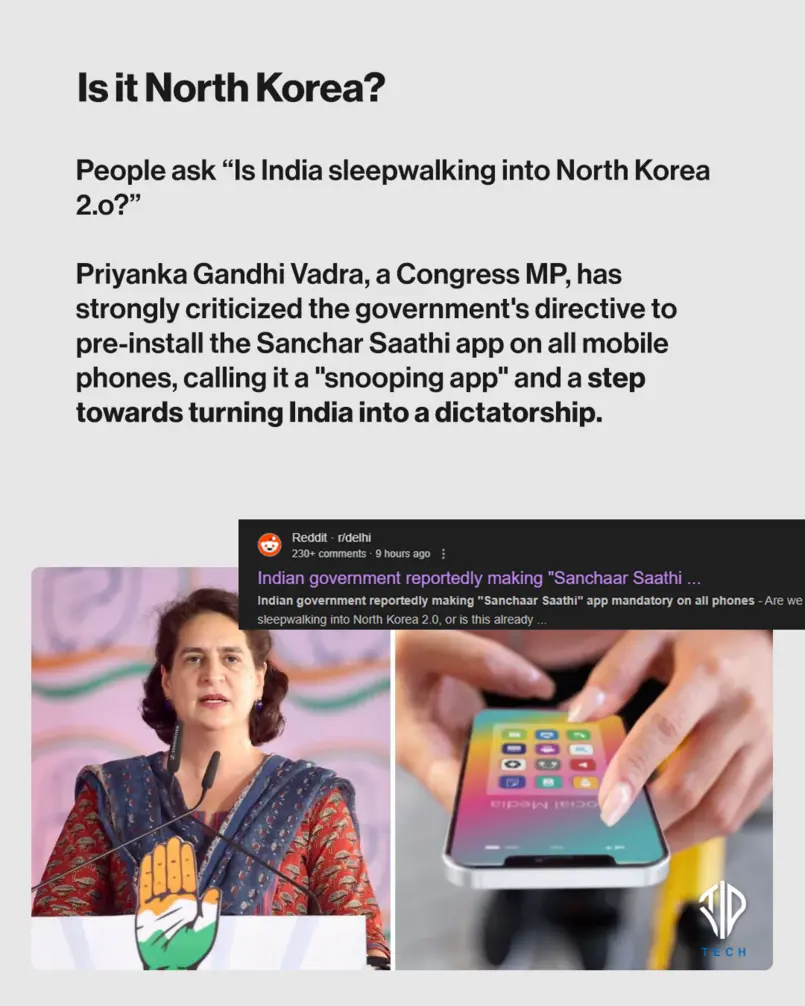
However, questions arise around the capability of a government institution to handle data and information in a secure and effective manner. Indeed, mandating the app to be pre-installed in every device poses a serious concern and doubtfulness around the matter.
Commenting on this, Priyanka Gandhi, MP of Opposition Congress Party, condemned the app stating it “snooping app” and India is becoming a ‘dictatorship’ country. Also, people were unhappy about the news and a Reddit user questioned “Is India sleepwalking into North Korea 2.o?”.
Opinion: Data-security is a big concern in a populous country like India, where digital and cyber frauds increasing day by day. However, the responsibility of each and everyone’s data is in their own hands and not the government. Government should streamline the data-handling and data storage processes efficiently and should ensure cyber frauds are near to nullified. Smartphone users should also be aware of various digital frauds happening and try to protect the data from their end.
Key Takeaways
- The DoT mandates pre-installation of the Sanchar Saathi app on all new smartphones sold in India.
- The app aims to curb cyber fraud and enhance telecom cybersecurity through various security features.
- Apple’s resistance to pre-installing third-party apps may lead to conflict with Indian regulations.
- Privacy concerns arise due to the mandatory nature of the app and potential for data access.
- The government asserts that the app prioritizes user privacy and complies with data protection laws.
Join our community by subscribing to our Weekly Newsletter to stay updated on the latest AI updates and technologies, including the tips and how-to guides.
(Also, follow us on Instagram (@tid_technology) for more updates in your feed and our WhatsApp Channel to get daily news straight to your Messaging App).