
Since Carl Benz’s pioneering gasoline engine in 1886, advancements in technology and transportation have propelled humanity forward, enabling feats like collecting asteroid samples from 321 million kilometers away. In the 21st century, modes of transport have reached unprecedented heights with the introduction of the world’s first Hyperloop and commercial space travel. Indeed, the Virgin Group, a British conglomerate founded by Richard Branson and Nik Powell, is at the forefront of these innovations, leading missions like Virgin Hyperloop and Virgin Galactic, aiming to shape a better future.
Let’s delve into these groundbreaking ventures to understand them better!
Exploring Virgin Hyperloop Technology
The hyperloop concept originated in 2012 when Elon Musk released his alpha paper, proposing aerodynamic aluminum capsules transporting passengers or cargo through a vacuum tube at incredible speeds, potentially reaching up to 760 mph (1223 km/hr). Musk open-sourced this concept, leading to the formation of Hyperloop Technologies in 2014, which was subsequently acquired and rebranded as Virgin Hyperloop.
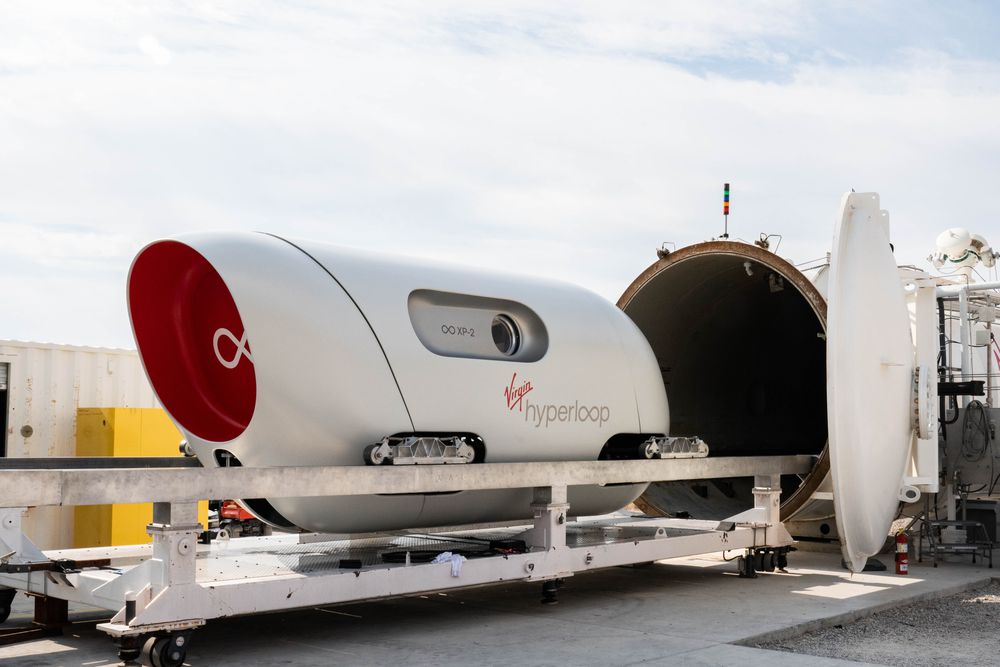
Understanding the Virgin Hyperloop System
Virgin Hyperloop is actively working to commercialize the high-speed hyperloop transportation concept. This innovative system involves electromagnetically levitating pods designed to carry passengers or goods, propelling them at speeds up to 760 mph through sealed vacuum tubes. This low-pressure environment minimizes air resistance and friction, allowing for unparalleled efficiency and speed.
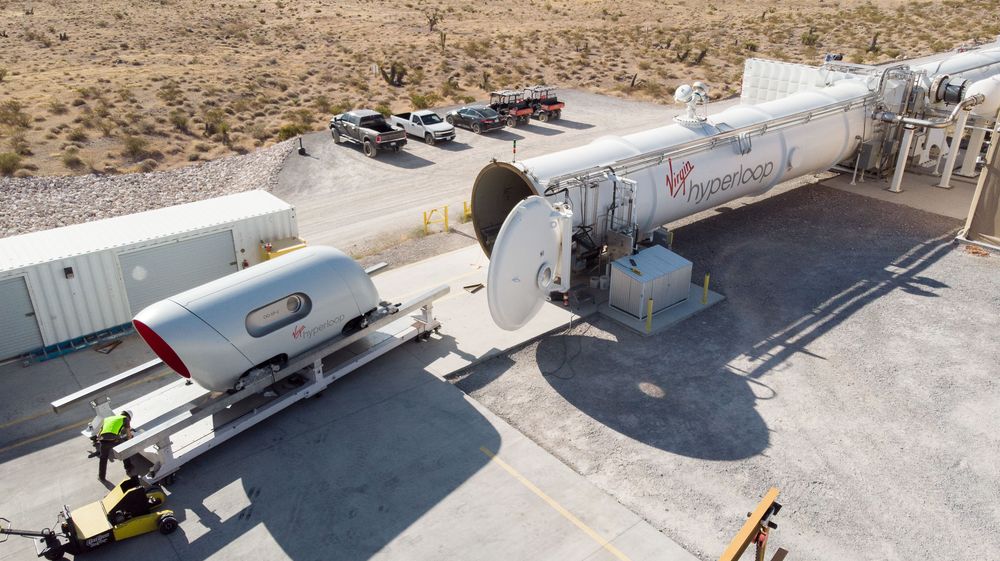
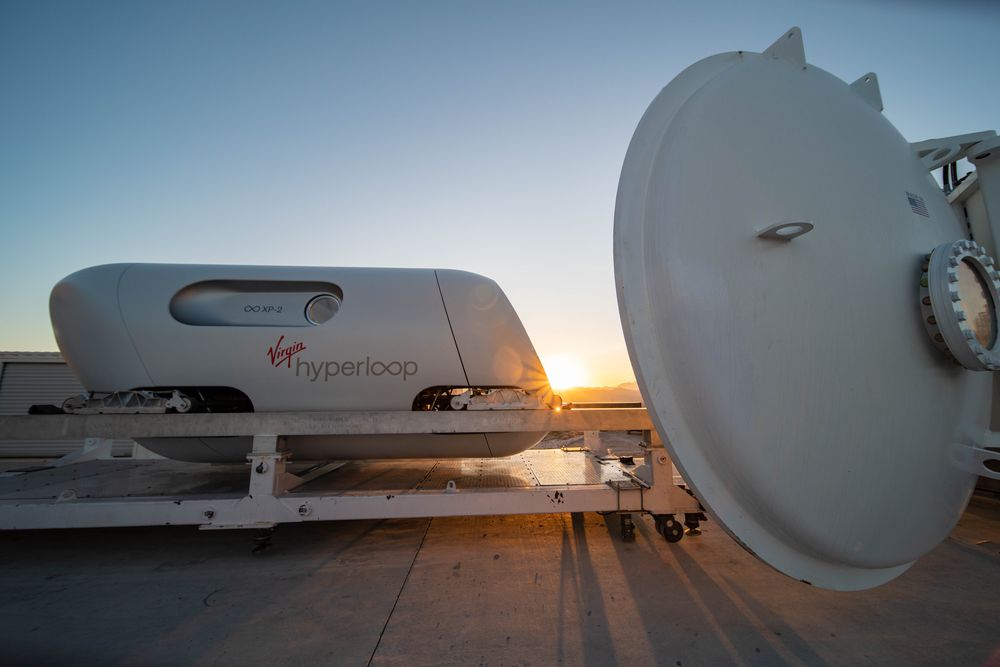
After six years of intensive development, Virgin Hyperloop achieved a significant milestone in hyperloop technology. On November 8, 2020, the company successfully conducted its first human test run, transporting passengers in a capsule at speeds reaching 100 mph (160 km/hr).
Historic First Human Test Flight for Hyperloop
This pivotal human test for Virgin Hyperloop took place on the company’s 500-meter long, 3.3-meter diameter DevLoop test track located at their facility in Las Vegas, Nevada. Josh Giegel, the firm’s Chief Technology Officer and Co-founder, alongside Sara Luchian, Head of Passenger Experience, were the first human passengers. While the DevLoop track had previously facilitated over 400 tests, this marked the inaugural instance with humans on board.
Virgin Hyperloop CEO on Unprecedented Progress
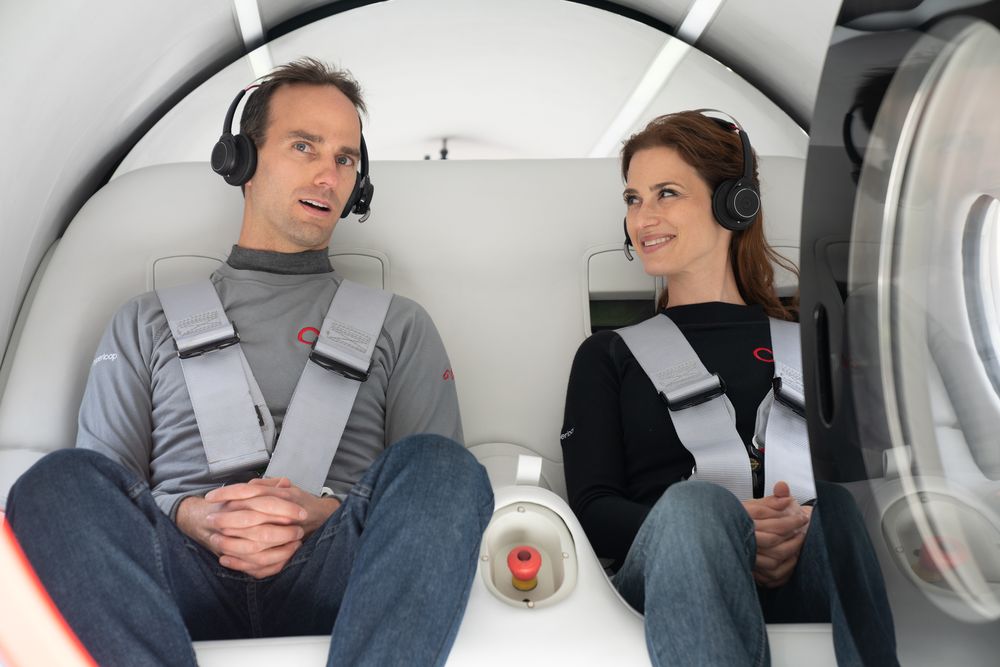
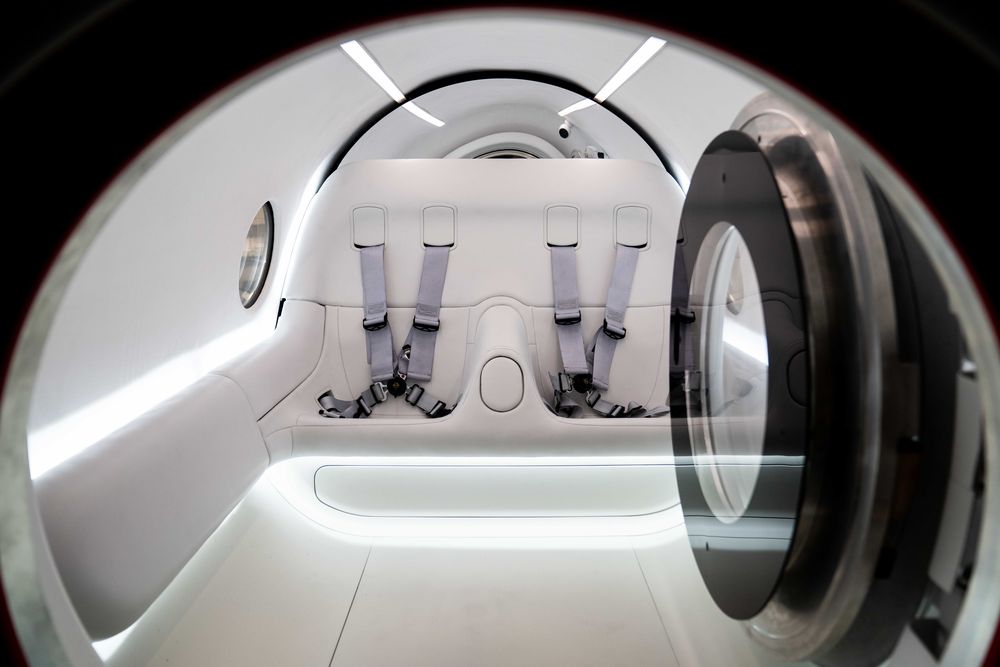
The Virgin Hyperloop pod, named Pegasus, is designed to accommodate 23 passengers, measures between 15 and 18 feet in length, and weighs 2.5 tons. During the test, passengers boarded Pegasus, which then entered an airlocked, enclosed vacuum tube. The air within the tube was removed, allowing the pod to accelerate to 100 mph along the track before smoothly decelerating to a complete stop. This process illustrates the operational mechanics of the hyperloop system.
Challenges and the Future of Hyperloop
While the initial human test occurred at a reduced speed, Virgin Hyperloop previously achieved a top speed of 240 mph in 2017 and aims to reach 670 mph in the future. The company is diligently addressing critical safety and economic considerations for hyperloop implementation. Operating at such high speeds necessitates robust safety protocols to prevent even minor mishaps. Furthermore, leaked financial documents from 2016 indicated significant development costs, projecting hyperloop system implementation to range from $9 billion to $13 billion, with a per-mile cost between $84 million and $121 million.
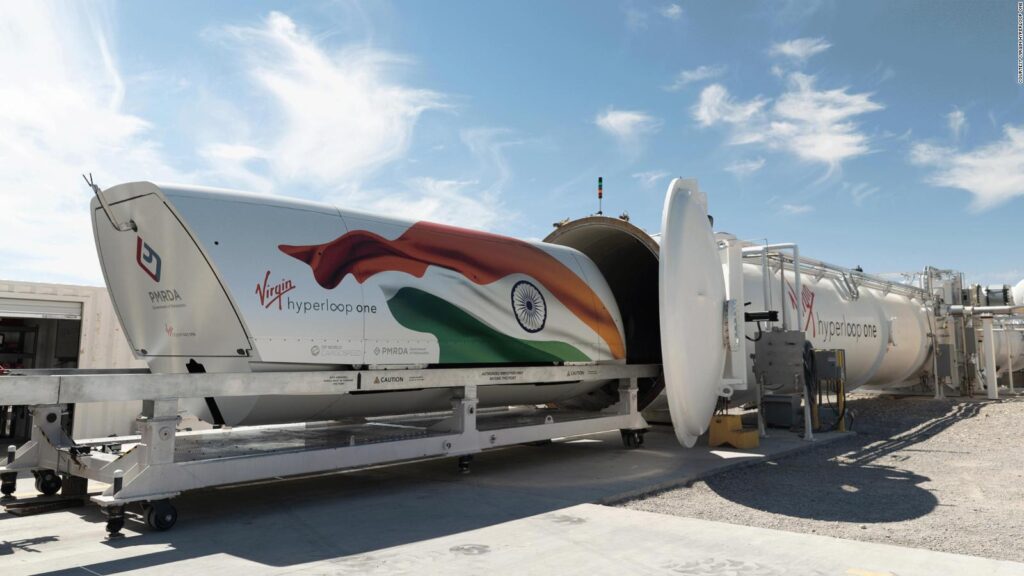
Despite these challenges, Virgin Hyperloop has secured numerous global deals and strategic partnerships. A notable example is the Memorandum of Understanding (MoU) signed with Bangalore Airport in India. This collaboration aims to establish a hyperloop connection capable of transporting thousands of passengers per hour between the airport and the city in just 10 minutes, at speeds up to 1080 kmph, significantly reducing the current travel time of nearly one hour (excluding traffic).
Hyperloop: From Concept to Reality
Journeying with Virgin Galactic
Virgin Galactic, an American spaceflight company established in 2004, focuses on offering commercial space tourism, aiming to transport hundreds to thousands of individuals into space for unique recreational journeys. After overcoming a catastrophic in-flight incident in October 2014, the company successfully conducted its first test flight in December 2018.
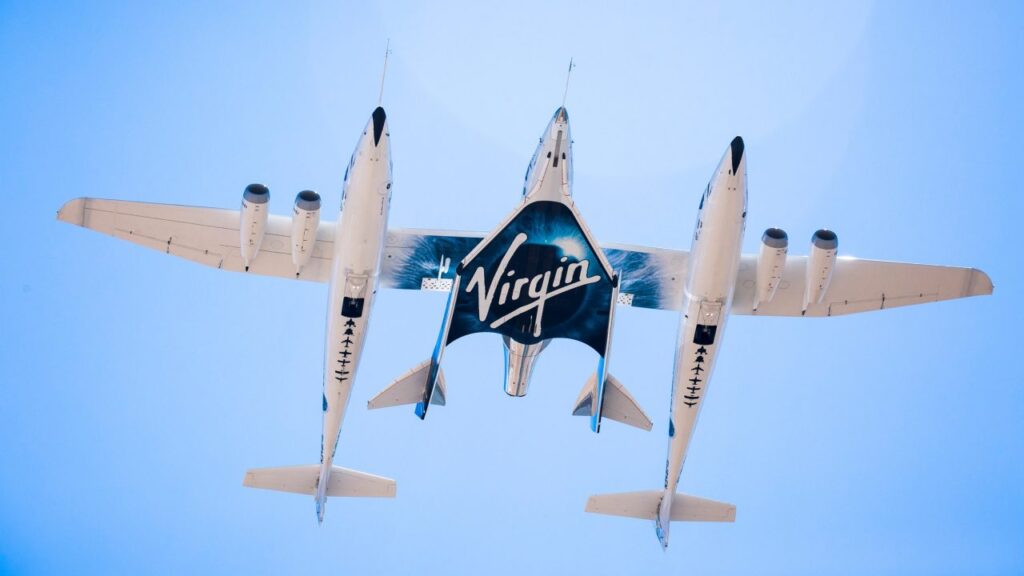
The Virgin Galactic system comprises WhiteKnightTwo, a purpose-built jet aircraft designed to carry SpaceShipTwo, which holds the distinction of being the world’s first commercial spaceship developed by a private entity.
Design and Operation of Virgin Galactic Spacecraft
WhiteKnightTwo is a distinctive four-engine, dual-fuselage jet aircraft engineered to elevate SpaceShipTwo to an altitude of 50,000 feet. The inaugural WhiteKnightTwo, constructed in 2008, underwent rigorous testing and was approved to transport SpaceShipTwo, holding it securely between its twin cabins. These cabins, molded identically to the spaceship, detach from SpaceShipTwo upon its release, ensuring a streamlined operation.
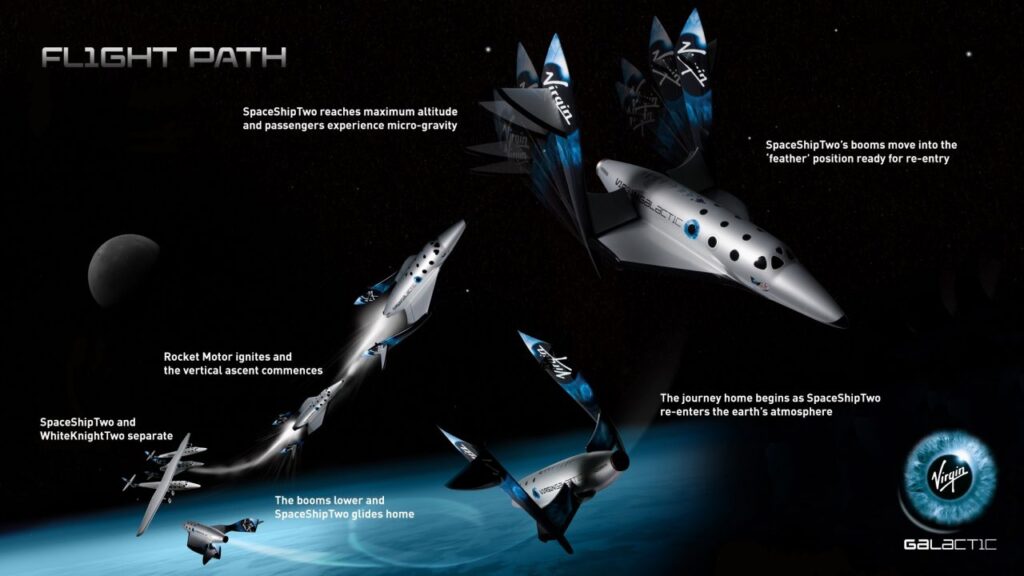
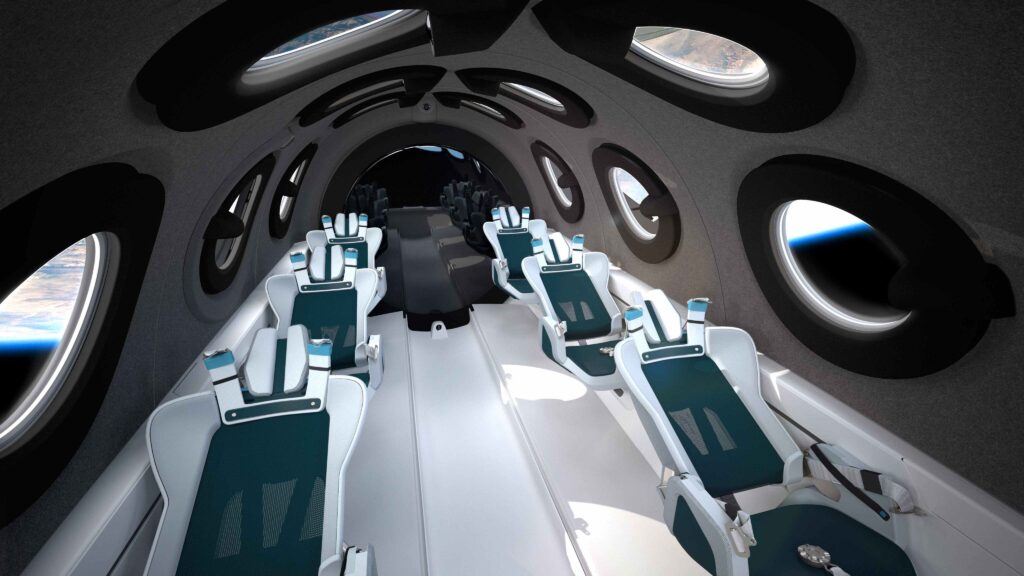
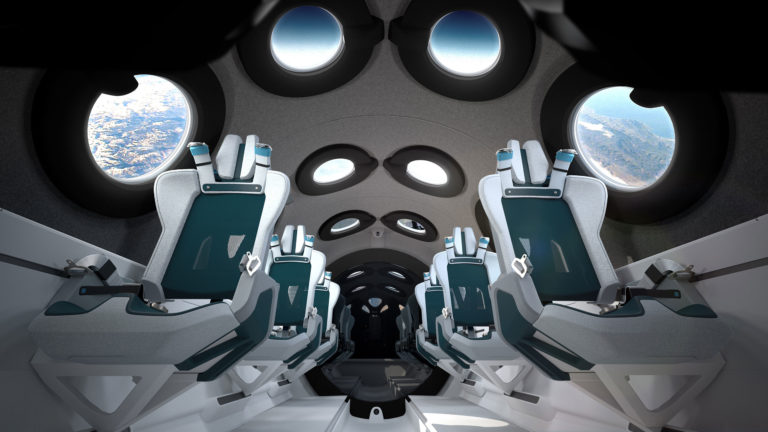
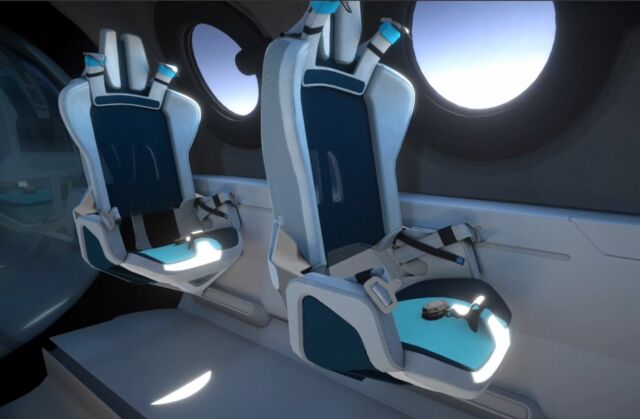
SpaceShipTwo is a reusable, winged spacecraft meticulously designed to safely carry eight individuals, including two pilots, into space with remarkable frequency. Its propulsion system relies on a hybrid rocket motor, integrating features from both solid and liquid rocket engines. The cabin of SpaceShipTwo prioritizes maximum safety, comfort, and an unparalleled astronaut experience. Custom-designed, articulated seats expertly manage exposure to G-forces during both ascent and descent, ensuring a comfortable journey.
For future Virgin Galactic astronauts, the breathtaking views will undoubtedly be a highlight of their space journey. To enhance this experience, SpaceShipTwo boasts more windows than any other spacecraft ever built. This allows every astronaut an expansive view into the cosmos and a unique perspective back at our magnificent planet below, offering unparalleled visual experiences in every direction.
Sending people to space has not only expanded our understanding of science, but taught us amazing things about human ingenuity, physiology and psychology. From space, we are able to look with a new perspective both outward and back. From space, the borders that are fought over on Earth are arbitrary lines. From space it is clear that there is much more that unites than divides us.
Here’s an exclusive inside look at the Virgin Galactic spacecraft:
Virgin Galactic’s Current Status and Future Flights
Virgin Galactic had announced its inaugural spaceflight from Spaceport America, initially expected between November 19-23, 2020. The company had previously commenced ticket sales at a price of $250,000 and anticipates resuming them soon. Prospective space travelers can secure a spot on the waiting list by paying a $1000 deposit, a program introduced by the firm in February 2020. According to CEO Richard Branson, passengers were projected to begin their Virgin Galactic space tours starting in 2021.
By the close of August 2020, Virgin Galactic had successfully accumulated a substantial $742 million in its financial reserves, showcasing its strong fiscal position.
Are you ready for your journey to space?
References:
- https://www.virgin.com/about-virgin/latest/virgin-galactic-on-first-spaceflight-from-spaceport-america
- https://www.theverge.com/2020/11/8/21553014/virgin-hyperloop-first-human-test-speed-pod-tube
- https://spacenews.com/virgin-galactic-prepares-to-transition-to-operations/
- www.virgingalactic.com
- Sources & Credits for all images belong to their respective owner(s).
Join our community by subscribing to our Weekly Newsletter to stay updated on the latest AI updates and technologies, including tips and how-to guides. Also, follow us on Instagram (@inner_detail) for more updates in your feed. For more interesting informational, technology, and innovation content, keep reading The Inner Detail.