
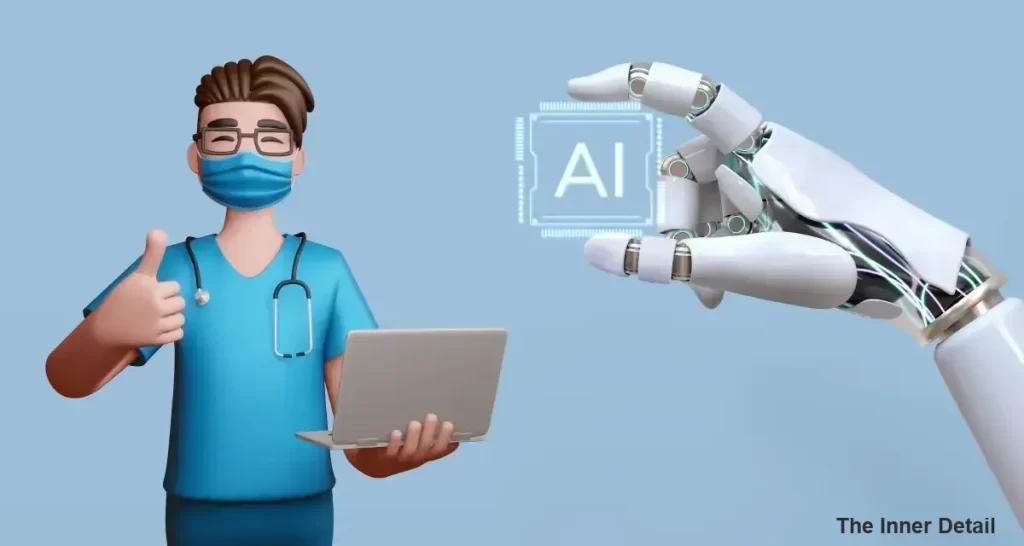
Artificial intelligence (AI) is rapidly transforming the healthcare landscape, moving beyond theoretical concepts to practical, real-world applications that are fundamentally changing how we diagnose, treat, and manage health. By performing tasks typically done by humans, but often faster and at a fraction of the cost, AI is simplifying the lives of patients, doctors, and administrators.
AI in healthcare involves the use of machine learning, natural language processing, deep learning, and other AI technologies to improve the experiences of both healthcare professionals and patients. It is truly reinventing and invigorating modern healthcare through machines capable of predicting, comprehending, learning, and acting.
How AI is Revolutionizing Healthcare?
AI shows up in numerous ways to enhance healthcare. It is improving medical diagnoses, sometimes predicting and diagnosing disease at a faster rate than most medical professionals. AI also plays a crucial role in speeding up drug discovery by helping design drugs, predicting side effects, and identifying ideal candidates for clinical trials, a process that traditionally costs billions and takes thousands of human hours.
AI is transforming the patient experience by supporting digital communications, offering schedule reminders, and tailored health tips, and improving the speed and accuracy of visits. It also excels at managing healthcare data, breaking down data silos and connecting vast volumes of information in minutes, which previously took years, thereby reducing administrative time and costs.
A doctor from Dubai took to social-media about the accuracy and efficiency of AI in diagnosing X-rays, adding that AI imposes a great fear to radiologists who have been trained for years. He said, “AI could do the X-ray diagnosis in just few seconds to minutes, which took me 20 years to fully grasp.”
Furthermore, AI powers robotic surgery systems that assist surgeons with precision, leading to fewer complications, less pain, and quicker recovery times. AI-powered telemedicine tools and chatbots are also used to expand access to healthcare.
The Promises: Pros of AI in Healthcare
The potential benefits of AI in healthcare are substantial.
- Processing vast amounts of data and identifying patterns for disease detection and patient care:
- Example 1: Google’s DeepMind developed an AI system that can detect over 50 eye diseases from retinal scans with high accuracy, often outperforming human experts. This allows for earlier intervention and personalized treatment plans, reducing the risk of vision loss for millions.
- Example 2: IBM Watson Health has been used to analyze patient data, including medical records, genomic data, and research papers, to help oncologists identify personalized cancer treatment options for patients, suggesting therapies that might not be obvious to human doctors alone.
- Faster and more accurate diagnoses, reducing preventable harm and deaths:
- Example 1: Aidoc’s AI solutions are used in hospitals globally to flag critical findings in medical images (like CT scans for brain bleeds or pulmonary embolisms), alerting radiologists to urgent cases immediately. This drastically reduces the time to diagnosis and treatment, potentially saving lives in emergency situations.
- Example 2: PathAI uses AI-powered pathology to assist pathologists in diagnosing cancer more accurately and efficiently by analyzing digital tissue samples. This helps reduce diagnostic errors and ensures patients receive the correct treatment sooner.
- Automating repetitive administrative tasks and supporting preventive care:
- Example 1: Companies like Suki AI develop voice AI assistants for doctors, allowing them to complete clinical documentation and administrative tasks by simply speaking naturally. This frees up hours of a doctor’s day, allowing them to spend more time directly with patients and less time on paperwork.
- Example 2: Healthcare providers are using AI-powered predictive analytics tools to identify patients at high risk of developing chronic diseases (e.g., diabetes, heart disease) or experiencing readmissions. This enables proactive interventions, personalized wellness programs, and preventive care strategies, leading to better patient outcomes and reduced healthcare costs.
- Accelerating drug discovery and developing more effective, personalized treatments:
- Example 1: BenevolentAI uses AI to analyze vast amounts of biomedical data, identify potential drug targets, and even suggest new drug candidates. This has significantly shortened the early stages of drug discovery, leading to promising molecules for diseases like Parkinson’s and ALS entering clinical trials faster.
- Example 2: Insilico Medicine utilizes AI for drug discovery and development, from target identification to molecule generation. They have successfully identified novel molecules and advanced them into preclinical trials at an unprecedented pace, demonstrating the potential for AI to revolutionize the pharmaceutical pipeline and bring new treatments to patients faster.
The Challenges: Cons of AI in Healthcare
Despite its power, implementing AI in healthcare comes with significant obstacles.
- A major concern is the potential for AI systems to produce errors or biased results, which can affect their trustworthiness.
- Data privacy and security are critical issues, as AI relies on large datasets, raising risks of sensitive patient information being exposed or misused.
- There is often a lack of transparency in how AI makes decisions. Furthermore, the field faces regulatory and legal hurdles, with a need for clear guidelines on who is accountable for errors. Medical professionals also need to stay updated with continuous AI advancements.
AI holds immense potential to revolutionize healthcare, but successfully integrating it requires addressing these challenges to ensure ethical, reliable, and equitable care.
Key Takeaways
- AI is revolutionizing healthcare through improved diagnostics, faster drug discovery, and enhanced patient experiences.
- AI offers significant benefits, including efficient data processing, accurate diagnoses, automation of tasks, and personalized treatments.
- Challenges to AI implementation include the potential for errors, data privacy concerns, lack of transparency, and regulatory hurdles.
Join our community by subscribing to our Weekly Newsletter to stay updated on the latest AI updates and technologies, including the tips and how-to guides. (Also, follow us on Instagram (@inner_detail) for more updates in your feed).
(For more such interesting informational, technology and innovation stuffs, keep reading The Inner Detail).