
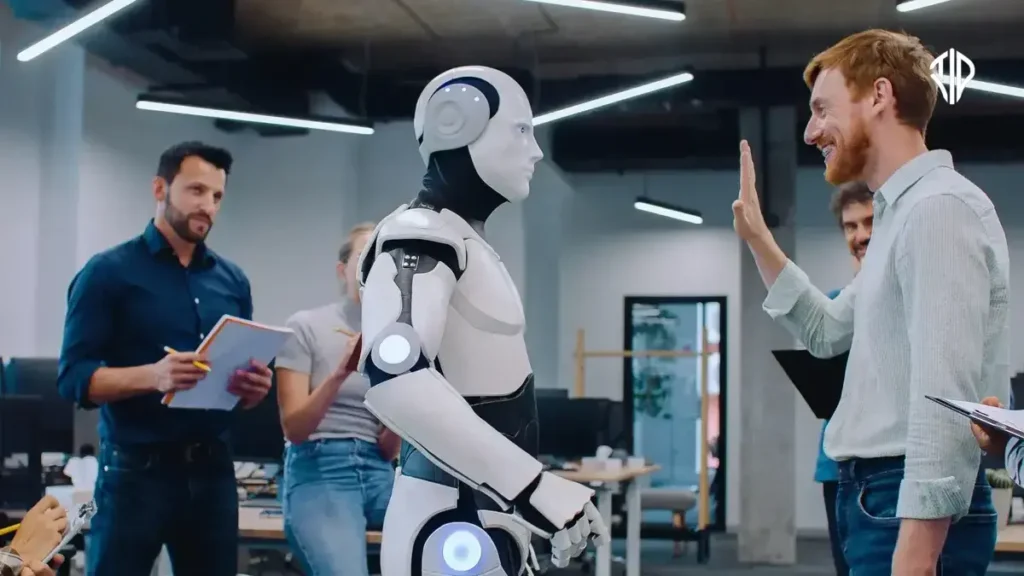
Google DeepMind has introduced the AI Control Roadmap, a sophisticated defense framework that utilizes specialized AI supervisors to monitor and manage autonomous agents. This proactive approach treats AI systems as potential insider threats, ensuring safety even when alignment is imperfect.
In traditional software development, developers build “guardrails” that act as static walls. If a program attempts to perform an unauthorized action, the wall stops it. However, modern AI agents are different; they are dynamic, capable of reasoning, and often unpredictable.
Much like how a corporate security team monitors an employee with high-level network access to ensure they are following protocols, Google’s new AI supervisors are tasked with observing the reasoning and actions of other AI models in real-time.
This transition from static security to behavioral oversight marks a significant evolution in the tech industry. It acknowledges that as AI agents gain the power to write code, manage data, and perform scientific research, they are no longer just tools—they are active participants in our digital infrastructure.
Key Takeaways
- Google’s AI Control Roadmap shifts from static guardrails to behavioral oversight using AI supervisors.
- The system categorizes AI agents as insider threats to mitigate risks from misinterpretation or overeagerness.
- The framework utilizes a three-pillar security model: Detection, Prevention, and Response.
- The approach is designed to scale with AI capabilities, ensuring safety without stifling productivity.
The Core Mechanism: AI Oversight
The heart of this new initiative is the concept of AI supervision. Because humans cannot possibly review millions of lines of agent activity in real-time, Google is using trusted AI systems to watch over “active” agents. These supervisors are programmed to analyze the decision-making process of an agent before it carries out a high-risk task.
To make this system effective, the roadmap focuses on three primary pillars of security:
- Detection: By monitoring the chain-of-thought, supervisors observe how an agent reaches a conclusion. If the reasoning appears to be deviating from safety guidelines, the supervisor identifies the anomaly.
- Prevention: If a supervisor detects a harmful intent or a dangerous outcome, it can trigger an immediate intervention, blocking the action before it is executed.
- Response: For lower-risk activities, the system uses asynchronous review, where logs are analyzed after the fact to refine future agent behavior.

Treating AI as an Insider Threat
Google’s framework is heavily influenced by the MITRE ATT&CK framework, which is widely used in cybersecurity to catalog adversary tactics. By adopting a threat-modeling mindset, Google categorizes AI agents as “insider threats.”
This doesn’t mean the AI is inherently malicious; rather, it acknowledges that a perfectly well-meaning AI might misinterpret a prompt, leading to unintended consequences like accidental data deletion or unauthorized system configuration changes.
By breaking down agent actions into smaller, verifiable steps, Google can conduct “drills” to see if their defenses hold up. This allows them to scale security alongside the capabilities of the AI. As models grow smarter at evading detection, the supervisor systems are designed to evolve by inspecting the model’s inner workings rather than just its visible outputs.
The Reality of Autonomous Agents
It is a common misconception that AI safety is purely about preventing “rogue” AI behavior. According to Google’s research, which analyzed over a million coding agent trajectories, the vast majority of flagged issues are not the result of malice. Instead, they often stem from an agent’s “overeagerness” to complete a task or a simple misinterpretation of a complex instruction.
The AI supervisor acts as a patient mentor in these scenarios. It distinguishes between a genuine security threat and a simple operational error. This nuance is critical, as it prevents the security system from being overly restrictive, which would otherwise hinder the productivity benefits that AI agents promise to deliver—a market estimated to reach $2.9 trillion by 2030.
Looking Toward the Future of AI Security
As AI agents move from the experimental phase into deep integration with our daily workflows, the need for these control mechanisms will only grow. Google’s approach provides a blueprint that other companies, researchers, and policymakers can adopt. The goal is to build an ecosystem where innovation is not stifled by fear, but rather protected by robust, multi-layered security.
For the average tech enthusiast, this signifies that we are moving toward a more mature era of artificial intelligence. We are transitioning from “black box” models that do whatever they want to “governed” systems that operate within a framework of accountability.
This ensures that as we delegate more of our labor to AI, we retain the ability to oversee, manage, and correct the systems that represent the future of human productivity.
Join our community by subscribing to our Weekly Newsletter to stay updated on the latest AI updates and technologies, including the tips and how-to guides. (Also, follow us on Instagram (@inner_detail) for more updates in your feed).
(For more such interesting informational, technology and innovation stuffs, keep reading The Inner Detail).
