
In the dynamic world of technology, options abound. Even for leading brands, discerning consumers often seek alternatives that align with their specific preferences. Just as there are ardent Apple enthusiasts, a significant segment of users actively looks for non-Apple tech solutions, whether for personal preference or specific feature sets.
For those exploring options beyond the Apple ecosystem, this guide highlights top-tier alternatives to popular Apple products, offering comparable performance and innovative features. We begin with a look at alternatives to Apple’s best-selling device, the iPhone.
Top iPhone 13 Pro Max Alternatives: Samsung S22 Ultra, OnePlus 10 Pro, and iQOO 9
The iPhone 13 series has significantly contributed to Apple’s record-breaking revenue, with the iPhone 13 Pro Max starting at ₹1,19,900. While the iPhone 13 Pro Max’s A15 Bionic chip is a top performer, this doesn’t diminish the strong appeal of alternatives like the Samsung Galaxy S22 Ultra, OnePlus 10 Pro, and iQOO 9 for users seeking powerful smartphones outside the Apple ecosystem.
For consumers seeking excellent alternatives to Apple’s flagship iPhone, these Android smartphones offer compelling specifications and features that meet high expectations.
| Specifications | Apple iPhone 13 Pro Max | Samsung S22 Ultra | OnePlus 10 Pro (upcoming) | iQOO 9 |
|---|---|---|---|---|
| Processor | A15 Bionic | Exynoss 2200 | Snapdragon 8 Gen 1 | Snapdragon 888+ |
| Display – Type | Super Retina XDR OLED, 120Hz | Dynamic AMOLED 2X, 120Hz | LTPO2 AMOLED | AMOLED, 1B colors, 120Hz, |
| Display – Size & Resolution | 6.7 inches, 1284 x 2778 pixels | 6.8 inches, 1440 * 3088 pixels | 6.7 inches, 1440 * 3216 pixels | 6.56 inches, 1080 * 2376 pixels |
| Memory | 128GB 6GB RAM, 256GB 6GB RAM, 512GB 6GB RAM, 1TB 6GB RAM |
128GB 8GB RAM, 256GB 12GB RAM, 512GB 12GB RAM, 1TB 12GB RAM |
128GB 8GB RAM, 256GB 8GB RAM, 256GB 12GB RAM, 512GB 12GB RAM |
128GB 8GB RAM, 256GB 12GB RAM |
| Camera – Main | 12 MP, f/1.5, 26mm (wide), 12 MP, f/2.8, 77mm (telephoto), 12 MP, f/1.8, 13mm, 120˚ (ultrawide), TOF 3D LiDAR scanner |
108 MP, f/1.8, 23mm (wide) 10 MP, f/4.9, 10 MP, f/2.4, 70mm, 12 MP, f/2.2, 13mm, 120˚ (ultrawide), |
48 MP, f/1.8, 23mm (wide), 8 MP, f/2.4, 77mm (telephoto) 50 MP, f/2.2, 14mm, 150˚ (ultrawide), |
48 MP, f/1.8, 25mm (wide), 13 MP, f/2.5, 50mm (telephoto), 13 MP, f/2.2, 16mm, 120˚ (ultrawide) |
| Camera – Selfie | 12 MP, f/2.2, 23mm (wide), | 40 MP, f/2.2, 26mm (wide) | 32 MP, f/2.2, (wide) | 16 MP, f/2.5, (wide) |
| Battery | 4352 mAh | 5000mAh, Fast Charging 45 W | 5000mAh, Fast charging 80W | 4350mAh, Fast Charging 120W |
| Software | iOS 15, upgradable to iOS 15.4 | Android 12, One UI 4.1 | Android 12.1, ColorOS 12.1 | Android 12, Funtouch 12 |
| Date of Release | September 14, 2021 | February 9, 2022 | January 11, 2022 | February 23, 2022 |
| Price in ₹ | Starts ₹1,29,900/- | Starts ₹1,09,000/- | ₹42,990/- |
Best Apple Watch Series 7 Alternatives: Samsung Galaxy Watch 4, Amazfit GTR 3 Pro, and Garmin Venu 2S
Since its introduction in Spring 2014, the Apple Watch has evolved through numerous upgrades. The current Watch Series 7 boasts Apple’s most advanced and largest display, significant health innovations, and enhanced durability. Priced from $399 / ₹41,900, the Apple Watch Series 7 faces strong competition from devices like the Samsung Galaxy Watch 4, Amazfit GTR 3 Pro, and Garmin Venu 2S, which offer comparable performance and feature sets.
Below is a detailed comparison highlighting key specifications of leading smartwatches that serve as excellent alternatives to the Apple Watch Series 7.
| Specifications | Apple Watch Series 7 | Samsung Galaxy Watch 4 | Amazfit GTR 3 Pro | Garmin Venu 2S |
|---|---|---|---|---|
| Processor | Apple S7 | Exynos W920 | ||
| Display – Size, Resolution | 1.77 inch396 * 484 pixels | 1.4 inch450 * 450 pixels | 1.39 inch454 * 454 pixels | 1.1 inch360 * 360 pixels |
| Display – Type | AMOLED | Super AMOLED | AMOLED | AMOLED |
| Features | Water resistant, Voice Control | Water Resistant | Voice Control | Water Resistant |
| Compatible OS | iOS | Android, iOS | Android v7.0, iOS | Android, iOS |
| Battery Capacity & Life | 309 mAh 18 hours | 361 mAH 40 hours | 450 mAH, up to 12 Days | Up to 10 Days in Smartwatch mode |
| Price in ₹ In $ | ₹41,900/- $399 | ₹40,299/- $349.99 | ₹17,354/- $229.99 | ₹29,683 $399 |
Explore More Tech Insights
Top AirPods Alternatives: OnePlus Buds Pro, Sony WF-1000XM4, and Google Pixel Buds-A Series
AirPods are Apple Inc.’s popular wireless Bluetooth earbuds, initially unveiled on September 7, 2016, alongside the iPhone 7. Quickly becoming one of Apple’s most popular accessories, these headphones represent Apple’s entry-level wireless audio solution, offered alongside the AirPods Pro and AirPods Max.
For consumers seeking excellent wireless earbuds that rival AirPods, top contenders include the OnePlus Buds Pro, Sony WF-1000XM4, and Google Pixel Buds-A Series, each offering unique strengths and competitive features.
OnePlus Buds Pro: Premium Design and Performance
The OnePlus Buds Pro stands out with its sophisticated design, ergonomic comfort, and a premium charging case that supports Warp Charging, providing up to 10 hours of audio playback from just a 10-minute charge. This makes them a highly efficient option for on-the-go listening.
These earbuds deliver impressive audio quality across diverse genres and sources, complemented by various sound modes for personalized listening. A key highlight is their robust active noise cancellation (ANC), which, while not surpassing all leading noise-cancelling headphones, often outperforms the AirPods Pro. Additional benefits for OnePlus smartphone users include a dedicated gaming mode and seamless fast pairing, making them an ideal choice within the OnePlus ecosystem.
Sony WF-1000XM4: Superior Audio and Noise Cancellation
While the Sony WF-1000XM4 earbuds are positioned at a slightly higher price point than the AirPods Pro, their comprehensive feature set justifies the investment. Sony has packed these premium earbuds with advanced technology, upholding the renowned quality of their XM series.
These Sony earbuds deliver class-leading sound quality and exceptional Active Noise Cancellation (ANC), often matching or exceeding the performance of AirPods Pro. Their IPX4 water resistance rating also ensures durability comparable to Apple’s top-tier model. Furthermore, the WF-1000XM4 offers superior battery life, providing 7 to 8 hours of playback even with ANC activated on a single charge.
Google Pixel Buds-A Series: Android’s Smart Earbud Choice
While iPhone users have a range of AirPods models, Android smartphone owners have an excellent contender in the Google Pixel Buds A-Series. These earbuds represent Google’s most refined offering to date, serving as a compelling alternative to AirPods for Android users.
The Pixel Buds A-Series are notably lightweight and comfortable. Although they lack active noise cancellation, they provide effective passive noise isolation. Available in White or ‘Dark Olive,’ these earbuds also feature IPX4 water resistance, making them suitable for workouts and outdoor activities.
With approximately five hours of battery life on a single charge, while not market-leading, it’s sufficient for daily use. The accompanying charging case extends total listening time to about 24 hours. Pairing the Pixel Buds A-Series is incredibly straightforward, especially for Android devices leveraging the Fast Pair feature, ensuring a quick and seamless connection.
Wireless Earbuds Comparison: AirPods Alternatives
| Specs | OnePlus Buds Pro | Sony WF-1000XM4 | Google Pixel Buds-A Series |
|---|---|---|---|
| Battery Life | 5 hours (ANC on), 7 hours (ANC off), 28 hours (with charging case and ANC), 38 hours (with charging case, ANC off) |
8 hours (ANC on), 12 hours (ANC off), 24 hours (with charging case) |
5 hours music, 24 hours (charging case) |
| Bluetooth Range | 40 feet (12 meters) | 30 feet (9 meters) | 40 feet (12 meters) |
| Special Features | ANC, Fast charging, Adjustable ambient mode, Voice assistant support |
Automatic Noise Cancelling (ANC), Transparency mode, Speak-to-chat, AI assistant support, Quick, Wireless Charging |
Bass Boost, Google Assistant integration, Find My Earbuds |
| Pros | Rich, well-balanced sound Powerful ANC Handsome, luxe design Powerful charging tech Unique audio features |
Balanced sound Excellent ANC effectiveness Improved Battery life |
Well rounded, clean sound Comfortable Reliable Connection |
| Cons | Poor ANC playtime Few features exclusive to OnePlus devices |
Expensive | No volume touch control on buds No Noise-cancelling |
Top MacBook Alternatives: Dell XPS 13 OLED and Asus ZenBook 13 OLED
Dell XPS 13 OLED: A Premium Laptop Contender
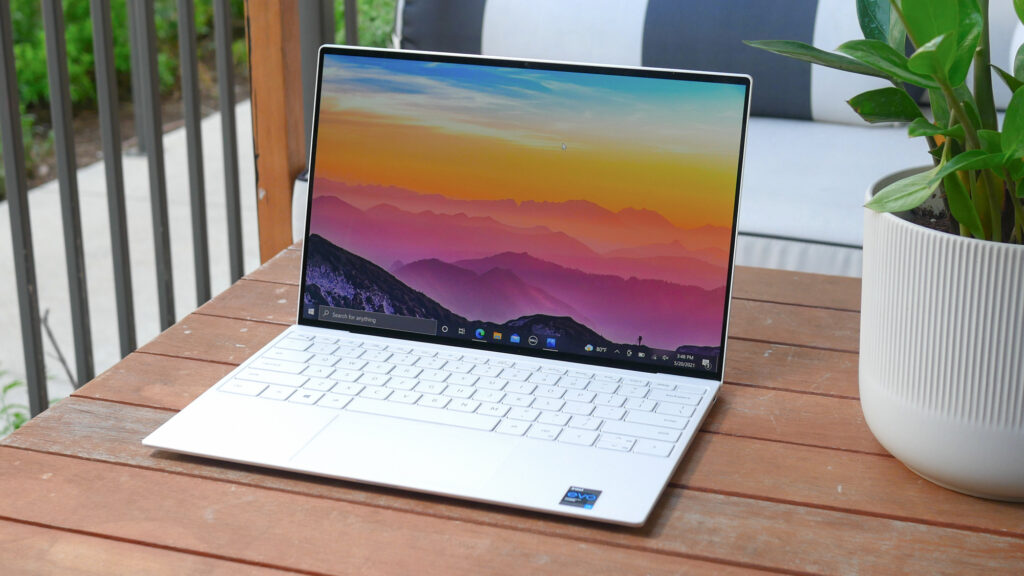
Dell’s current XPS 13 models are powered by 11th-generation Intel Core i5 and i7 processors, while Apple’s 13-inch MacBook Pro and MacBook Air utilize Apple’s innovative M1 chip. In terms of design and portability, the XPS 13 measures 0.58 inches thin and weighs approximately 2.64 pounds. The 13-inch MacBook Pro is marginally thicker and heavier at 0.61 inches and 3.1 pounds, with the MacBook Air at 0.63 inches and 2.8 pounds. These subtle differences in dimensions are largely negligible in everyday portability.
Internally, the Dell XPS 13 can be configured with up to 32GB of RAM and up to 2TB of storage. The 13-inch MacBook Pro also supports up to 32GB of RAM and 2TB of storage, while the MacBook Air offers configurations with up to 16GB of RAM and 2TB of storage, providing ample power and capacity for demanding tasks.
The Dell XPS 13 offers superior connectivity compared to its Apple counterparts, featuring two Thunderbolt 3 ports, a microSD card slot, and a 3.5mm audio jack. It conveniently includes a USB-C to USB-A adapter for connecting external peripherals. Additionally, select XPS 13 configurations boast touch-enabled UHD+ displays, with an OLED panel option providing exceptional color vibrancy and contrast for a truly stunning visual experience.
Asus ZenBook 13 OLED: A Stylish MacBook Alternative
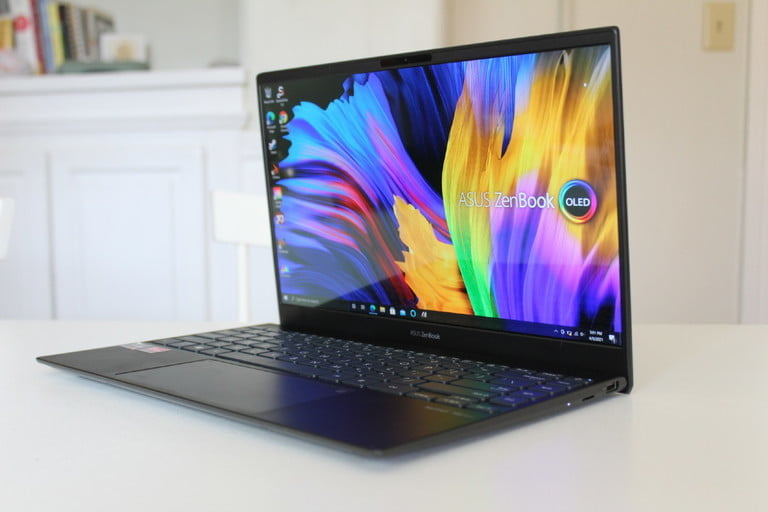
For users seeking a laptop with premium design and build quality similar to a MacBook, the Asus ZenBook 13 OLED UM325 presents an excellent choice. It features a thoughtfully redesigned keyboard, offering a superior typing experience, alongside a spacious trackpad that rivals the MacBook’s. While its 1080p OLED display has a lower technical resolution, the OLED technology ensures vibrant colors and stunning visual clarity.
Beyond its aesthetic appeal, the ZenBook UM325 is powered by either a Ryzen 5 or Ryzen 7 processor, delivering robust performance for demanding workloads. AMD’s recent processors rival Apple’s M1 chip in raw power, positioning the ZenBook as a formidable performance competitor against Intel-based laptops. Users can configure it with up to 16GB of RAM and a 512GB SSD. Connectivity options, though somewhat limited, include a USB Type-A port, two USB-C ports, and an HDMI slot, offering more variety than a typical MacBook, albeit without Thunderbolt capabilities.
Collectively, these features culminate in an experience highly comparable to a MacBook, establishing the Asus ZenBook UM325 as an outstanding alternative for discerning users.
Join our community by subscribing to our Weekly Newsletter to stay updated on the latest AI updates and technologies, including tips and how-to guides. Also, follow us on Instagram (@inner_detail) for more updates in your feed.
For more interesting informational, technology, and innovation content, keep reading The Inner Detail.