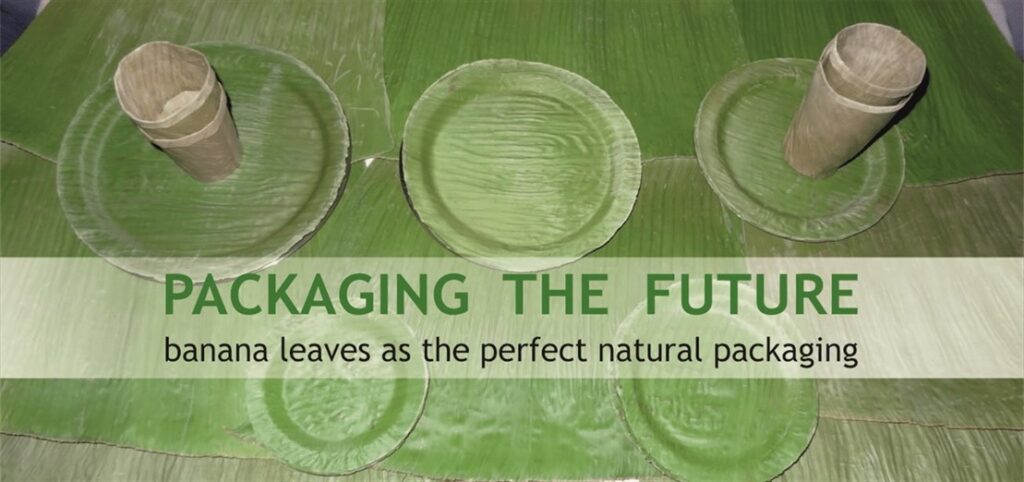
Plastic pollution poses a severe threat to global wildlife and ocean ecosystems, with packaging being a primary contributor. In 2010, global plastic waste reached 275 million tons annually, with approximately 8 million tons—nearly 3%—polluting our oceans and disrupting marine life. By 2015, this figure escalated to 350 million tons. However, a groundbreaking invention by young Indian innovator Tenith Adhithyaa, known as “Banana Leaf Technology,” offers a promising and sustainable solution to this environmental crisis, earning global recognition and praise for its revolutionary approach.
Innovative Banana Leaf Technology for Sustainable Packaging
At its core, Banana Leaf Technology utilizes cellular enhancement to produce a truly organic biomaterial. This innovative process results in a product that is 100% eco-friendly, highly sustainable, entirely chemical-free, and remarkably cost-efficient.
While natural leaves typically have a short lifespan of two to three days before being discarded, this advanced technology preserves organic biomaterials for up to a year without any chemical treatment. These preserved leaves are then transformed into durable packaging materials and various other products, maintaining their integrity for up to three years.
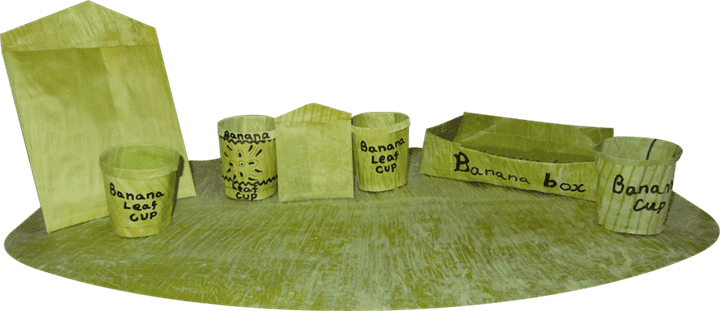
This preservation process significantly enhances the leaves’ physical properties, transforming them into a robust, biodegradable material that serves as an excellent alternative to both plastic and paper. The processed leaves demonstrate remarkable improvements in durability, stretchability, and crush resistance, enabling them to withstand extreme temperatures and bear heavier loads than conventional materials. The technology works by enriching the leaf cells and strengthening their cell walls, thereby preventing destruction by pathogenic agents. These resilient leaves can function as effective packaging materials and products, retaining their natural color for up to one year within their three-year lifespan.
Notably, because this is a cellular enhancement technology, it can be applied to virtually any type of leaf, making it a versatile solution for sustainable packaging.
Why Banana Leaf Technology is a Superior Alternative
The Persistent Problem of Plastic Pollution
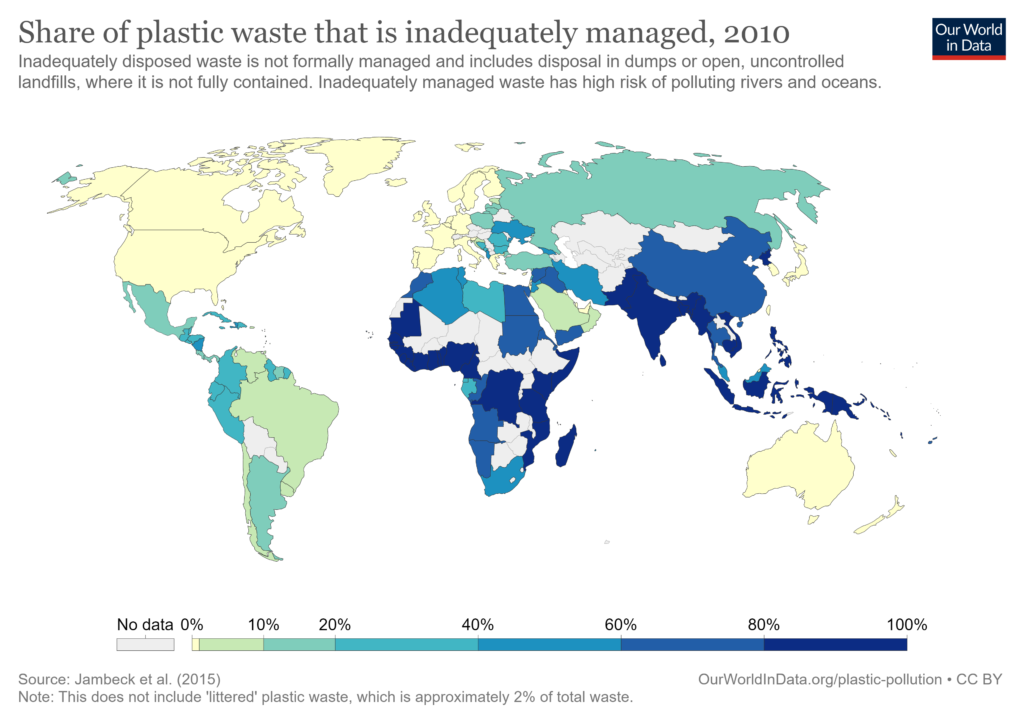
As previously discussed, plastics pose a monumental challenge globally, particularly due to their non-biodegradable nature, which complicates disposal. A major concern is the inadequate management of plastic waste, leading to severe environmental consequences for both soil and ocean ecosystems.
Alarming Statistics: Plastic Waste’s Impact on Oceans and Landfills
Statistics reveal that in many developing and low-income countries, a staggering 80-90% of plastics are poorly managed, leading to widespread environmental damage. In contrast, only a limited number of developed nations effectively manage plastic waste, primarily through landfill decomposition.
The Environmental Cost of Paper Production: Deforestation
While paper is often considered an alternative, its widespread use contributes significantly to global deforestation, with approximately 7 billion trees cut down annually. The demand for single-use paper products, in particular, drives this large-scale tree felling, exacerbating environmental damage.
Key Advantages of Banana Leaf Technology
- 100% biodegradable and chemical-free, offering a safe alternative to hazardous commercial products.
- Can also serve as animal fodder and is suitable for food storage.
- Easy and safe to dispose of; simply returning it to the ground enhances soil fertility.

- Highly cost-efficient: Processing a single leaf costs approximately $0.01. According to the inventor, a banana leaf straw costs 10 paise compared to a plastic straw at 70 paise, and a banana leaf plate costs about Rs 1, significantly less than a plastic plate at Rs 4.
Adopting banana leaf technology offers multifaceted environmental benefits, addressing critical issues such as deforestation, landfill waste, marine debris, ocean acidification, global warming, coral bleaching, and soil erosion.
Meet the Innovator: Tenith Adhithyaa
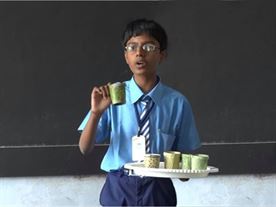

Tenith Adhithyaa, India’s first Innovation Scholar, is the brilliant mind behind Banana Leaf Technology, a cellular innovation focused on creating eco-friendly materials. This groundbreaking technology was developed in 2010 by an 11-year-old Tenith in his homemade laboratory in Watrap Village, Tamil Nadu, India. His inspiration stemmed from a profound desire to engineer a superior, sustainable biomaterial to combat the pressing environmental crisis. Adhithyaa’s dedication to reviving traditional South-East Asian practices fueled his research, transforming a personal quest into a global ambition for sustainable living.
Read this : A London Woman’s startup chases ‘Zero-waste’ on a retro styled milk truck
The journey began when Adhithyaa observed farmers discarding large quantities of leaves as waste, a practice driven by the absence of effective preservation techniques and resulting in significant economic loss. This observation sparked a pivotal question in his mind: “Can these leaves be biologically enhanced?”
Beyond his primary invention, Tenith Adhithyaa is a prolific innovator, recognized as a teenage scientist, researcher, software developer, motivational speaker, science campaigner, professional coin collector, and Guinness World Record holder. By the age of 20, he had developed 19 inventions. As the visionary founder of the ‘Lets Innovate Youth’ social innovation movement, he has inspired and empowered over 89,000 young individuals globally since 2010.
Don’t miss this: Wind turbine that generates both Electricity and water: A 23-yr old Indian Engineer’s innovation
References:
- http://bananaleaftechnology.com/
- https://ourworldindata.org/plastic-pollution
- https://yourstory.com/socialstory/2020/02/young-scientist-banana-leaf-technology-reusable-alternative-plastic
Join our community by subscribing to our Weekly Newsletter to stay updated on the latest AI updates and technologies, including the tips and how-to guides. (Also, follow us on Instagram (@inner_detail) for more updates in your feed).
(For more such interesting informational, technology and innovation stuffs, keep reading The Inner Detail).