
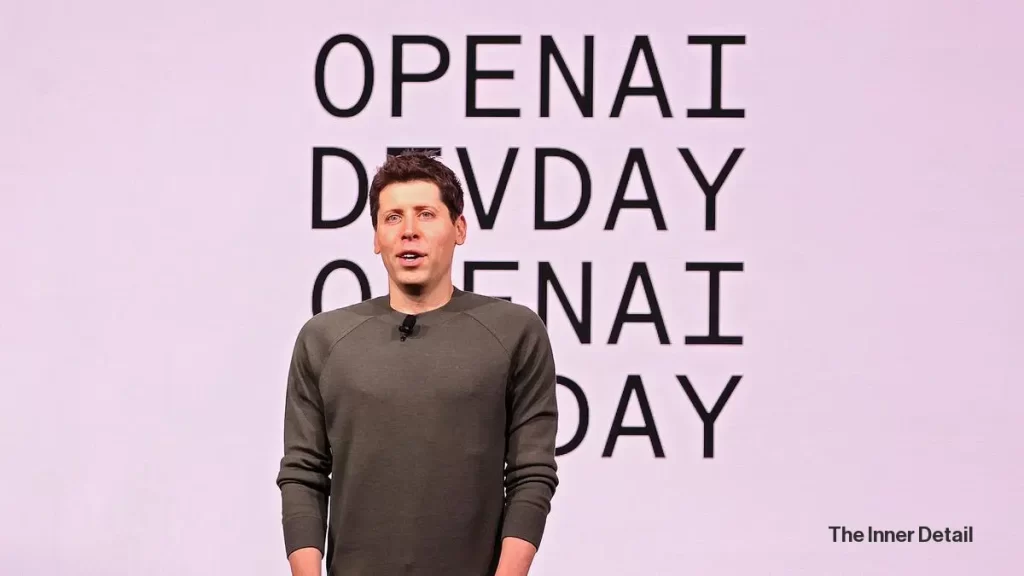
The ChatGPT-maker ‘OpenAI’ once again takes the headlines after the news that the company offered $1.5 million stock-based salary compensations to its employees, garnered the social-media.
y The battle for top-tier artificial intelligence talent has reached an unprecedented intensity, and leading tech startups are responding with compensation packages that redefine industry standards.
In a landscape where groundbreaking innovation is paramount, companies are pulling out all the stops to attract and retain the brightest minds. Among these, OpenAI has reportedly emerged as the frontrunner, showering its employees with an astonishing average of $1.5 million each in stock-based compensation.
OpenAI’s Unrivaled Compensation Strategy
According to recent financial disclosures and investor materials, OpenAI’s compensation structure is not merely generous; it is extraordinary. The company is reportedly offering an average of $1.5 million per employee in stock-based compensation, a sum that eclipses the payouts seen at most major tech companies even before their public market debuts.
This figure alone is projected to constitute nearly half of OpenAI’s anticipated 2025 revenue, highlighting the sheer scale of investment in its human capital.
This level of largesse is a strategic move by OpenAI to cement its dominance in the rapidly evolving generative AI space. The war for AI talent is fierce, with competitors like Meta actively poaching researchers with lucrative nine-figure offers. Such aggressive recruitment tactics have forced OpenAI to continually sweeten its retention bonuses and accelerate the vesting of equity, ensuring its pivotal scientists and engineers remain committed to its vision.
The company’s stock-based compensation is projected to climb by approximately $3 billion annually through 2030, underscoring the long-term commitment to its workforce.
To put OpenAI’s current compensation in perspective, consider these historical benchmarks:
- Google: Ahead of its 2004 IPO, Google’s stock compensation averaged about seven times less than OpenAI’s current figures.
- Facebook: Prior to its 2012 IPO, Facebook’s stock compensation was roughly 34 times less than what OpenAI is currently offering, per employee.
- Traditional Tech Firms: Most large tech companies typically spend around 6% of their revenue on stock compensation in the year preceding their IPOs, a stark contrast to OpenAI’s projected 46% of revenue in 2025.
The shift from a non-profit foundation to a hybrid public benefit corporation model in 2019 was largely driven by the escalating costs of advanced AI research and the need to attract external investment. This evolution has culminated in a compensation model designed to attract and retain the world’s most sought-after AI experts.
The Broader AI Talent War: Anthropic, Perplexity, and Beyond
While OpenAI’s reported $1.5 million average in stock awards sets a new benchmark, the entire AI ecosystem is characterized by exceptionally high compensation. Startups like Anthropic and Perplexity AI, direct competitors or significant players in the AI domain, are also engaged in this fierce talent acquisition battle.
- Anthropic: A leading rival to OpenAI, Anthropic is known for its strong focus on AI safety and its impressive large language models, like Claude. To attract top researchers and engineers, Anthropic also offers highly competitive compensation packages, combining substantial base salaries with significant equity stakes. While specific average stock compensation figures comparable to OpenAI’s $1.5 million are not widely publicized, reports suggest that senior AI researchers and engineers at Anthropic can command total compensation packages (including base salary, bonuses, and equity) well into the seven figures.
- Perplexity AI: This startup, known for its conversational answer engine, is another player in the intensely competitive AI landscape. As a growing company, Perplexity AI also invests heavily in its talent, offering attractive salaries and equity to secure experts in areas such as natural language processing and information retrieval. While its scale and funding rounds might differ from OpenAI or Anthropic, the general trend of high compensation for specialized AI talent holds true. Base salaries for experienced engineers and researchers often fall in the range of $300,000 to $600,000, with equity being a significant additional component.
Salary Packages of top Companies Revealed: Google| Amazon | Meta | Apple | Microsoft
The common thread among these leading AI startups is the recognition that human capital is their most valuable asset. The expertise required to develop, train, and deploy cutting-edge AI models is scarce and highly specialized. This scarcity drives up the market rate for these skills, compelling companies to offer increasingly lucrative packages to build and maintain their competitive edge.
Why Such Lavish Compensation?
The extraordinary compensation in the AI sector is driven by several critical factors:
- Scarcity of Expertise: The number of individuals truly capable of pushing the boundaries of AI research and development is incredibly small. These are highly specialized roles requiring advanced degrees and years of experience.
- High Stakes Innovation: AI is seen as the next technological frontier, with the potential to reshape industries and societies. Companies that win the AI race stand to gain immense market value and influence.
- Cost of Research: Developing advanced AI models, especially large language models (LLMs), requires massive computational resources and significant investment in research. Attracting the best people to manage and execute this is paramount.
- Investor Confidence: Investors are pouring billions into AI startups, and they expect to see that capital deployed effectively to secure top talent who can deliver on the promise of groundbreaking AI.
- Retention Challenges: The demand for AI talent means that employees are constantly being targeted by rival companies. High compensation packages are not just about attraction but also about strong retention.
The Impact and Future Outlook
OpenAI’s aggressive compensation strategy, while a significant financial outlay, underscores the company’s commitment to maintaining its leadership position in generative AI. It also sends a clear signal across Silicon Valley: the price of top AI talent has never been higher.
This trend is likely to continue as AI technology matures and its applications become even more pervasive. For those with the right skills and passion for artificial intelligence, the current technological landscape offers unparalleled opportunities for both impactful work and substantial financial reward. As the AI talent war rages on, we can expect to see continued innovation in compensation strategies, further solidifying the AI professional as one of the most valued assets in the modern economy.
Key Takeaways
- OpenAI leads the AI talent war with an average of $1.5 million per employee in stock-based compensation, significantly higher than historical tech giants pre-IPO.
- This extraordinary compensation strategy is driven by the extreme scarcity of top-tier AI talent and the high stakes of innovation in the generative AI space.
- Competitors like Anthropic and Perplexity AI also offer highly competitive packages, reflecting the industry-wide battle for skilled AI professionals.
- Investor confidence and the massive costs of AI research necessitate lucrative compensation to attract and retain the best minds.
- The trend of escalating compensation in AI is expected to continue, making AI professionals among the most valued assets in the modern economy.
Join our community by subscribing to our Weekly Newsletter to stay updated on the latest AI updates and technologies, including the tips and how-to guides. (Also, follow us on Instagram (@tid_technology) for more updates in your feed).
(For more such interesting informational, technology and innovation stuffs, keep reading The Inner Detail).