
Smartphone photography has evolved significantly, driven by a surging global interest in capturing life’s moments. From casual selfies to memorable group shots and high-quality video recording, modern smartphone cameras now boast impressive capabilities, with some models featuring up to 200-megapixel sensors. This technological advancement opens up a vast array of possibilities for documenting the world around us.
Adding a groundbreaking dimension to this evolution, the world is on the cusp of experiencing 3D image capture directly from smartphone cameras. This innovation promises to elevate smartphone photography to an unprecedented and incredibly exciting new level.
A team of innovative researchers at Stanford University is pioneering an approach that enables standard smartphone image sensors to perceive light in three dimensions. This significant breakthrough enhances a smartphone’s capacity to accurately measure object distances, making advanced three-dimensional imaging technology broadly accessible within the tech landscape.
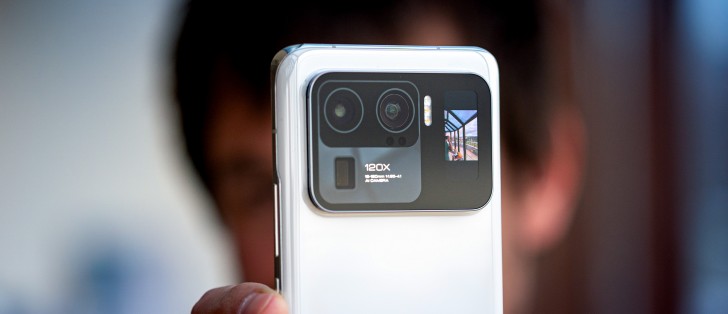
Currently, most standard smartphone image sensors primarily capture light intensity and color, limiting them to two-dimensional, flat images. While these cameras utilize widely available CMOS technology and can produce high-resolution photos in the tens of megapixels, their fundamental limitation remains 2D capture.
Understanding the Technology Behind 3D Smartphone Imaging: Lidar
Accurately measuring the distance between objects using light typically requires specialized, often expensive, Lidar systems. Lidar, an acronym for ‘light detection and ranging’, operates by emitting lasers that reflect off various objects. By precisely measuring these returning light pulses, Lidar can determine an object’s distance, speed, direction of movement, and even predict potential intersections with other objects.
Lidar technology is currently instrumental in various applications, most notably in self-driving cars where it plays a critical role in determining distances to obstacles. Modern smartphones, such as the iPhone 13 Pro and iPhone 13 Pro Max, also incorporate Lidar sensors to enhance autofocus capabilities in night mode and low-light conditions. However, the high cost of these Lidar sensors has traditionally limited their widespread integration.
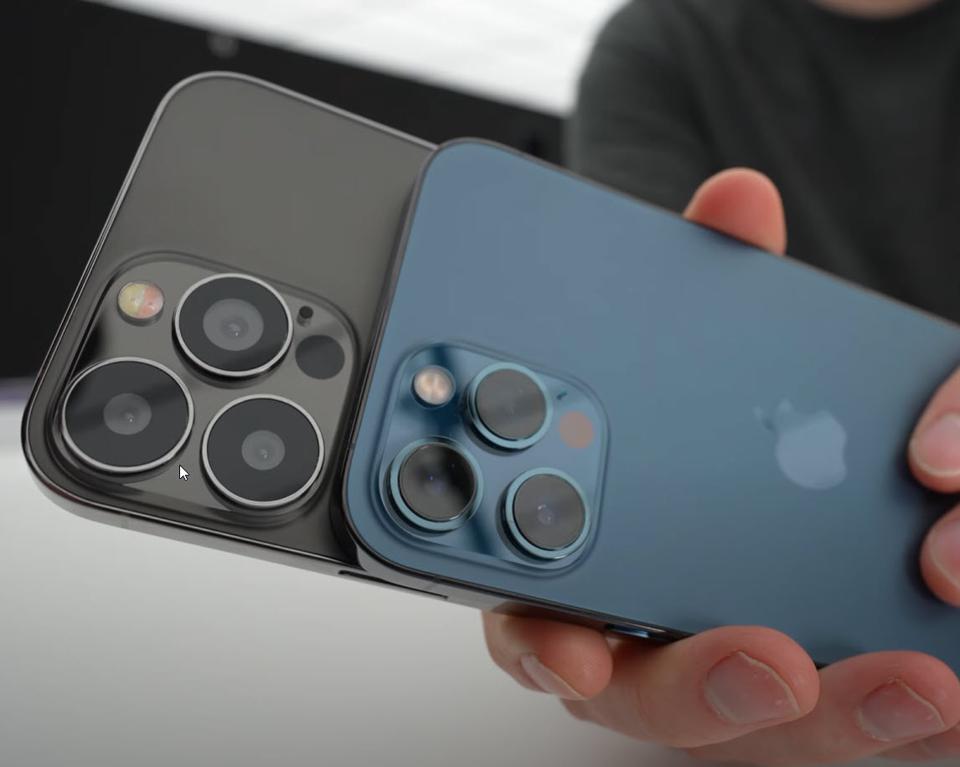
In a significant advancement, the Lidar technology being developed by Stanford researchers offers a more cost-effective solution compared to existing systems, making it potentially affordable for integration into a broader range of smartphones.
Okan Atalar, a doctoral candidate in electrical engineering at Stanford University, explains that “Existing 3D cameras often rely on specialized pixels with small fill factors, which necessitate complex electronics for 3D pixel capture. Our innovative approach, in contrast, is remarkably simple and designed to seamlessly integrate with everyday cameras, including cellphones and digital cameras.”
Pioneering 3D Imaging Technology: The Role of Acoustic Resonance
Upgrading standard image sensors for 3D imaging typically involves integrating a light source and a modulator capable of switching light on and off millions of times per second. By analyzing these rapid light variations, distance information can be accurately calculated. However, a major hurdle has been the impractical power requirements of conventional modulators.
The Stanford team has successfully developed an innovative solution utilizing acoustic resonance. Their acoustic modulator employs a wafer of lithium niobate, a transparent crystal highly valued for its exceptional electrical, auditory, and optical properties, precisely coated with two transparent electrodes.
Lithium niobate exhibits a crucial piezoelectric property; when electricity flows through its electrodes, its atomic crystal lattice undergoes a precise shape alteration. This results in vibrations at incredibly high, predictable, and controllable frequencies. As it vibrates, lithium niobate effectively modulates light. With the addition of polarizers, this novel modulator can efficiently switch light on and off multiple millions of times per second.
Bringing 3D Camera Capabilities to Smartphones
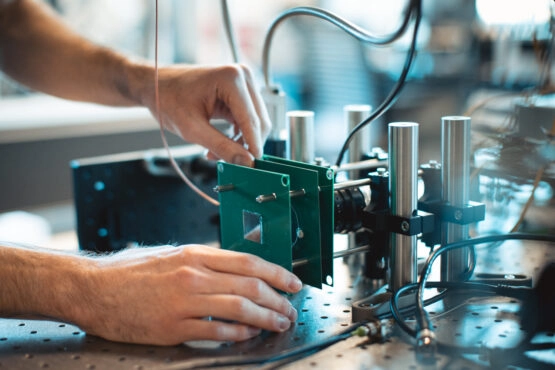
Technically, the piezoelectric effect within the lithium niobate crystal generates an acoustic wave that precisely rotates the polarization of light in highly desirable, tunable, and practical ways. This innovative technical approach was pivotal to the team’s success. Subsequently, a polarizing filter positioned after the modulator transforms this light rotation into intensity modulation, causing the light to become brighter and darker, effectively turning it on and off millions of times per second.
Explore Related Innovations
“While alternative methods exist for modulating light,” states Atalar, “this acoustic approach stands out as highly preferable due to its exceptional energy efficiency.”
Due to its simplicity and seamless compatibility with existing camera systems, this technology could pave the way for what researchers term ‘standard CMOS lidar.’ This advanced imaging solution has the potential for integration into various applications, including drones, extraterrestrial rovers, and numerous other devices.
Demonstrating 3D Imaging: Practical Experiments and Future Potential
The researchers assert that their proposed modulator carries immense potential, capable of adding the crucial third dimension to virtually any image sensor. To validate this, the team constructed a prototype Lidar system on a lab bench, utilizing a commercially available digital camera as the receiving unit. This prototype successfully captured megapixel-resolution depth maps while requiring only minimal power to operate its optical modulator.
Furthermore, through ongoing refinements, Atalar indicates that the team has achieved an impressive reduction in energy consumption—at least ten times lower than the already efficient threshold initially reported. They project the potential for several hundred-times greater energy reduction. Should these advancements materialize, a future featuring compact Lidar systems, integrated with standard image sensors, and the widespread availability of 3D smartphone cameras could swiftly become a reality.
So, do you think 3D Photography is efficiently possible in Smartphones? If so, which brand would excel in it?
Join our community by subscribing to our Weekly Newsletter to stay updated on the latest AI updates and technologies, including the tips and how-to guides. (Also, follow us on Instagram (@inner_detail) for more updates in your feed).
(For more such interesting informational, technology and innovation stuffs, keep reading The Inner Detail).
