
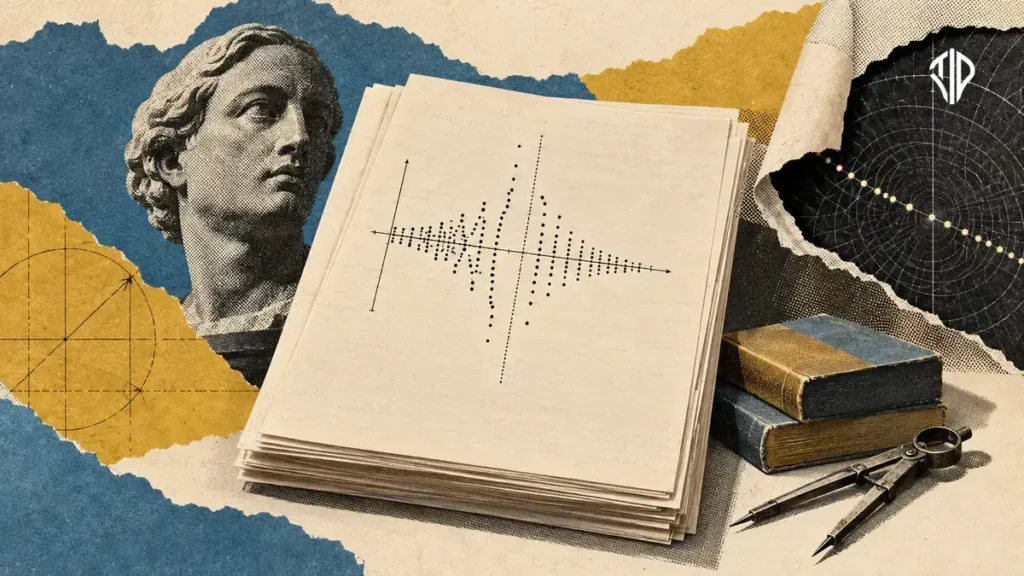
A landmark mathematical breakthrough has emerged as an Anthropic researcher utilizes the Claude AI chatbot to propose a solution for the 167-year-old Riemann Hypothesis.
This monumental claim bridges artificial intelligence and advanced scientific research, signaling a potential shift in how humanity tackles complex computational and theoretical mysteries.
For over a century and a half, some of the brightest minds in human history have stared at blank chalkboards, wrestling with problems that seem deliberately designed to frustrate us. Mathematics is often perceived as an immutable language of pure logic, where human intuition is the only key capable of unlocking deep universal truths.
Yet, the boundary between human thought and machine capability is rapidly blurring as advanced large language models step out of the realm of simple text generation and into the domain of high-level theoretical reasoning.
When a researcher teams up with an artificial intelligence to crack a puzzle that has baffled generations, it forces us to rethink the very nature of discovery. We are moving away from an era where computational tools merely calculate answers, entering a transformative period where they actively collaborate to formulate new pathways of thought.
This milestone is not just about a single mathematical equation; it is a profound testament to how cognitive augmentation can reshape the limits of what we are capable of achieving.
Key Takeaways
- Unlocking New Theories: A verified proof would strengthen thousands of existing mathematical results that currently rely on the hypothesis being true.
- New Avenues of Thinking: The innovative methods used within the proof could spark entirely fresh subfields of research in number theory.
- Redefining AI Capabilities: This event proves that modern AI can contribute to high-level theoretical science rather than just data processing.
- Shifting Research Paradigms: Human mathematicians may increasingly adopt AI collaborators to handle arduous, multi-layered logical deductions.
The Anatomy of an Unsolved Giant
To fully appreciate the gravity of this recent announcement, one must understand the sheer historical weight of the problem at hand. First introduced by German mathematician Bernhard Riemann in 1859, the Riemann Hypothesis is widely regarded as the most important unsolved problem in pure mathematics.
It serves as one of the seven Millennium Prize Problems designated by the Clay Mathematics Institute, carrying a lucrative one million dollar bounty for anyone who can successfully prove it.
At its core, the hypothesis deals with prime numbers, those fundamental building blocks of arithmetic that can only be divided by themselves and one. While primes like 2, 3, 5, 7, and 11 appear with an elusive irregularity along the number line, Riemann proposed that a hidden structural order governs their distribution.
He connected this distribution to a complex mathematical concept known as the Riemann zeta function, predicting that its non-trivial zeros all lie along a specific vertical line in the complex number plane. Proving this prediction true would solidify an enormous body of dependent mathematical theories and give researchers unprecedented precision in understanding numerical architecture.
The Collaborative Breakthrough
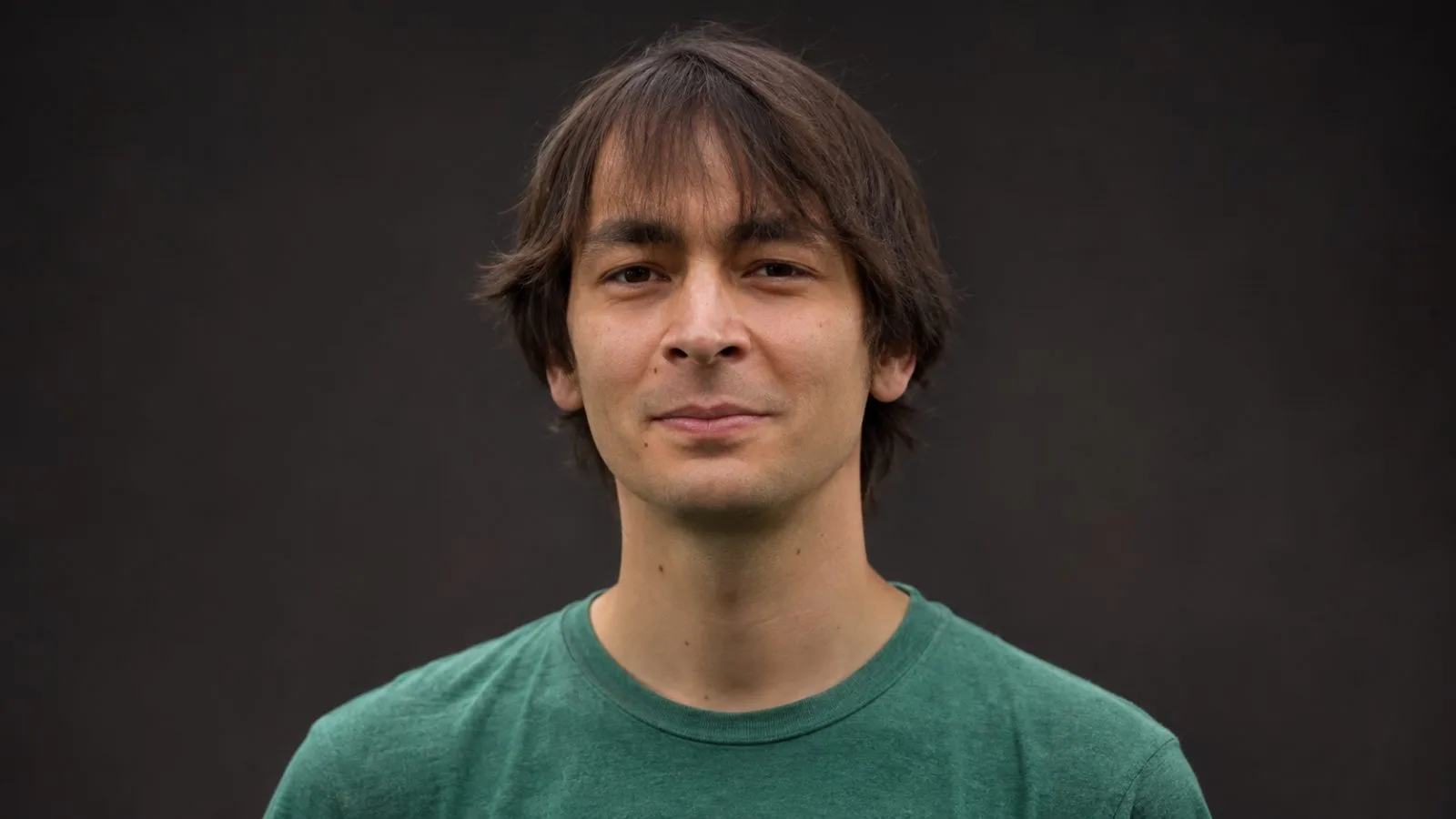
The recent announcement came to light when Levent Alpöge, a mathematician at Anthropic who previously made waves with a Claude-assisted solution to the Jacobian conjecture, published a four-legged statement outlining his progress.
Having spent years preparing to approach the problem, Alpöge worked alongside the AI chatbot over the span of several months. Rather than letting the system operate in a vacuum, he guided the model toward a specific mathematical framework, acting as a strategic director while the AI accelerated the computational heavy lifting.
Alpöge described the collaboration in glowing terms, noting that the AI managed to surprise even him by flying, dancing, and sparkling near the finish line of the complex deduction. This synergy highlights a new paradigm in research, where human domain expertise combines with the immense processing scope of machine intelligence.
By using advanced reasoning capabilities, the chatbot helped navigate labyrinthine logical pathways that would typically take human teams years to manually parse and verify.
Verifying the Unbelievable
A claim of this magnitude naturally invites intense skepticism and rigorous peer review from the global mathematical community. Because the proposed proof spans an astonishing 250,000 pages when written out in formalised computer code, standard review methods are fundamentally inadequate.
Alpöge utilized Lean, a specialized computer programming language designed to verify mathematical arguments step by step, allowing computational systems to check whether the logical flow remains sound.
Despite the digital verification, prominent mathematicians have urged caution, emphasizing that computer checks are not an immediate substitute for comprehensive human comprehension. Esteemed figures like Terence Tao and Steven Strogatz have noted that fully digesting the argument will require a significant investment of time.
Alpöge himself delayed his public announcement to avoid releasing underdeveloped work, acknowledging that he still needs to fully understand and articulate all the mathematical nuances uncovered during the process.
Transforming the Landscape of Number Theory
Should independent verification ultimately confirm the validity of the proof, the implications for number theory will be monumental. Scholars suggest the breakthrough could act as a Rosetta Stone, bridging disparate branches of mathematics where connections have historically remained partial and incomplete.
While the discovery will not directly accelerate internet speeds or immediately alter global financial systems, its true value lies in the profound structural understanding it unlocks.
A New Dawn for Scientific Discovery
The intersection of artificial intelligence and theoretical mathematics opens up a fascinating philosophical and practical debate. For researchers who have dedicated their entire lives to studying elusive problems, the sudden assistance of an algorithm can evoke mixed emotions, bordering on a bittersweet realization that a primary guiding light of their field has been automated.
Yet, this milestone should be viewed not as an end to human ingenuity, but rather as the dawn of an unprecedented era of scientific acceleration.
As we stand on the precipice of this new frontier, the boundary between human intuition and machine assistance continues to dissolve. If algorithms can help us untangle mysteries that have endured for nearly two centuries, we must prepare for a future where accelerated breakthroughs become the norm across every scientific discipline.
The true triumph of this collaboration is a testament to human curiosity, proving that our greatest tool is our willingness to embrace new ways of thinking.
Join our community by subscribing to our Weekly Newsletter to stay updated on the latest AI updates and technologies, including the tips and how-to guides. (Also, follow us on Instagram (@inner_detail) for more updates in your feed).
(For more such interesting informational, technology and innovation stuffs, keep reading The Inner Detail).
