
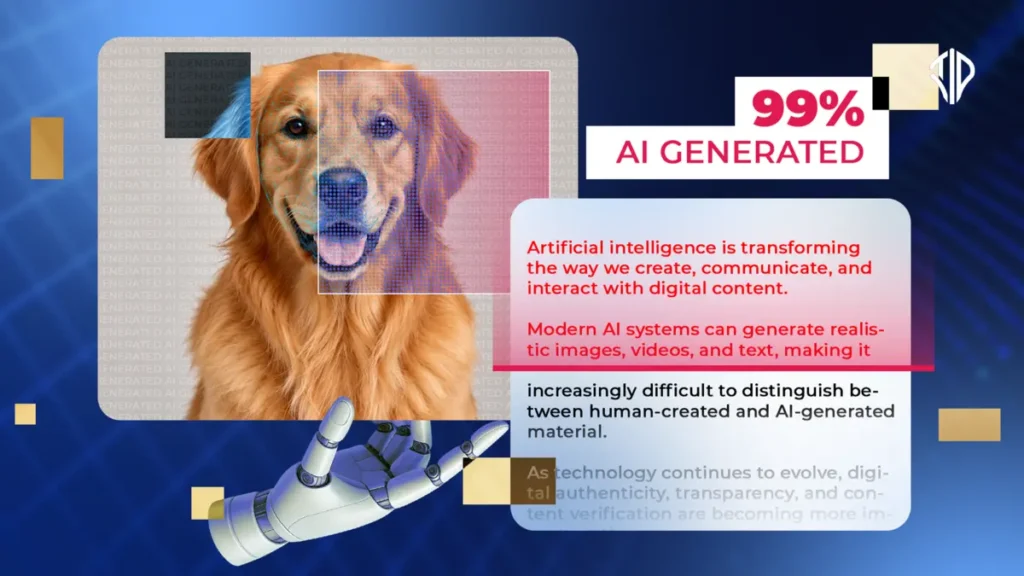
Modern generative AI tools have advanced to a point where spotting synthetic creations by eye is nearly impossible. While early AI images frequently featured distorted anatomy or glaring visual glitches, current diffusion models and large language models produce uncannily polished photos and prose, as detailed in a recent software overview.
Relying on manual inspection leaves too much room for error, forcing users to adopt digital verification strategies. Fortunately, a growing ecosystem of forensic utilities, metadata checkers, and specialized scanners can help verify whether an asset is genuinely human-made or synthetically generated.
Key Takeaways
- Modern AI media is nearly impossible to spot by eye alone, requiring specialized forensic tools and digital verification strategies.
- Major platforms use digital watermarks (like Google SynthID) and cryptographic metadata (like C2PA) to establish media provenance.
- A variety of dedicated scanners and browser extensions—such as Pangram, Hive AI Detector, and GPTZero—help verify written and visual content across devices.
- No single detection tool covers every model, making a multilayered approach essential for accurate media verification.
Understanding AI Watermarks and Cryptographic Provenance
Before running digital forensics on a file, it helps to understand how media creators embed authenticity signals into their work. Major platforms and camera manufacturers utilize different technological approaches to establish provenance, meaning no single scanner can catch every piece of synthetic media.
Digital watermarks are invisible signals embedded directly into the pixel data of an image or video file. Tools like Google SynthID inject these invisible markers during generation, allowing specialized software to trace the origin of the file even after basic edits.
Cryptographic metadata offers another verification layer through the Coalition for Content Provenance and Authenticity or C2PA standard. Camera hardware and editing suites attach a secure history log directly to the file, documenting whether an image was captured optically or altered digitally.
Google SynthID Detector for Visual Media
Google has expanded access to its SynthID Detector portal, allowing everyday users to check suspicious images, videos, and audio files. While previously restricted to journalists and researchers, the portal now processes media generated by major platforms including Gemini, ChatGPT, Nvidia, and Kakao.
Users receive a set number of free checks daily by signing in with a standard account. The system analyzes pixel-level watermarks to confirm if a file originates from a supported synthetic generator.
It is important to note that a negative result does not guarantee a human origin. If an image was created by a platform that does not implement SynthID technology, the detector will simply return no match.
C2PA Content Credentials for Digital Provenance
The C2PA open industry standard acts as a digital certificate of authenticity for media files. Major camera manufacturers such as Canon and Nikon, alongside software developers like Adobe, embed this cryptographically signed metadata into exported files to prove their origin.
The fastest way to examine this metadata on a desktop computer is through the official Content Credentials Chrome extension. This utility integrates directly into the browser right-click menu, letting users inspect the capture history and edit logs of web images instantly.
This protective metadata is fragile and can easily be stripped away during basic compression, file format conversions, or when uploading to certain social media platforms. Verification requires access to the original, unmodified file.
Pangram for Written AI Text Detection
While media detectors handle visual files, written content requires specialized linguistic analysis to catch mixed authorship. Pangram utilizes a mixture-of-experts model designed to differentiate between fully human prose, AI-assisted writing, and purely machine-generated text.
The platform provides a percentage score alongside a breakdown highlighting specific sentences that display synthetic patterns. Users can paste text directly into the web portal or install the associated Chrome extension for on-the-spot analysis.
The extension functions across various web platforms, integrating directly into webmail clients, social media feeds, and word processors like Google Docs. This makes it particularly valuable for educators and editors reviewing large volumes of incoming digital submissions.
Hive AI Detector for Forensic Image Analysis
When an image bypasses both watermarking systems and metadata checks, forensic analysis tools become necessary. Hive AI Detector scans pixel artifacts and compression patterns across suspect photos and video frames to determine their origin.
Instead of relying on embedded tags, Hive evaluates visual inconsistencies typical of generative algorithms. The system attempts to identify which specific generation model was likely used, such as Midjourney or Flux.
The official Hive Chrome extension provides a streamlined experience for casual users, offering free image scanning without requiring account registration. Video files are typically capped at shorter durations to maintain quick processing speeds.
GPTZero for Mobile Browser Text Verification
For quick checks on mobile devices, GPTZero offers a streamlined alternative to heavier desktop tools. The platform specializes in separating human-written writing from machine-generated text, highlighting transitional passages where AI assisted with grammar and phrasing.
The mobile browser interface operates smoothly without requiring mandatory sign-ins for basic scans. This accessibility makes it a convenient option for checking digital articles, forum posts, and student submissions while on the move.
Building a Multilayered Verification Habit
Because no single detection utility covers every possible generative model, establishing a reliable workflow requires a combination of tools. Checking suspicious images through SynthID, C2PA, and Hive takes only a few moments using browser extensions.
Similarly, running questionable prose through specialized writing analyzers helps clarify authorship in academic and professional environments. While automated detection will never achieve absolute perfection, adopting a multipronged approach significantly improves digital literacy and media verification accuracy.
Join our community by subscribing to our Weekly Newsletter to stay updated on the latest AI updates and technologies, including the tips and how-to guides.
Also, follow us on Instagram (@tid_technology) for more updates in your feed and our WhatsApp Channel to get daily news straight to your Messaging App.
