
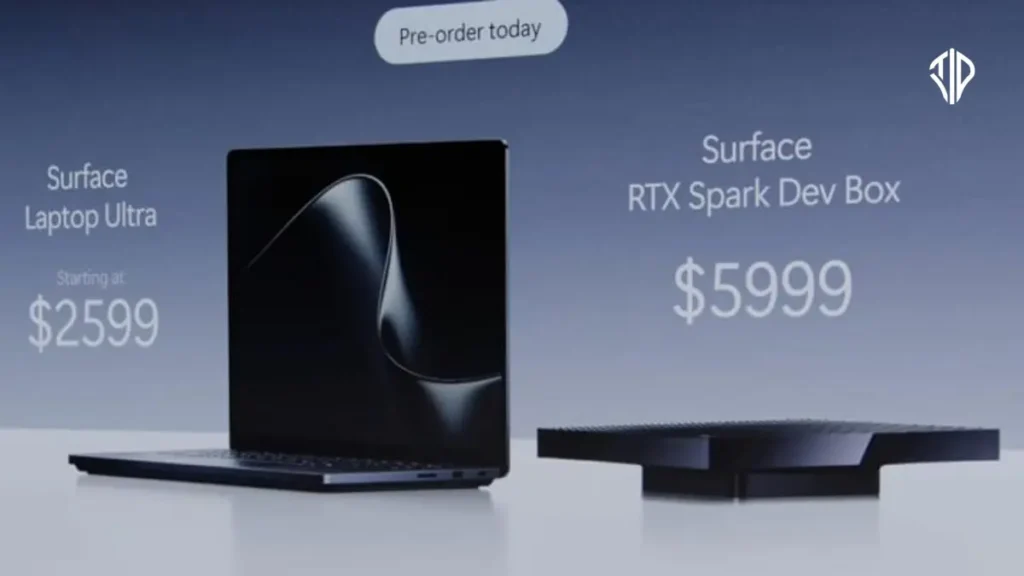
Microsoft and NVIDIA have announced a historic hardware and software integration, introducing the RTX Spark superchip and the new Surface Laptop Ultra to power autonomous AI agents on Windows. This collaboration marks a definitive shift toward local, agentic computing for enterprise and everyday users alike.
The personal computer has long served as the primary canvas for human digital productivity. From drafting documents to compiling complex software, users rely on their machines as extensions of their own cognitive capabilities. However, the traditional paradigm has always required active human intervention for every distinct task.
As artificial intelligence transitions from experimental chat interfaces to autonomous actors capable of executing complex workflows, the underlying computing architecture must evolve. The partnership between Microsoft and NVIDIA addresses this exact requirement by transforming the local desktop into a secure, high-performance ecosystem designed specifically for always-on digital assistants.
Key Takeaways
- RTX Spark Integration: A co-engineered superchip combining Blackwell RTX GPU and Grace CPU cores for data-center-grade performance on local devices.
- Surface Laptop Ultra: A flagship portable device capable of running massive 125B parameter local language models with up to 128GB of unified memory.
- Microsoft Execution Containers (MXC): New OS-level infrastructure providing secure, persistent environments for autonomous AI agents.
- DGX Station for Windows: Brings enterprise-scale research and trillion-parameter model training capabilities directly into the Windows ecosystem.
The Architecture of RTX Spark
At the heart of this new era of personal computing is RTX Spark, a revolutionary co-engineered superchip that packs data-center-grade intelligence into a form factor suitable for laptops and compact desktops. By merging advanced graphics architecture with high-bandwidth processing, this hardware shatters traditional limitations of local AI performance.
The RTX Spark architecture combines an NVIDIA Blackwell RTX GPU featuring up to 6,144 cores with an up to 20-core NVIDIA Grace CPU. These two processing powerhouses are interconnected at a blistering 600 GB/s, ensuring that data moves seamlessly between compute and memory layers without bottlenecks.
Furthermore, the system delivers an incredible one petaflop of FP4 AI performance alongside up to 128GB of unified memory. This immense computational capability allows users to run massive local language models that previously required cloud infrastructure, ensuring both privacy and zero-latency execution.
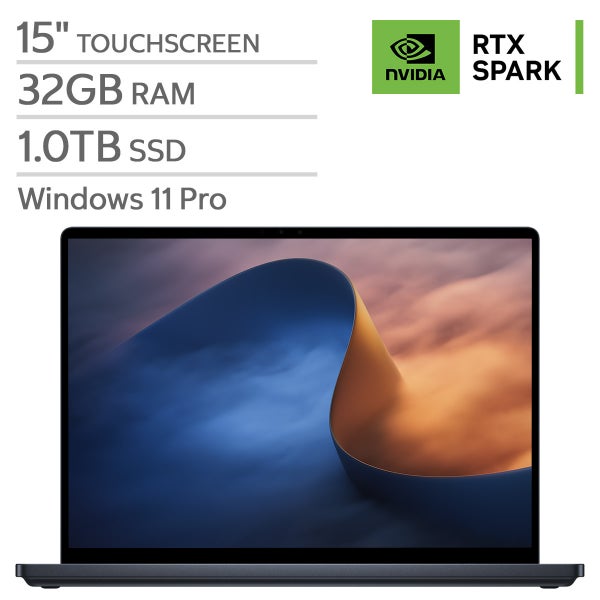
Powering the Surface Laptop Ultra
The debut of the Surface Laptop Ultra showcases the full potential of this new silicon. Microsoft has engineered its flagship device from the ground up to leverage the capabilities of the RTX Spark platform.
With up to 128 gigabytes of unified memory and desktop-class processing speeds housed within a portable chassis, the Surface Laptop Ultra redefines mobile productivity. Users can now execute advanced workflows, render complex graphics, and run local AI models such as Qwen 3.8 Flash Next—a 125B parameter model—directly on their laptops.
This capability ensures that sensitive corporate and personal data remains on the device, eliminating the security risks and latency associated with cloud-reliant processing.
Operating System Innovations for the Agentic Era
Hardware alone cannot support the shift toward autonomous AI agents; the operating system must evolve to manage background processes safely. Microsoft has introduced Microsoft Execution Containers (MXC), a foundational OS-level infrastructure designed to let agents run securely and persistently.
MXC provides the strict governance and observability required for background automation. By building these security primitives directly into Windows, Microsoft ensures that autonomous agents operate within tightly controlled boundaries.
Combined with Microsoft Security and Agent 365, MXC establishes a trusted environment where AI systems can assist users continuously without compromising system integrity or user privacy.
Enterprise-Grade Power with NVIDIA DGX Station
For enterprise environments requiring even greater computational muscle, NVIDIA has previewed the NVIDIA DGX Station for Windows. This deskside AI supercomputer brings GB300 Grace Blackwell-class infrastructure directly into the Windows ecosystem.
| Feature | RTX Spark (Surface Ultra & Desktops) | NVIDIA DGX Station for Windows |
|---|---|---|
| Primary Use Case | Mobile productivity, local development, everyday AI agents | Enterprise research, trillion-parameter model training |
| Processing Core | Blackwell RTX GPU + Grace CPU | GB300 Grace Blackwell Ultra Superchip |
| Coherent Memory | Up to 128GB Unified Memory | 748GB Coherent Memory |
| AI Compute | Up to 1 Petaflop (FP4) | Up to 20 PetaFLOPS (FP4) |
Until now, heavy enterprise AI development heavily favored Linux environments, forcing developers to maintain fragmented workflows across different operating systems. The introduction of the DGX Station for Windows bridges this divide, allowing data scientists and developers to train trillion-parameter models locally while remaining inside the Windows ecosystem they already use.
A New Paradigm for Developers, Creators, and Gamers
The unification of the NVIDIA CUDA software stack across both RTX Spark and DGX Station creates a frictionless experience for technical professionals. Developers can transition models, tools, and workflows from laptops to enterprise servers without rewriting code.
Creators benefit immensely from 5th-generation Tensor Cores with NVFP4 support, hardware-accelerated AV1, and advanced video encoding and decoding capabilities. Meanwhile, gamers can enjoy high-refresh-rate AAA gaming at 1440p exceeding 100 frames per second, powered by DLSS 5, Reflex, and G-SYNC technologies.
The collaboration between Microsoft and NVIDIA establishes a robust foundation for the future of computing. By combining secure OS primitives with groundbreaking local AI hardware, the tech industry is successfully ushering in the agentic era.
Join our community by subscribing to our Weekly Newsletter to stay updated on the latest AI updates and technologies, including the tips and how-to guides. (Also, follow us on Instagram (@inner_detail) for more updates in your feed).
(For more such interesting informational, technology and innovation stuffs, keep reading The Inner Detail).
