
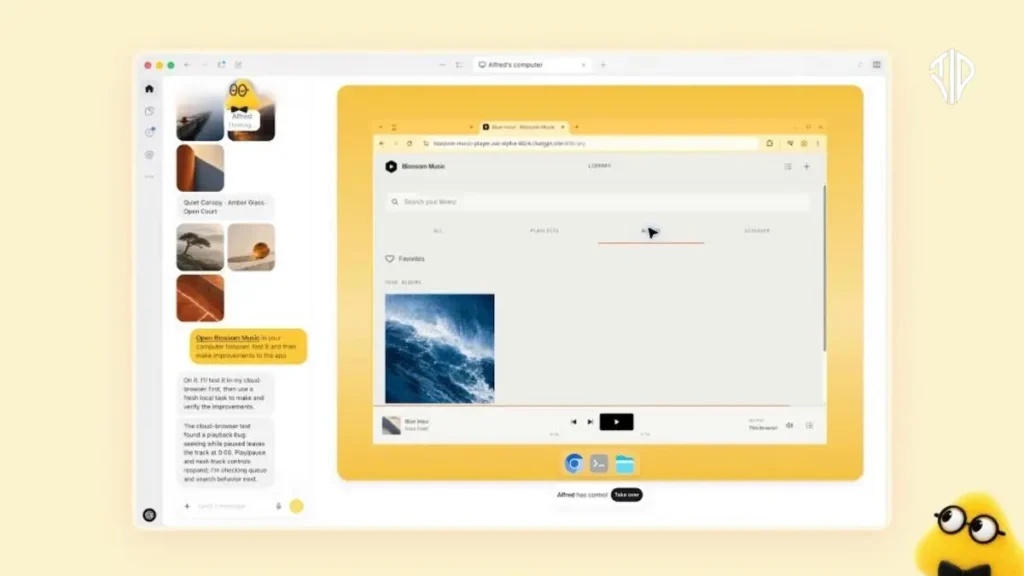
OpenAI has officially expanded its ecosystem with the debut of Dots, a persistent, background-running personal assistant powered by the advanced GPT-6 Astra model. Unveiled at the company’s annual developer conference, this bubbly agentic avatar represents a major departure from traditional chat-based interfaces by focusing entirely on continuous, autonomous execution.
Unlike standard software tools that require constant human prompting and oversight, Dots is engineered to operate independently across various hardware ecosystems and interfaces. This architectural shift highlights the industry’s rapid evolution from reactive large language models to proactive artificial intelligence agents capable of handling complex, long-term multi-step workflows.
Understanding Agentic Architecture
Traditional AI interactions typically follow a strict request-and-response loop where the user types a prompt, receives an output, and initiates the next step. Agentic AI fundamentally alters this dynamic by introducing autonomous reasoning loops that can plan, execute, evaluate, and correct tasks over extended periods.
Powered by GPT-6 Astra, Dots is designed to bridge the gap between static software tools and dynamic human intentions. Users can assign broad, multi-layered objectives, and the agent breaks down these goals into manageable micro-tasks executed continuously in the background.
Cross-Platform Independence and Flexibility
One of the most noteworthy aspects of the Dots launch is its hardware-agnostic design framework. Traditional voice assistants and digital agents are often strictly tethered to specific operating systems, smart speakers, or mobile devices.
By operating independently of any single hardware interface, Dots aims to become a fluid digital companion that travels seamlessly across desktop environments, mobile devices, and wearable technologies. This interoperability ensures that user preferences, ongoing projects, and background tasks remain synchronized regardless of the physical medium being used.
Minimizing Human Oversight in Daily Workflows
The primary engineering hurdle for autonomous agents has always been reliability and safety during unsupervised execution. OpenAI has integrated advanced guardrails and verification mechanisms into Dots to ensure that background tasks do not drift away from user intent.
By handling routine administrative duties, monitoring ongoing digital workflows, and managing complex research projects without requiring minute-by-minute guidance, agents like Dots are poised to redefine personal productivity. Users transition from active operators to strategic directors, delegating cumbersome chores to persistent digital entities.
The Broader Impact on Consumer and Enterprise Technology
The introduction of Dots signals a broader competitive race among major technology firms to establish dominant consumer-facing agentic platforms. As artificial intelligence deepens its integration into daily personal and professional routines, the demand for software that acts autonomously rather than passively will only accelerate.
While questions regarding data privacy, security, and computational resource management will inevitably follow any major agentic launch, the technological trajectory is clear. Autonomous assistants are moving out of experimental laboratory environments and into mainstream consumer hands, laying the groundwork for a more automated digital future.
Key Takeaways
- Dots is a persistent, background-running personal assistant powered by the GPT-6 Astra model.
- The agent features a hardware-agnostic design, operating seamlessly across desktop, mobile, and wearable devices.
- Autonomous reasoning loops allow Dots to plan, execute, and evaluate complex multi-step workflows independently.
- Advanced guardrails and verification mechanisms ensure tasks remain aligned with user intent during unsupervised execution.
Join our community by subscribing to our Weekly Newsletter to stay updated on the latest AI updates and technologies, including the tips and how-to guides.
Also, follow us on Instagram (@tid_technology) for more updates in your feed and our WhatsApp Channel to get daily news straight to your Messaging App.
