
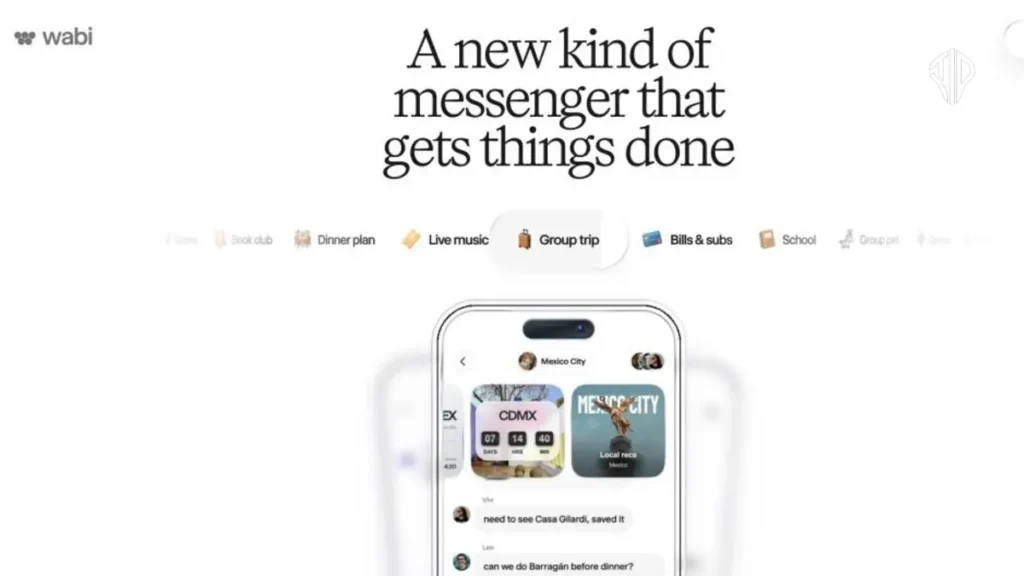
The landscape of generative artificial intelligence is shifting rapidly away from traditional static web apps toward dynamic, agent-driven workflows according to recent reports. Wabi, a startup initially recognized for allowing users to construct functional software entirely through natural language prompts, is officially pivoting its platform into a personal AI messenger. This evolution reflects a broader industry movement where general-purpose chat windows are no longer enough to satisfy user demand for execution and deep productivity.
Led by founder Eugenia Kuyda, who previously made waves with the AI companion startup Replika, the updated iteration positions the software as an active assistant designed to handle tasks rather than just generate text. Instead of forcing users to design standalone applications from scratch, the system aims to dynamically construct the exact visual interface needed for a specific task right inside the chat window on demand.
The Shift From Static Apps to Dynamic Agent Interfaces
When prompt-based software creation first gained traction, the primary appeal was democratizing technology. Anyone could describe a dashboard, a tracker, or a basic utility, and the model would generate the code or environment. However, maintaining dozens of separate mini-apps created its own form of software clutter.
The new approach streamlines this interaction model by merging messaging with functional utility. When a user asks the assistant to complete a complex objective, such as managing a schedule, comparing local service providers, or organizing research notes, the backend does not just reply with text blocks. It renders interactive components, forms, and custom buttons directly within the conversation thread.
Why Conversational Agents Are Changing Software Design
The integration of chat interfaces and dynamic UI generation points to a future where software is entirely ephemeral. Rather than downloading specific applications for every niche requirement, users interact with a single agentic hub that builds tools on the fly and discards them when the task concludes.
This model lowers the barrier to digital automation even further. Consumers and professionals no longer need to know which application fits a specific use case because the assistant constructs a custom environment tailored precisely to the query at hand.
Looking Ahead at Personal AI Assistants
As competition heats up with major platforms exploring similar agentic capabilities, the success of these systems will depend heavily on context retention, security, and execution reliability. By shifting into a messaging-first paradigm, the platform is betting that users prefer fluid, ongoing interactions over managing a collection of standalone generated tools.
The evolution of Wabi highlights a mature phase in generative technology, moving from novelty toys and simple text generation to genuinely useful, adaptive workflows that fit naturally into everyday communication habits.
Key Takeaways
- Wabi has pivoted from a prompt-based app builder into a personal AI messenger led by Eugenia Kuyda.
- The platform dynamically renders interactive components, forms, and tools directly within the chat interface on demand.
- This shift eliminates software clutter by moving away from permanent standalone mini-apps toward ephemeral, task-specific UI generation.
- Future success in the agentic AI space relies on strong context retention, reliability, and security.
Join our community by subscribing to our Weekly Newsletter to stay updated on the latest AI updates and technologies, including the tips and how-to guides.
(Also, follow us on Instagram (@tid_technology) for more updates in your feed and our WhatsApp Channel to get daily news straight to your Messaging App).
