
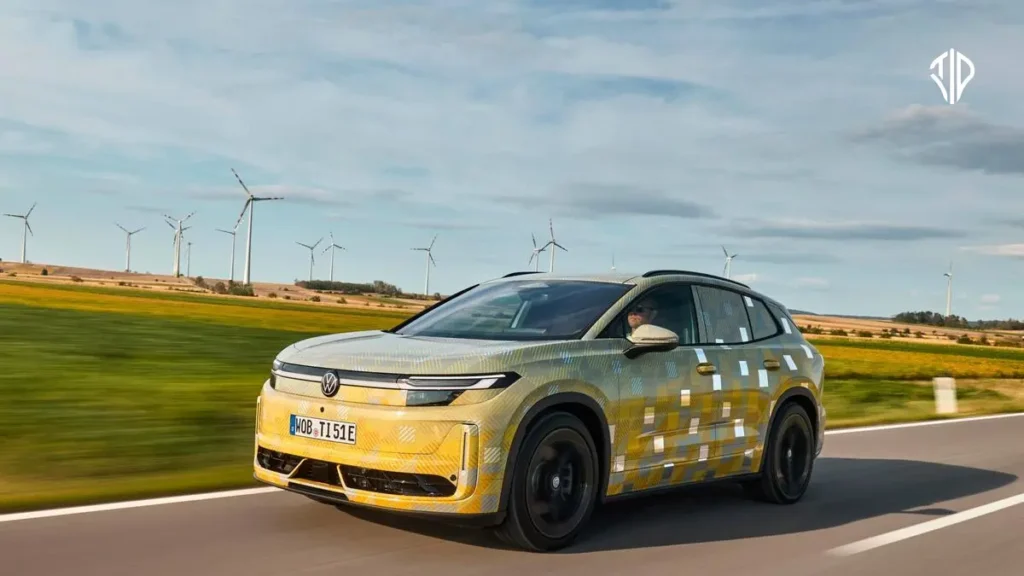
Volkswagen has announced a major shift in its electric vehicle strategy, confirming according to recent reports that it will replace the recently retired ID.4 crossover with an all-electric version of the Tiguan. This transition highlights a broader industry acknowledgment that legacy brand recognition plays a vital role in consumer adoption as the automotive market shifts toward electrification.
The upcoming ID.Tiguan is slated for an early 2027 launch in Europe, where it will join the ID.Polo and ID.Cross to finalize the automaker’s refreshed EV portfolio. Volkswagen has also confirmed that the electric crossover will eventually arrive in the United States, following the conclusion of ID.4 production at its Tennessee manufacturing facility.
Learning from Past Design Missteps
First launched in 2020, the ID.4 was designed to compete against high-volume gasoline vehicles like the Toyota RAV4 and Honda CR-V rather than directly challenging early EV pioneers. Despite selling nearly one million units globally since 2021, the vehicle faced widespread criticism for its minimalist interior interface, which omitted crucial physical controls.
The incoming ID.Tiguan addresses these user complaints by adopting cabin ergonomics similar to the ID.3 NEO and the ID.Polo. Drivers can expect a return of physical buttons for all four window switches, alongside tactile dials for volume and climate control systems. This pivot signals a growing realization among traditional automotive designers that completely touch-based cockpits often frustrate drivers rather than enhance the driving experience.
Software and Technological Integration
Underneath the redesigned interior, the ID.Tiguan will incorporate Volkswagen’s modern Android Automotive-based operating system. This software architecture is expected to enable advanced connectivity features, potentially including a Gemini-powered voice assistant to manage vehicle functions hands-free.
However, questions remain regarding whether the model will adopt the advanced Rivian-developed software and zonal architecture currently planned for Volkswagen’s upcoming entry-level electric vehicles. As automakers continue to refine their software platforms, transitioning to more intuitive hardware and reliable software stacks will be critical for retaining market share against dedicated electric vehicle manufacturers.
Key Takeaways
- Volkswagen is replacing the ID.4 crossover with an all-electric version called the ID.Tiguan.
- The ID.Tiguan will launch in Europe in early 2027 and later arrive in the United States.
- The new model addresses user complaints by bringing back physical buttons and tactile dials for windows, volume, and climate controls.
- It features an Android Automotive-based operating system with potential Gemini-powered voice assistant integration.
Join our community by subscribing to our Weekly Newsletter to stay updated on the latest AI updates and technologies, including the tips and how-to guides.
(Also, follow us on Instagram @tid_technology for more updates in your feed and our WhatsApp Channel to get daily news straight to your Messaging App).
