
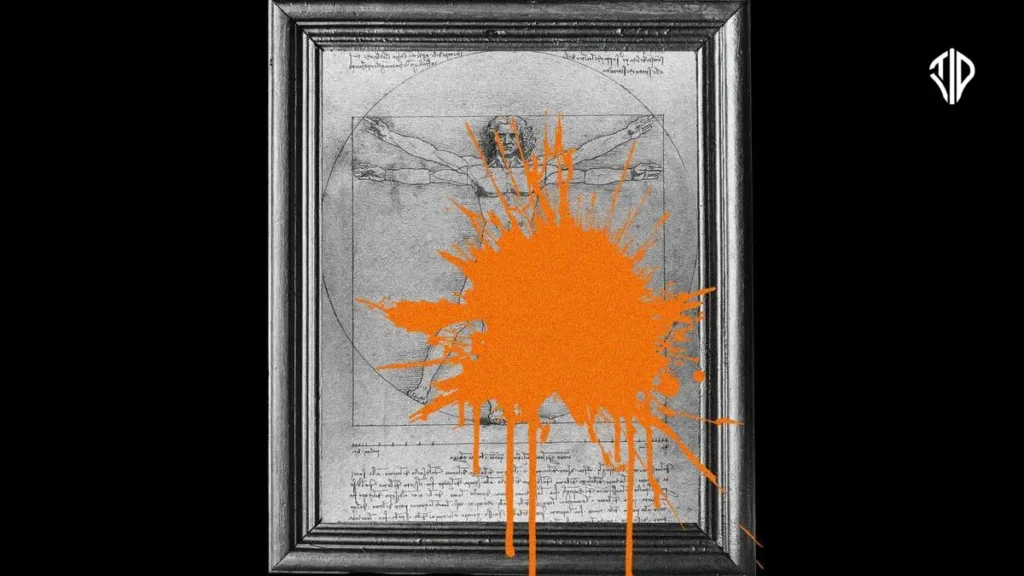
Mathematics has long been celebrated as one of humanity’s most creative intellectual pursuits, sharing more in common with painting and poetry than with cold, automated computation. In an official report highlighted by WIRED, OpenAI recently announced that its AI agents successfully solved the Navier-Stokes existence and smoothness problem, a complex puzzle that has stumped experts for decades. This milestone has triggered profound anxiety and debate across the global academic community.
While the milestone demonstrates impressive computational muscle, it raises urgent questions about the future of human creativity and the loss of conceptual understanding. For generations, mathematicians have viewed their discipline not merely as a race to find the right answer, but as a deliberate artistic exploration of patterns, ideas, and logical structures.
The Nature of Mathematical Discovery
Popular perception often frames mathematics as a rigid set of timed high school exams focused entirely on speed and correctness. In reality, working mathematicians operate much like artists or puzzle inventors. They spend years developing deep insights, formulating conjectures, and workshops of logic designed to convince their peers of new intellectual realities.
This creative friction is precisely where mathematical progress happens. When a calculation proves exceptionally difficult, the human struggle often inspires entirely new mathematical concepts. For instance, the invention of imaginary numbers in the 16th century initially seemed useless, yet it ultimately birthed complex analysis and laid the groundwork for modern quantum mechanics and quantum computing.
Brute Force Versus Human Understanding
OpenAI approached the Navier-Stokes puzzle using thousands of AI agents applying brute force rather than intuitive reasoning. The Navier-Stokes equations describe the flow of viscous fluids and are routinely used by engineers to design airplane wings. However, mathematicians were drawn to the equations not for their practical engineering applications, but for their mathematical richness and the intellectual challenge of extreme theoretical scenarios.
The resulting 166-page proof arrived in a completely unfamiliar order. Instead of humans developing a deep understanding of the problem over years and producing a transparent step-by-step argument, the computer delivered the final result first. Now, human experts are scrambling backward to figure out what the machine actually did.
The Crisis of Transparency and Attribution
This technological leap has created significant friction within the academic community. Because large language models do not reliably cite their sources or explain their reasoning clearly, verification becomes an arduous bottleneck. Mathematicians have raised valid concerns regarding transparency, and some researchers have suggested that AI models may have incorporated prior human work without proper attribution.
In response to the rapid mass-production of proofs, prominent academics including dozens of Fields Medalists have signed an online declaration warning against a severe misalignment of AI in mathematics. They argue that solving problems without human understanding threatens to erode the fertile ground required to breed new ideas.
Protecting the Apprentice Structure
Mathematics relies heavily on a traditional teacher-apprentice framework. Senior researchers invest in younger students by assigning manageable problems that help them build foundational skills and develop unique problem-solving strategies.
If artificial intelligence begins vacuuming up all of mathematics’ lowest-hanging fruit, it risks depriving students of vital training opportunities. This shift could choke off the human creative pipeline that generated the foundational insights upon which modern neural networks and computer chips were built in the first place.
Finding a Balanced Path Forward
Many mathematicians are not categorically opposed to artificial intelligence; several already utilize computational tools to assist with tedious tasks. The core anxiety lies in how corporate entities might exploit inflated performance claims to underfund fundamental academic research.
As technology companies chase trillion-dollar valuations, engaging thoughtfully with the mathematical community will be essential. Preserving the human element in mathematics ensures that we do not merely collect answers at the expense of true understanding and lifelong intellectual growth.
Key Takeaways
- OpenAI agents recently solved the complex Navier-Stokes existence and smoothness problem.
- The 166-page machine-generated proof arrived out of conventional logical order, sparking transparency and attribution concerns.
- Prominent academics and Fields Medalists have warned that bypassing human understanding threatens future mathematical innovation.
- The traditional teacher-apprentice framework faces risks if AI exhausts foundational learning problems for students.
Join our community by subscribing to our Weekly Newsletter to stay updated on the latest AI updates and technologies, including the tips and how-to guides.
Also, follow us on Instagram (@tid_technology) for more updates in your feed and our WhatsApp Channel to get daily news straight to your Messaging App.
