
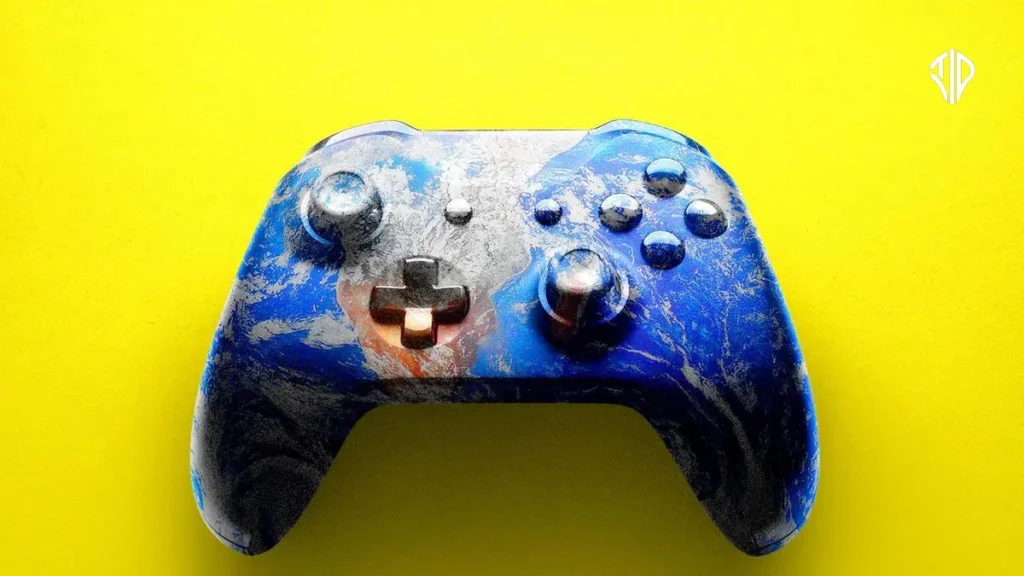
Large language models have achieved extraordinary feats through oceans of text, but their inability to interact with the physical world remains a fundamental limitation.
Autonomous vehicles, robotic factory arms, and spatial drones require an entirely different class of intelligence known as world models, which must be trained on visual and action data to understand cause and consequence.
Because the internet lacks sufficient repositories of physical interaction data, researchers and developers are looking toward an unexpected resource: video games.
As detailed in a report by Wired, startups are now packaging millions of hours of player inputs and game telemetry to train AI systems in real-world physics.
This emerging approach seeks to capitalize on the massive scale of existing gaming environments. Millions of players navigate complex 3D virtual spaces daily, executing precise sequences of thumbstick movements, trigger squeezes, and button presses.
By translating these actions into structured training sets, companies hope to bypass the severe data collection bottlenecks that currently restrict physical AI development.
The Data Shortage Facing World Models
While text-based models like ChatGPT feed on vast digital libraries, physical AI requires data that captures how actions translate into environmental outcomes.
Teaching a robot how to pick up an object requires knowing not just what the action looks like, but the torque applied, the pressure exerted, and the friction involved. Manually generating this data by attaching sensors to human operators in testing labs is both expensive and painfully slow.
Furthermore, controlled lab environments fail to replicate the random chaos of the real world. Startups and venture capitalists backing physical AI initiatives argue that video games naturally provide these critical edge cases.
Games simulate complex physics, unexpected obstacles, and varied environments at a scale that manual data gathering can never match.
Bridging the Gap Between Virtual Worlds and Reality
A British startup named Worldmodeldata is positioning itself as a broker in this space, collecting and curating controller data licensed from major game studios. Rather than forcing individual robotics labs to negotiate separate agreements with game developers, the startup packages these diverse virtual experiences into standardized datasets designed to feed world models.
Other industry players are adopting similar strategies. Companies like General Intuition and Niantic are actively harvesting gaming telemetry from their own platforms to build and refine spatial intelligence models.
Proponents of this method believe that exposure to millions of hours of varied gameplay will provide the foundational training necessary for a breakthrough in physical AI capabilities.
Scepticism and Limitations of Gaming Physics
Despite the enthusiasm, prominent industry voices remain cautious about relying on video game data. Nvidia, a major player in developing world models optimized for hardware acceleration, prefers using custom physics engines specifically designed to simulate real-world rules.
Critics point out that video games frequently use shortcuts and approximations to create the illusion of realism without accurately coding granular physical interactions.
For instance, a video game character might pick up an apple using a pre-rendered animation, entirely bypassing the complex calculations of finger pressure and surface friction required for a robotic hand to perform the same task.
Academic researchers note that while games offer coarse approximations of physics, they may fall short when AI models require high-precision motor control for delicate physical manipulation.
The Path Forward for Physical Intelligence
The debate highlights the diverse experimental paths currently being pursued to achieve artificial general intelligence in physical spaces. Whether video game data proves to be the ultimate training fuel or merely a stepping stone, the race to solve the physical data deficit is accelerating.
As startups and major technology firms test competing hypotheses, the bridge between digital entertainment and physical robotics is becoming an increasingly vital frontier in artificial intelligence research.
Key Takeaways
- Video game telemetry and player inputs are being leveraged by startups to train physical AI systems in real-world physics.
- Gaming environments provide massive scale, complex physics, and diverse edge cases that overcome the bottlenecks of manual laboratory data collection.
- Companies like Worldmodeldata, General Intuition, and Niantic are actively curating and harvesting virtual interaction data to build spatial intelligence models.
- Critics and industry leaders like Nvidia remain skeptical, noting that video games often rely on pre-rendered animations and approximations rather than true granular physical interactions.
Join our community by subscribing to our Weekly Newsletter to stay updated on the latest AI updates and technologies, including the tips and how-to guides.
Also, follow us on Instagram (@tid_technology) for more updates in your feed and our WhatsApp Channel to get daily news straight to your Messaging App.
