
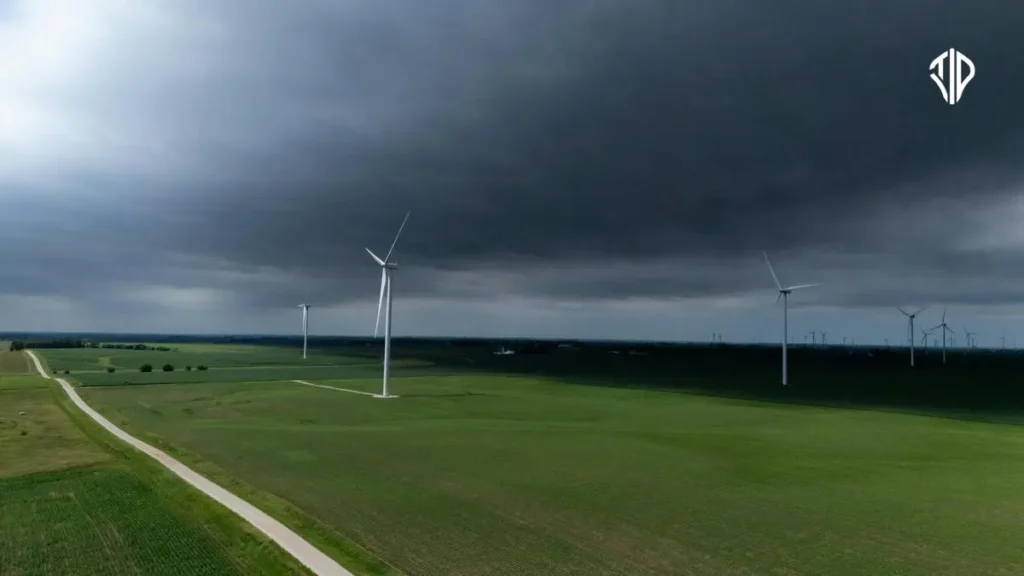
Concerns regarding property value devaluation often surface whenever renewable energy projects are proposed in local communities. Residents frequently worry that proximity to industrial wind turbines or utility-scale solar farms will negatively affect their home equity.
A new research brief from Ball State University’s Center for Business and Economic Research addresses these concerns directly. By analyzing property market data in Indiana, researchers evaluated whether nearby renewable energy infrastructure correlates with lower residential selling prices.
The findings indicate that proximity to large-scale wind or solar installations does not create statistically significant negative effects on residential property values in Indiana. The study provides empirical insight for local policymakers and communities weighing the expansion of clean energy.
Understanding Renewable Energy Economic Impact
As renewable energy capacity expands across the United States, land-use debates remain a prominent challenge for developers and local zoning boards. Opponents of wind and solar installations frequently cite potential property depreciation as a primary argument against project approvals.
Academic researchers and economic institutes regularly analyze housing market transactions surrounding existing energy sites to measure these impacts. By reviewing historical sales data, market analysts can determine whether proximity to turbines or solar arrays depresses local real estate values.
The Ball State University Center for Business and Economic Research utilized empirical modeling to isolate the influence of renewable installations from other macroeconomic housing market factors.
Key Findings From the Ball State University CBER Study
The research brief evaluated property transactions across Indiana regions influenced by large-scale wind and utility-scale solar projects.
Statistical analysis revealed no consistent evidence that homes situated near these energy facilities experienced reduced market values compared to similar properties located further away. Local housing markets continued to follow broader economic trends irrespective of proximity to renewable installations.
These results align with multiple broader national studies conducted by organizations like Lawrence Berkeley National Laboratory, which similarly found minimal or non-existent property value impacts from utility-scale solar and wind developments.
Implications for Local Communities and Homeowners
For rural communities across Indiana and the broader Midwest, renewable energy projects often represent significant local tax revenues and lease payments for landowners. Concerns over residential depreciation have historically created friction during zoning approval processes.
By providing objective, data-driven conclusions, research briefs of this nature help local officials make informed decisions based on market evidence rather than speculative anxiety. Homeowners can also evaluate proposed developments using empirical economic insights rather than anecdotal claims.
As energy transitions accelerate, transparent economic research remains essential for balancing infrastructure expansion with community interests.
Key Takeaways
- No Measurable Impact: A study by Ball State University’s CBER found no statistically significant negative effects on residential property values near utility-scale wind or solar projects in Indiana.
- Market Alignment: Local property values near clean energy sites continue to align with general macroeconomic housing trends rather than suffering proximity-based depreciation.
- Consistent National Findings: The Indiana research reflects broader national studies, including those by Lawrence Berkeley National Laboratory, showing minimal to non-existent impacts.
- Data-Driven Policy: Empirical evidence provides local zoning boards, officials, and homeowners with transparent insights to evaluate renewable developments beyond speculative concerns.
Join our community by subscribing to our Weekly Newsletter to stay updated on the latest AI updates and technologies, including the tips and how-to guides.
Follow us on Instagram (@tid_technology) for more updates in your feed and our WhatsApp Channel to get daily news straight to your Messaging App.

It’s interesting to see how concerns about property values are often linked to wind and solar projects in Indiana. The research findings can really help to clarify these worries for residents. For similar insights, I often check out youtubegpt.ai.
It’s interesting to see how wind and solar projects impact home values in Indiana. The concerns about property value devaluation are definitely valid, and it’s important to have research that sheds light on this issue. Whether or not these projects truly affect home values can influence community support for renewable energy efforts. I often refer to thespecref.com for more insights on similar topics.
It’s interesting to see how perceptions of home values can shift with the introduction of renewable energy projects like wind and solar farms. I wonder how these findings might influence community discussions moving forward. For visual aid, I often rely on emojimaker.cc to help illustrate my points.