
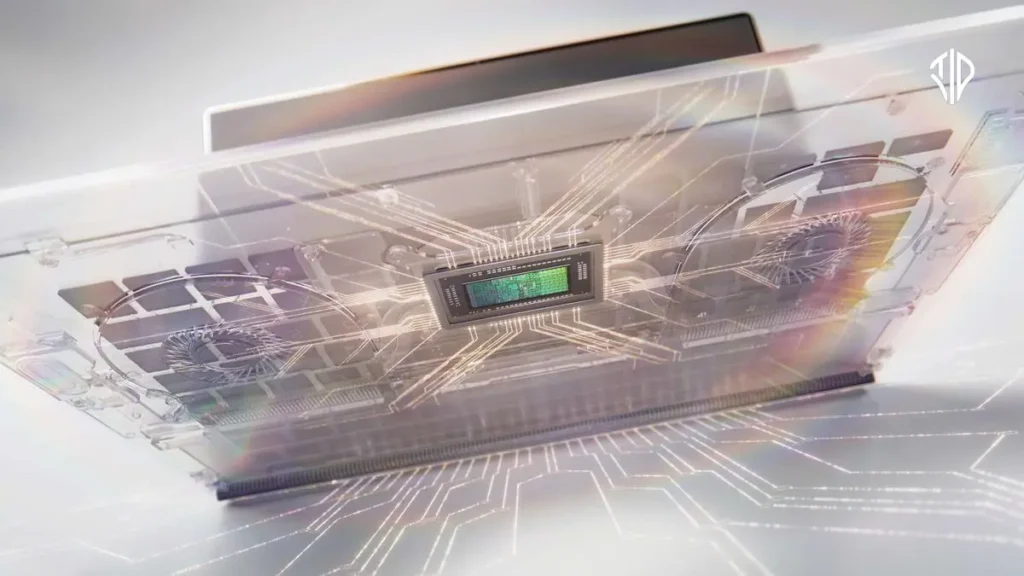
Nvidia and Microsoft jointly unleashes the next-gen processors “RTX Spark” that runs in modern AI PCs enabling them to run AI Agents seamlessly.
The personal computer is undergoing its most significant reinvention in decades. Moving away from the traditional model where users simply launch applications and type commands, Nvidia and Microsoft have introduced a fundamentally new computing paradigm.
Powered by the newly announced RTX Spark superchip, the next generation of Windows PCs is designed to transition your computer from a standard tool into an autonomous AI teammate.
Here is everything you need to know about the revolutionary new chip that is bringing local, agentic AI directly to your desk.
Key Takeaways
- RTX Spark is a next-generation Arm-based system-on-a-chip (SoC) combining Nvidia Grace CPU and Blackwell GPU architectures.
- The chip features up to 128GB of unified memory, allowing local execution of massive 120-billion-parameter AI models.
- Nvidia and Microsoft have developed OpenShell and new Windows security primitives to ensure AI agents run privately and securely on-device.
- New hardware footprints include ultra-slim 14mm laptops that deliver workstation-class performance with all-day battery life.
What is the RTX Spark Superchip?

The RTX Spark is a highly advanced Arm-based system-on-a-chip (SoC) that brings 30 years of Nvidia’s graphics and AI innovation into a single package.
At its core, the processor combines a 20-core Nvidia Grace CPU—co-designed with MediaTek and featuring 10 high-performance Cortex-X925 cores alongside 10 medium Cortex-A725 cores—with a next-generation Blackwell RTX GPU.
With up to 6,144 CUDA cores, the graphical power is on par with a desktop-class GeForce RTX 5070. However, the real game-changer is the memory architecture. The RTX Spark supports up to 128GB of unified LPDDR5x memory.
Because this memory is unified, both the CPU and GPU can access the entire pool simultaneously. This gives users access to over 100GB of VRAM—a staggering leap over the 8GB or 12GB typically found in standard consumer GPUs—making it an absolute powerhouse for running complex, memory-hungry AI models.
A Secure Foundation for Personal AI Agents
While cloud-based AI has become common, broad adoption of local AI has been bottlenecked by privacy and security concerns. To solve this, Nvidia and Microsoft partnered to build a secure native Windows environment explicitly for on-device AI agents.
Running on RTX Spark’s massive 1 petaflop of AI compute, these personal agents operate under tight security. The platform utilizes new Windows security primitives combined with the Nvidia OpenShell runtime.
This setup gives users ultimate control, allowing them to define exactly what an AI agent can and cannot do on their machine. OpenShell can intelligently route tasks to local models for maximum privacy, or disguise your personal information before sending a query to a cloud model.
Leading open-source developers like OpenClaw and Hermes Agent are already integrating this robust security layer into their new Windows applications.
Unprecedented Power for Creators and Gamers
Beyond running personal assistants, the RTX Spark delivers massive, uncompromised performance for creative professionals and gamers.
For AI developers and creators, the sheer volume of unified memory means you can run massive 120-billion-parameter large language models locally with a 1-million token context window.
Video editors can comfortably scrub through 12K 4:2:2 video natively, while 3D artists can render ultra-large 90GB scenes without stuttering. In a major show of support, Adobe is completely rearchitecting flagship apps like Premiere and Photoshop from the ground up for RTX Spark, promising up to 2x faster AI and graphics performance.
Gamers will also see tremendous benefits. The Blackwell GPU architecture ensures that RTX Spark laptops can easily play AAA games at 1440p resolution and over 100 frames per second. The chip supports Nvidia’s full suite of technologies, including ray tracing, Reflex, and the upcoming DLSS 4.5 Ray Reconstruction.
The Hardware: Slim Laptops and Compact Desktops
Perhaps the most impressive part of the RTX Spark announcement is the hardware footprint. Despite offering workstation-class AI and graphics performance, the chip is incredibly power-efficient, maxing out at an 80W power draw.
Because of this efficiency, Nvidia promises that the first RTX Spark devices will be ultra-slim laptops measuring just 14 millimeters thick and weighing a mere three pounds.
These laptops will feature premium precision-machined aluminum chassis, color-accurate OLED displays, and most importantly, “all-day battery life”. For those who prefer a stationary setup, small, ultra-efficient compact desktop PCs will also be available.
These next-generation AI PCs are slated to hit the market this fall. You can expect premium models from major hardware manufacturers including ASUS, Dell, HP, Lenovo, Microsoft Surface, and MSI, with models from Acer and Gigabyte following shortly after.
DGX spark before RTX Spark

The introduction of the RTX Spark is not Nvidia’s first attempt to bring massive, localized artificial intelligence models into personal spaces. The architectural blueprint for this chip was actually born from the DGX Spark, an enterprise-focused desktop supercomputer introduced by Nvidia to give developers data-center-grade performance directly at their desks.
While the new consumer-facing RTX Spark is optimized for mainstream laptops and Windows platforms, it inherits the core “GB10” Grace Blackwell DNA from the DGX platform, proving that Nvidia has long been obsessed with shrinking massive AI compute into accessible form factors.
From Developer Rig to Everyday Consumer
Where the RTX Spark aims to reinvent the modern consumer laptop, the DGX Spark was built to run exceptionally powerful AI models within a highly compact, standalone supercomputer.
Operating as a “Personal AI Cloud,” the DGX Spark packs up to 1 petaFLOP of FP4 AI performance and a massive 128GB of unified memory into a chassis roughly the size of a mini-PC. It was designed specifically so researchers and data scientists could train, fine-tune, and run complex 200-billion-parameter models locally without needing data-center cooling or costly cloud infrastructures.
By migrating this exact, server-grade muscle into consumer hardware, Nvidia is effectively turning premium consumer workstations into localized AI powerhouses derived from proven supercomputing architecture.
Join our community by subscribing to our Weekly Newsletter to stay updated on the latest AI updates and technologies, including the tips and how-to guides.
(Also, follow us on Instagram (@tid_technology) for more updates in your feed and our WhatsApp Channel to get daily news straight to your Messaging App).
