
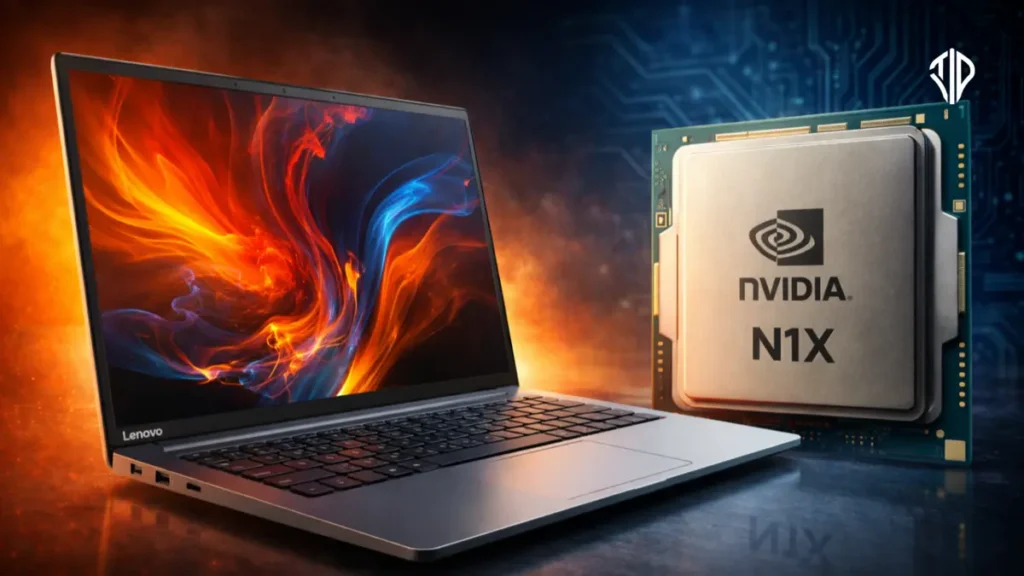
We may have Nvidia’s first Arm-based “N1” and “N1x” series processors for consumer laptops in the first quarter of 2026, which is about to compete with Intel processors.
For decades, the Windows laptop market has largely been a two-horse race, with Intel and AMD trading blows for supremacy in the central processing unit (CPU) arena. The phrase “Intel Inside” became synonymous with dependable performance, shaping an entire generation of personal computing.
However, a seismic shift is underway, one that promises to redefine laptop performance, power efficiency, and even the very notion of what a PC can be.
Nvidia, a titan renowned for its graphics processing units (GPUs), is poised to launch its first Arm-based processors for consumer laptops: the N1 and N1x, signaling a monumental challenge to the long-established order.
The Dawn of Nvidia’s N1 and N1x Processors
This spring, the landscape of Windows laptops is set to change dramatically as Nvidia prepares to introduce its N1 and N1x system-on-chips (SoCs). Unlike their traditional role of providing discrete graphics cards to complement Intel or AMD CPUs, Nvidia’s new chips will serve as the primary engine for consumer laptops.
The N1 is expected to be a robust general-purpose processor, while the N1x is designed as a potent gaming SoC, a move that could particularly excite the portable gaming community. This isn’t just about Nvidia adding a CPU; it’s about a fully integrated solution, leveraging the power-efficient Arm architecture alongside Nvidia’s legendary graphics prowess.
Early leaks paint a compelling picture of this impending revolution. Dataminer Huang514613 revealed a list of upcoming Lenovo laptops built around the N1 and N1x processors. These include mainstream offerings like 14-inch and 16-inch Ideapad Slim 5 models, two variants of the 15-inch Yoga Pro 7, and a convertible Yoga 9.
Crucially, even Lenovo’s own Legion Space control software, an indicator of official product planning, shows references to a “Legion 7 15N1X11” gaming laptop, confirming the N1x’s role in high-performance machines.
Beyond Lenovo, the world’s largest laptop maker, there are whispers of Dell preparing an Alienware gaming laptop and a premium Dell (now XPS) model also utilizing the N1x, potentially bringing the total to eight different Nvidia-powered laptops soon.
Challenging the ‘Intel Inside’ Legacy
Nvidia’s foray into the laptop CPU market with Arm-based SoCs is more than just a new product launch; it’s a direct challenge to the dominance Intel and AMD have held in the x86 ecosystem. For years, the choice for a Windows laptop meant choosing between these two giants.
However, the success of Apple’s Arm-based MacBooks, the emergence of MediaTek-powered Chromebooks, and the growing capabilities of Qualcomm Snapdragon laptops running Windows have already demonstrated the viability and benefits of the Arm architecture—chief among them, superior power efficiency and longer battery life.
Nvidia, with its deep expertise in high-performance computing and graphics, aims to push this envelope further. While specific performance benchmarks are still speculative and should be viewed with a degree of caution, a Geekbench leak suggested that the N1x variant could boast an impressive 20 CPU cores and as many CUDA cores as a desktop RTX 5070 graphics card.
This immense integrated graphical power, if accurate, would be a game-changer, especially for gaming laptops where dedicated GPUs are often large and consume significant power. Nvidia CEO Jensen Huang has also hinted at the close relationship between the N1 and the GB10 “Superchip” found in the DGX Spark mini-PC, suggesting a powerful lineage.
Nvidia’s Arm Roots and Future Vision
While this marks Nvidia’s first major push into Windows consumer laptops with its own Arm SoCs, the company is no stranger to the Arm architecture. Their Tegra line of chips has successfully powered consumer devices for years, notably the highly popular Nintendo Switch console, as well as past devices like the original Microsoft Surface RT and Nvidia’s own Shield handheld and Shield TV set-top-boxes.
These new N1 and N1x chips, however, represent a new chapter, reportedly built in collaboration with MediaTek, combining their respective strengths.
Looking ahead, Nvidia’s long-term commitment is clear, with N2 and N2x chips already rumored to be on the roadmap for late 2027. This indicates a sustained strategy to establish a significant foothold in the laptop market.
The implications for consumers are exciting: more choice, potentially higher performance-per-watt, and highly capable integrated graphics directly within the SoC, leading to thinner, lighter, and more powerful devices.
For Intel and AMD, the pressure to innovate will intensify as they face formidable competition from an unexpected quarter, further accelerating advancements across the entire PC industry. Even AMD is reportedly working on its own Arm chips for future Microsoft Surface devices, underscoring the broader industry shift towards Arm.
The coming months will reveal the true capabilities of Nvidia’s N1 and N1x processors, but one thing is certain: the era of monolithic CPU dominance in Windows laptops is drawing to a close. A new chapter of competition, innovation, and diverse architectural choices is upon us, promising an exciting future for personal computing.
Key Takeaways
- Nvidia is launching its first Arm-based N1 and N1x processors for consumer Windows laptops, directly challenging the x86 dominance of Intel and AMD.
- The N1 and N1x SoCs will serve as primary engines for mainstream and gaming laptops, leveraging Arm’s power efficiency and Nvidia’s integrated graphics prowess.
- Early leaks suggest the N1x could feature 20 CPU cores and powerful integrated graphics comparable to a desktop RTX 5070, indicating a significant performance boost for portable devices.
- Major manufacturers like Lenovo, Dell, and Alienware are already preparing laptops with Nvidia’s new Arm chips, with up to eight models potentially launching soon.
- This move by Nvidia, alongside other Arm-based successes (Apple, Qualcomm, MediaTek), signals a broad industry shift towards Arm architecture, promising consumers more choice, greater efficiency, and accelerated innovation in the PC market.
Join our community by subscribing to our Weekly Newsletter to stay updated on the latest AI updates and technologies, including the tips and how-to guides. (Also, follow us on Instagram (@inner_detail) for more updates in your feed).
(For more such interesting informational, technology and innovation stuffs, keep reading The Inner Detail).
