A dutch company has introduced an AI-powered tool “Dream Recorder”, which aims to visualize your dreams by recording it and letting you watch it later.
The world of dreams has long been a mysterious realm, a canvas where our subconscious paints vivid, often surreal narratives. From ancient prophecies to Freudian analysis, humanity has sought to understand these fleeting nightly sagas.
Now, thanks to groundbreaking advancements in artificial intelligence, we might be closer than ever to not just interpreting our dreams, but actually seeing them brought to life. Imagine the power of recalling your wildest nocturnal adventures and having them visualized before your eyes—a concept no longer confined to science fiction.
Dream Recorder
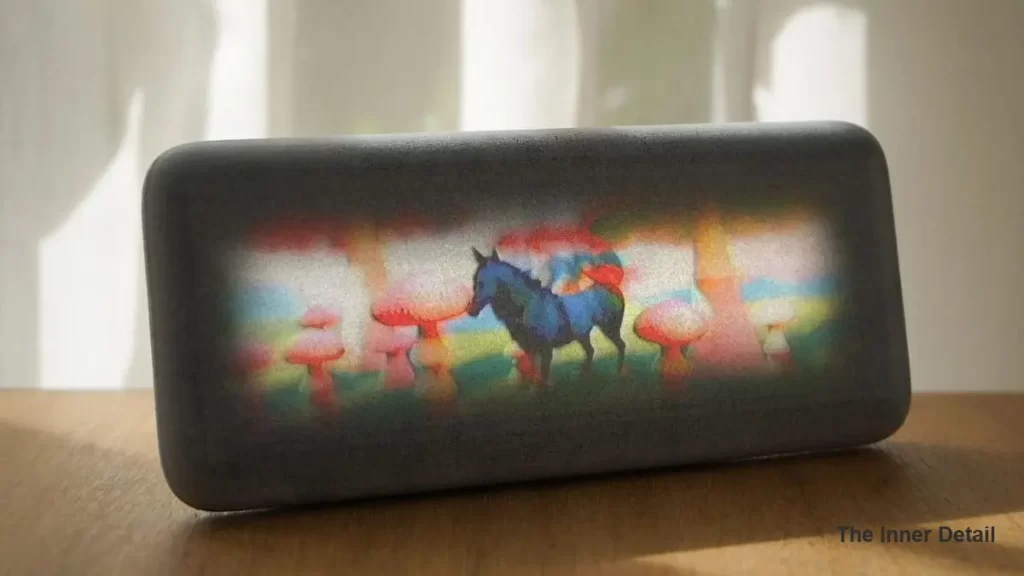
Dutch design studio Modem has introduced a pioneering project aptly named the Dream Recorder. This innovative device promises to bridge the gap between our internal dreamscapes and an external, viewable reality. By harnessing the latest in AI technology, it allows users to experience visual interpretations of their own dreams, transforming ephemeral memories into tangible, albeit impressionistic, art.
At its core, the Dream Recorder utilizes a sophisticated video AI model capable of translating spoken phrases into compelling visual representations. The process is remarkably straightforward for the user:
- Hit Record: When you awaken with a fresh dream still lingering in your mind, simply press the record button on the device.
- Describe Your Dream: Narrate your dream aloud, detailing the scenes, characters, and emotions as best you can recall them.
- Witness the Visualization: The Dream Recorder processes your verbal account and displays a brief, low-definition, impressionistic-style visualization of your memory.
The resulting visuals are not intended to be hyper-realistic, but rather to evoke a sense of nostalgia and comfort, an artistic echo of your subconscious journey. It’s a truly unique way to engage with the often elusive narratives of our sleep.
A Deeper Dive into the Subconscious
In today’s wellness-oriented world, smartwatches, sensors, and apps abound, diligently documenting our sleep patterns and vital signs. However, as Modem co-founder Bas van de Poel explains, “those tools stop at documentation.” The Dream Recorder, by contrast, goes a significant step further. “It doesn’t just log your dreams; it translates them,” van de Poel states.
This distinction is crucial. It signifies a shift from merely observing to actively interpreting and giving form to the invisible. “For the first time,” he continues, “we have tools capable of giving shape to the subconscious, turning the invisible into something we can see, and maybe even begin to understand.” This technology offers a fresh perspective on human consciousness, inviting us to explore the hidden depths of our minds in an entirely new way.
A DIY Journey into Dream Interpretation
Perhaps one of the most intriguing aspects of the Dream Recorder is its accessibility. This isn’t a device you simply purchase off the shelf; it’s a Do-It-Yourself (DIY) project by design. Modem has embraced an open-source philosophy, meaning:
- All the code is readily available.
- The enclosure is designed to be 3D printed.
- A comprehensive shopping list, with an estimated cost of around $333 for components, is accessible online on the company’s GitHub page.
This open-source approach not only empowers curious individuals to build their own dream-recording device but also fosters a community of innovation. Savvy programmers and tech enthusiasts are invited to contribute their own thoughts, code, and AI insights to the project’s lead developers, pushing the boundaries of what this technology can achieve. Modem even provides step-by-step instructions accompanied by photos for relatively easy assembly, making this an exciting venture for anyone with a keen interest in tech and dreams.
Designed for Reflection, Not Accumulation
In an age often criticized for endless digital accumulation and distractions, the Dream Recorder offers a refreshing counter-narrative. The device is intentionally designed with a limited memory capacity, capped at seven memory slots or days. This deliberate constraint underscores its purpose.
“It’s not designed for endless accumulation, but for reflecting on the meanings of your dreams as they echo into waking life,” explains van de Poel. He emphasizes the desire to foster “no distractions, no feeds; just a quiet moment to reflect and reconnect with your subconscious.” The Dream Recorder aims to provide a sense of peace and introspection, encouraging users to engage meaningfully with their inner world rather than simply collecting data.
The Science of Dreams and Recall
While the idea of playing back dreams is revolutionary, the very act of remembering them remains a fascinating subject of scientific inquiry. Reports indicate that only about 11% of Americans consistently remember their dreams. However, ongoing research continues to shed light on why some people have better recall than others.
A study published in early 2025 in the journal Communications Psychology highlighted several factors that increase the likelihood of remembering dream details:
- Maintaining positive outlooks about dreaming.
- Being prone to daydreaming during waking hours.
- Spending longer periods in light sleep stages.
- Living in warmer weather conditions.
- Being younger in age.
Beyond mere recall, lead authors of the study also emphasized that dreams can offer profound insights into mental health, various psychological conditions, and hold immense potential for future studies of human consciousness itself. The Dream Recorder, small, lightweight, and designed to sit discreetly on your bedside table (doubling as a clock), could become an invaluable tool in these explorations, bringing us closer to understanding the intricate workings of our minds.
The Dream Recorder represents more than just a novel gadget; it’s a testament to how AI can unlock new dimensions of human experience. By transforming our most personal, ephemeral thoughts into something visible, it invites us to ponder the very nature of consciousness, memory, and self-reflection. As this DIY project evolves and more individuals engage with it, the potential for deeper personal insight and collective understanding of our shared dream world is truly boundless.
Key Takeaways
- The Dream Recorder uses AI to visualize spoken descriptions of dreams.
- It is a DIY, open-source project, encouraging community contribution.
- The device promotes reflection on dreams rather than endless data accumulation.
- Research indicates factors like positive outlooks and age influence dream recall.
Join our community by subscribing to our Weekly Newsletter to stay updated on the latest AI updates and technologies, including the tips and how-to guides. (Also, follow us on Instagram (@inner_detail) for more updates in your feed).
(For more such interesting informational, technology and innovation stuffs, keep reading The Inner Detail).