
Snapchat, initially known as an instant multimedia messaging application, continues to innovate its camera technology. The company develops hardware that captures and visualizes the world in exciting new ways. Following the 2016 release of ‘Spectacles,’ their AR glasses designed to synchronize augmented reality elements with real-world captures, Snapchat is now launching an autonomous flying camera drone that follows users and records video.
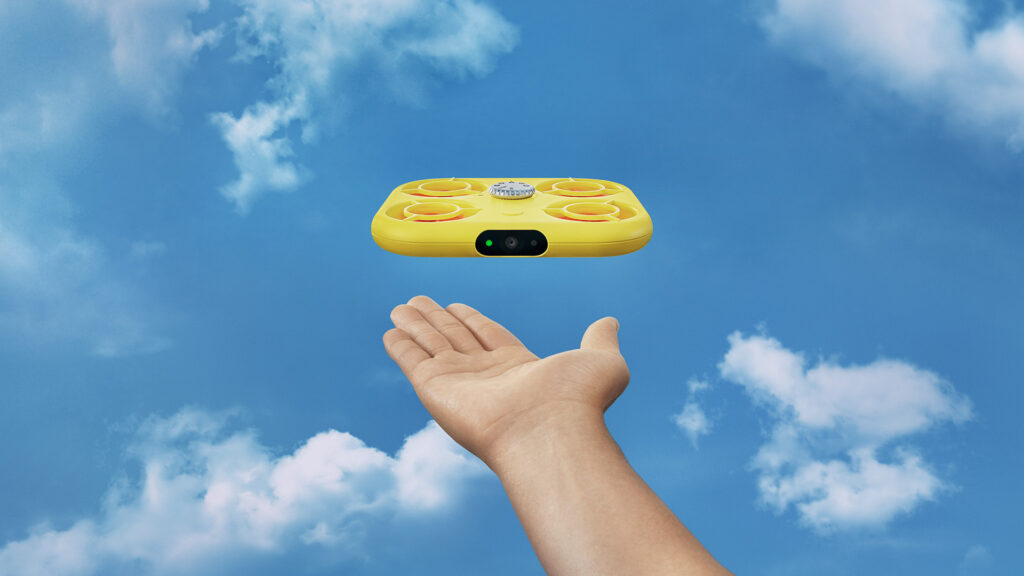
Snap’s new palm-sized drone, named Pixy, is a compact yellow device. This innovative flying camera takes off directly from your hand, autonomously follows you to capture dynamic videos, and then sends the footage directly to the Snapchat app for easy editing and sharing with friends.
Snap CEO Evan Spiegel on Pixy: A New Way to Capture Moments
“It gives you a totally new perspective, actually allows you to have fun and go hang out with your family and create videos all together,” Evan Spiegel, Snap’s Chief Executive, stated in an interview. This charming plastic drone seamlessly pairs with your Snapchat app. It effortlessly takes off from the user’s palm, swiftly captures photos or videos, and lands gently back in the palm when prompted. Its intuitive operation is reminiscent of a pet bird capturing your memorable moments.
Key Features of the Snapchat Pixy Drone
While Pixy may not possess the extensive capabilities of a traditional professional drone, its compact and lightweight design allows it to easily fit into a pocket. The Pixy drone operates via six pre-programmed flight patterns, selected using a dial conveniently located on its top. Users can choose modes like ‘follow me’ or ‘hover above head’ for hands-free photo and video capture. This eliminates the need for a separate controller, simplifying its operation compared to conventional drones.
The Pixy drone’s design includes a swappable battery, a 12-megapixel camera sensor on its front for capturing high-quality media, and a bottom-facing sensor crucial for stable take-off and precise landing. Weighing a mere 101 grams, Pixy is exceptionally light and portable.
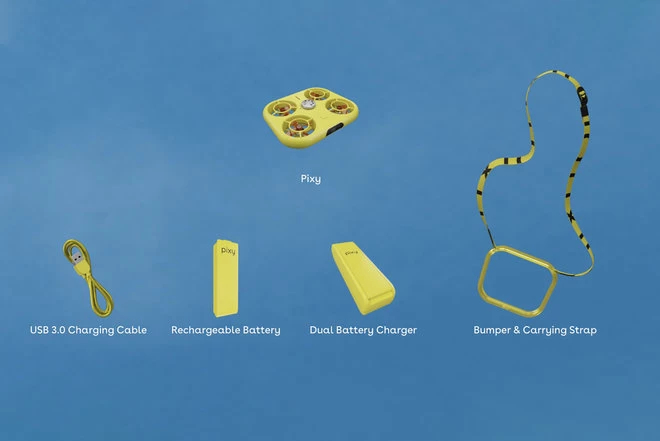
A fully charged Pixy drone provides enough power for five to eight flights, with each flight lasting approximately 10 to 20 seconds. When the battery depletes, it can be easily swapped with a charged spare. Snap offers additional batteries for $20 each and a portable dual-battery charger for $50. Pixy’s integrated 12MP camera sensor can capture up to 100 videos or 1000 photos, stored on its internal 16GB drive.
Captured footage wirelessly syncs directly to the Memories section within the Snapchat app. From there, users can enhance their videos with Snap’s unique augmented reality (AR) effects before sharing them with friends via the app or other platforms.
Related Insights
One common challenge with drones is achieving smooth take-offs and landings. Pixy addresses this with its bottom-facing camera, which aligns at eye level during launch and then automatically tracks your movements. To end a flight, simply extend your hand, and Pixy will gently land back in your palm. Early reviewers expressed enthusiasm, praising Pixy’s user-friendly and impressive flight capabilities during initial tests.
Evan Spiegel envisions Pixy as a revolutionary tool for capturing human-centric moments, departing from the broader applications of traditional drones. He emphasizes, “I think Pixy opens up a whole new space here because your smartphone can’t fly. You can get a totally new and different perspective. And so, in that way, I think Pixy is meaningfully better than what your smartphone can create.” This highlights Pixy’s unique ability to offer perspectives unattainable with a smartphone.
Understanding Pixy Drone’s Limitations
Despite its advanced features, Pixy has certain limitations due to its compact design. This miniature drone does not record audio with its video captures. Furthermore, its lightweight construction makes it unsuitable for use in windy conditions. Snap also advises against operating Pixy over water or highly reflective surfaces, as these could potentially interfere with its automated flight and bottom-facing camera sensors.
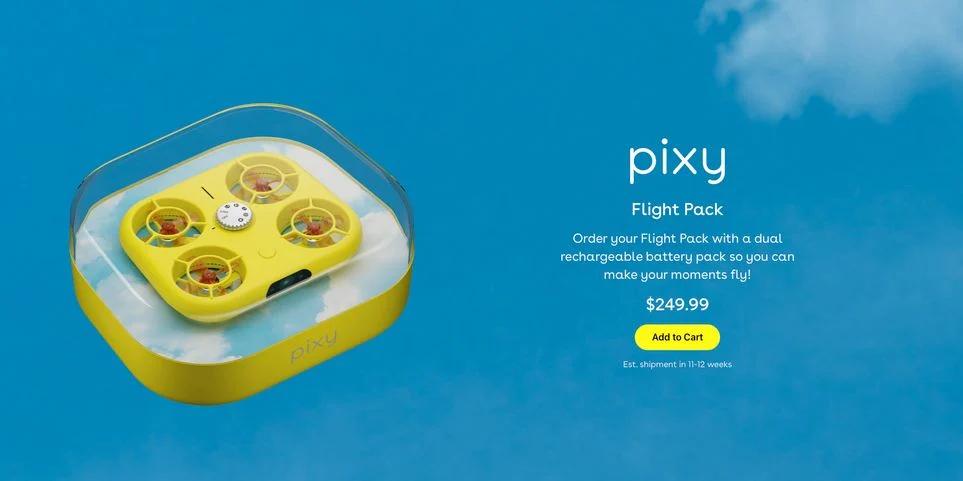
Priced at $230, Pixy is currently not designed for widespread availability. Snap has initially limited its sales to the United States and France, making it an exclusive offering in these regions.
Snapchat’s Augmented Reality Vision and Future
Snapchat remains highly enthusiastic and confident about its augmented reality (AR) initiatives. The company is committed to seamlessly integrating AR elements with the real world, distinguishing its approach from the fully immersive virtual environments offered by the metaverse. Snapchat extends its in-app AR capabilities to hardware, providing users with engaging and immersive real-world experiences.
According to Bobby Murphy, Snapchat’s Co-founder and Chief Technology Officer, the company’s overarching goal is to “create something that really resonates with our community,” emphasizing user connection and relevance.
Pixy represents Snap’s second significant venture into AR-focused hardware, following the earlier Spectacles. The company views the initial limited release of Pixy as a testing phase. Should this palm-sized drone achieve strong user adoption and positive reception, Snap plans to mass-produce a second, potentially enhanced version, dubbed ‘Pixy 2.0’.
In contrast to Amazon’s ‘Ring Always Home Cam’, a flying camera designed primarily for home surveillance and announced in 2020, Snap’s Pixy aims to capture user attention and enthusiasm through its playful and engaging nature.
Join our community by subscribing to our Weekly Newsletter to stay updated on the latest AI updates and technologies, including the tips and how-to guides. (Also, follow us on Instagram (@inner_detail) for more updates in your feed).
(For more such interesting informational, technology and innovation stuffs, keep reading The Inner Detail).